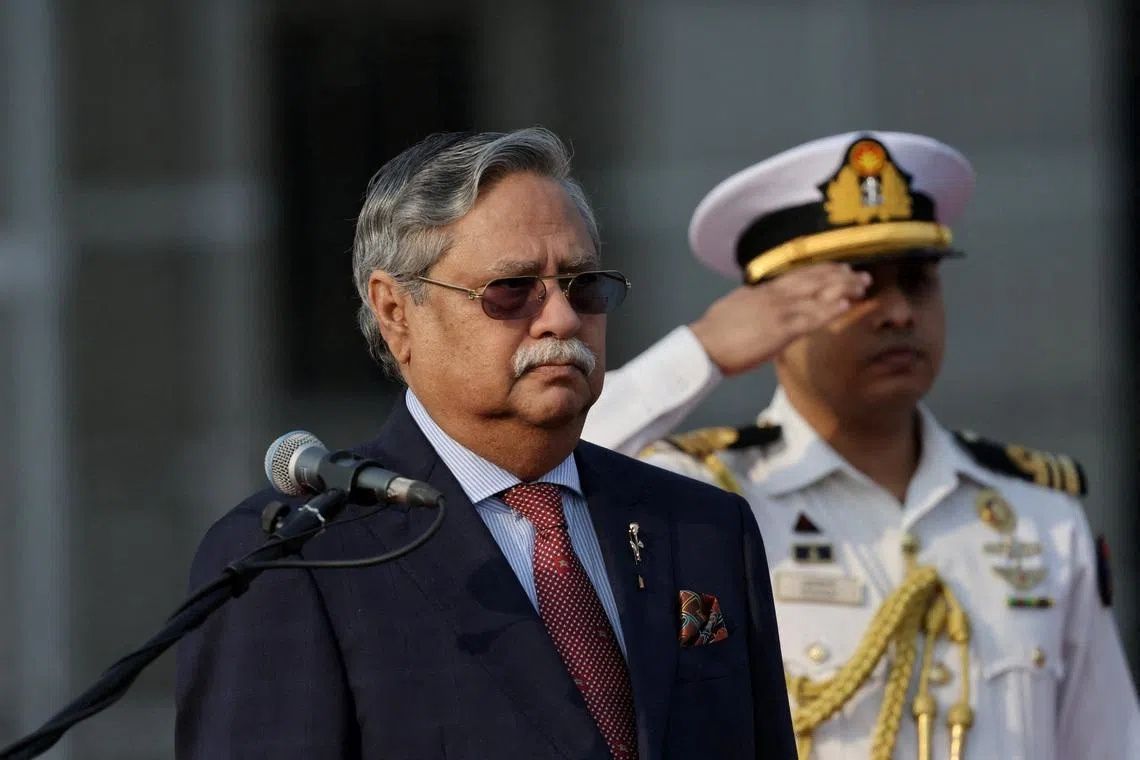
Bangladesh's President Mohammed Shahabuddin announced his resignation on Friday, citing serious health complications that have rendered him unable to continue in the largely ceremonial but symbolically important role. The 76-year-old leader, who has served in the presidency since April 2023, made the announcement through his office, stating that recent medical assessments have identified a condition called Autonomic Neuropathy, which periodically causes episodes of momentary unconsciousness that he deemed incompatible with the demands of high office.
Shahabuddin's departure marks a significant development in Bangladesh's political landscape, particularly given the country's turbulent recent history. He assumed the presidency during a period of considerable upheaval, having witnessed the downfall of Prime Minister Sheikh Hasina following a nationwide student-led uprising that erupted in 2024. Hasina's subsequent flight to neighbouring India fundamentally altered the nation's power dynamics, and Shahabuddin's position as a former political associate of the ousted premier had already made his tenure precarious in the eyes of Bangladesh's current interim administration and wider public sentiment.
Autonomic Neuropathy, the condition cited in Shahabuddin's health statement, is a neurological disorder affecting the autonomic nervous system—the network responsible for regulating involuntary bodily functions including heart rate, blood pressure, and consciousness levels. The occasional episodes of lost consciousness that Shahabuddin mentioned represent a genuine medical concern for anyone holding high-level public office, particularly one involving ceremonial duties and state representation. His disclosure of the condition reflects a pragmatic recognition that the physical demands and pressures of presidential duties could exacerbate his medical situation, potentially creating national governance complications.
The political implications of Shahabuddin's exit are profound for the imprisoned or exiled Awami League party and its supporters. With the former premier's planned return to Bangladesh scheduled within five months, she now finds herself almost entirely bereft of institutional allies holding significant positions. The Awami League itself remains under a blanket ban following the upheaval of 2024, and numerous party leaders and activists have either been detained by the current administration or have fled the country fearing prosecution. This institutional isolation severely constrains Hasina's ability to reconstruct political infrastructure or secure protective institutional support upon her eventual return.
According to constitutional provisions outlined in Shahabuddin's resignation announcement, the Speaker of the Jatiya Sangsad—Bangladesh's national parliament—will assume presidential duties pending the formal election of a new head of state. This interim arrangement ensures continuity of state functions during what could be a protracted transition period, though the mechanism for selecting Shahabuddin's successor remains subject to political negotiation among different factions within the interim government. The parliamentary process for electing a new president will likely reflect the current balance of power among anti-Hasina political forces.
The distinction between ceremonial and executive authority in Bangladesh's constitutional framework proves crucial for understanding the significance of Shahabuddin's resignation. While the president serves as the nominal commander-in-chief of the armed forces and holds formal state authority, genuine executive power rests with the Prime Minister and the cabinet that governs this South Asian nation of 173 million people. Nevertheless, the presidency retains considerable symbolic importance and can exercise meaningful influence during constitutional crises, pardons, and other formal state matters—making even ceremonial office politically consequential in contested environments.
For Malaysia and other Southeast Asian democracies, Shahabuddin's resignation offers instructive observations about institutional vulnerability during periods of political transition. The ease with which a president aligned with a ousted faction can be isolated—either through resignation prompted by health concerns or through other means—illustrates the fragility of institutions when political consensus breaks down fundamentally. Bangladesh's experience suggests that ceremonial offices may offer less protection to minority factions than commonly assumed when broader political movements turn decisively against particular leaders and their networks.
The timing of the resignation, announced just months before Hasina's planned return, appears deliberately coordinated to maximize the isolation of her political position before she re-enters Bangladesh's political space. Shahabuddin's withdrawal removes one potential institutional defender and eliminates the possibility of a sympathetic head of state able to exercise discretionary powers in Hasina's favour during potential legal or constitutional challenges. The interim administration evidently views the complete removal of Hasina-era officials from positions of institutional authority as essential to consolidating its political gains from the 2024 uprising.
Regional observers monitoring Bangladesh's political stabilization process will likely interpret Shahabuddin's departure as confirming the decisive nature of the 2024 transition. Unlike scenarios where ousted leaders retain residual institutional support or sympathetic figures in high office, Hasina now confronts a political environment almost entirely dominated by actors opposed to her previous administration. This structural disadvantage may significantly constrain her ability to challenge the interim government's policies or resist potential legal actions against herself and her party members.
The search for a successor president will test the cohesion of Bangladesh's current interim political coalition. Different elements—including student activists, civil society organizations, and various political parties excluded from Hasina's governance—may propose competing candidates reflecting their particular interests and ideological orientations. The presidential selection process could reveal fissures within the anti-Hasina alliance, potentially opening space for political realignment as Bangladesh navigates the complicated transition from crisis management toward institutionalized governance structures that can accommodate diverse political voices.

