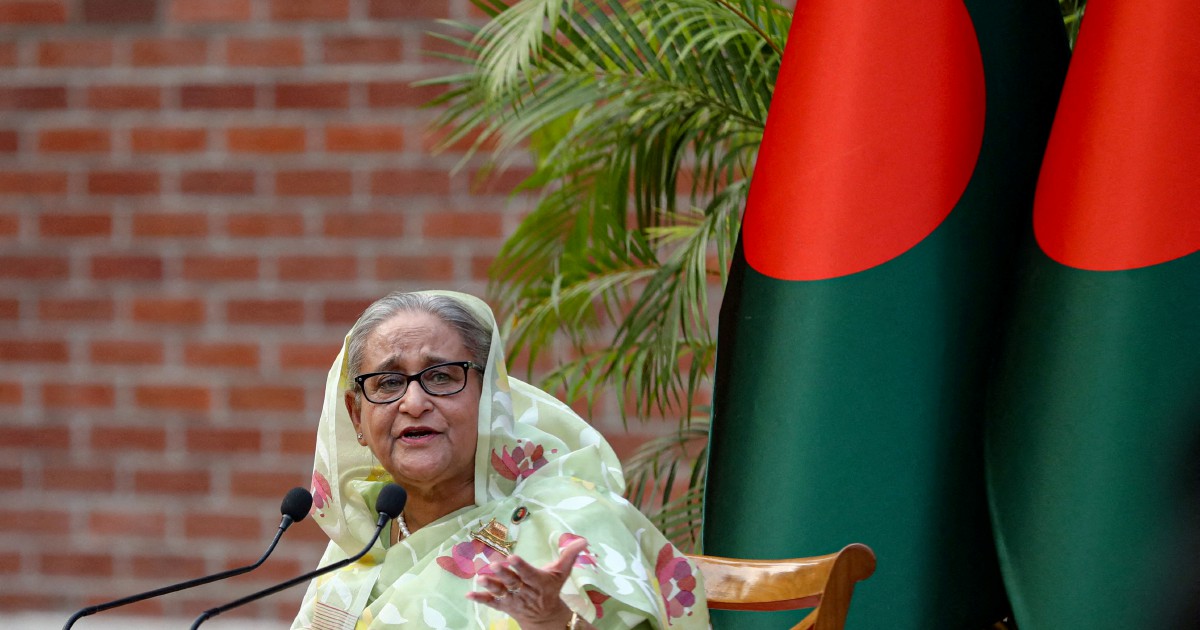
Sheikh Hasina, Bangladesh's ousted Prime Minister, has declared her intention to return to the country and confront the legal system that has convicted her, despite the gravity of the charges she faces and the threat of capital punishment. Her statement, made from abroad where she has sought refuge following her dramatic departure from office, represents a bold challenge to the interim government's authority and suggests she does not intend to remain in self-imposed exile indefinitely.
The former leader's conviction stems directly from her government's response to the widespread student-led demonstrations that erupted in 2024, a period of considerable upheaval that ultimately destabilized her administration. The death sentence handed down against her represents one of the harshest penalties the judicial system can impose, yet Hasina has signalled she will not accept banishment from her homeland as the price for political survival. Her refusal to remain in exile marks a significant shift in how ousted leaders in South Asia have traditionally managed criminal proceedings against them.
Hashina's core contention is that the charges levelled against her are not rooted in genuine legal concerns but rather constitute a weaponization of the judiciary by her political opponents. She characterizes her conviction as "politically motivated," arguing that the temporary authorities have manipulated the court system to neutralize her as a potential threat to their consolidation of power. This accusation points to a broader pattern of concern in the region regarding the instrumentalization of legal processes for partisan advantage, a phenomenon that undermines confidence in independent justice systems.
The 2024 crackdown on student protestors was a pivotal moment in Bangladesh's recent political history. The demonstrations, which mobilized large segments of the youth population, reflected genuine grievances about governance, economic opportunities, and democratic representation. Hasina's government responded with security force actions that resulted in significant casualties and injuries, intensifying public anger and eventually contributing to her political downfall. The scale of the violence during this period has made the investigation and accountability measures a central focus of the interim administration.
From a regional perspective, the situation in Bangladesh carries implications beyond its borders. Southeast Asia and South Asia have witnessed recurring cycles where transitions of power involve the victimizing of previous leaders through retrospective legal action. The pattern raises questions about institutional stability and the rule of law in the broader region. Malaysia, which has experienced its own episodes of post-transition accountability measures, understands the delicate balance between addressing genuine grievances and maintaining legal system credibility.
Hashina's resolve to return reflects a calculation that her political movement still possesses sufficient support to warrant the personal risk involved in facing trial. By refusing to accept exile, she positions herself as a martyr figure for her supporters and challenges the legitimacy of the proceedings against her. This strategic choice suggests confidence that her conviction will not withstand scrutiny, or alternatively, that her political legacy is worth the personal cost of imprisonment or execution. Either way, her stance ensures that her case will remain a focal point of political contestation in Bangladesh.
The legal proceedings against the former Prime Minister have progressed with unusual speed, even by the standards of politically charged prosecutions. The rapid conviction has drawn criticism from international observers who question whether due process has been adequately followed. Bangladesh's judiciary, already under scrutiny regarding independence, faces additional pressure as global attention focuses on whether these proceedings represent genuine accountability or political persecution dressed in legal garb.
For the Malaysian audience, Hasina's situation offers a cautionary reminder of how transitions of power can destabilize even established political leaders. Her case demonstrates that tenure in high office provides limited protection once political circumstances shift dramatically. The broader implications for governance and institutional resilience in democratic systems undergoing periods of significant change warrant careful consideration by policymakers across the region.
The interim Bangladesh authorities face a delicate predicament. If they proceed with executing or imprisoning Hasina, they risk international criticism and potentially destabilizing her supporters. If they grant clemency or reduce her sentence, they risk appearing weak before their own political base. The return of Hasina to Bangladesh and her willingness to face trial will likely create a significant political event that could reverberate across South Asian capitals, particularly given Bangladesh's strategic importance and its experience as a laboratory for different governance models.
The outcome of this standoff will significantly influence how future political transitions unfold not only in Bangladesh but potentially across the region. If Hasina's gamble succeeds and she uses the legal process to rehabilitate her image or obtain leniency, it establishes a different precedent than if the courts proceed with maximum severity. Meanwhile, her supporters continue organizing within Bangladesh and the diaspora, ensuring that the question of her return remains a live political issue with considerable energy behind it.

