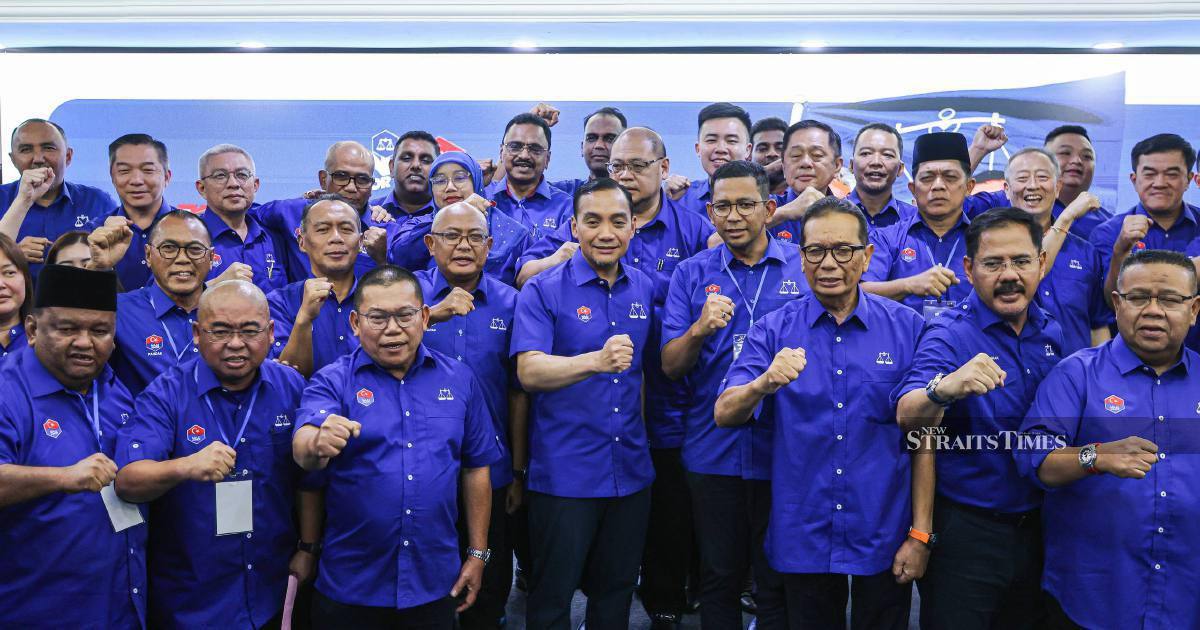
Barisan Nasional's Johor leadership has delivered an unambiguous message to all potential coalition partners: if the alliance wins the forthcoming state election, it will assume power without sharing governance responsibilities. The declaration represents a significant hardening of BN's negotiating stance in Peninsular Malaysia's southern stronghold, signalling that the coalition is confident enough in its electoral prospects to govern in solitary command.
Onn Hafiz Shuhaimi, the prominent figure guiding Barisan Nasional's electoral strategy in Johor, has stressed that this position is final and beyond further discussion. The statement rules out arrangements with other parties, whether numerically necessary or strategically advantageous, marking a departure from the fluid coalition politics that has characterised Malaysian governance since 2018. For Johor, a state where BN has traditionally maintained significant support networks and electoral machinery, the assertion reflects calculations that the alliance can accumulate sufficient seats without external partnerships.
This posture carries implications extending well beyond state boundaries. Since the 2022 general election, Malaysian politics has witnessed heightened flux, with multiple parties courting potential allies and governance configurations remaining in flux even after polling closes. BN's categorical rejection of coalition arrangements in Johor suggests the alliance believes it has consolidated enough support to govern independently. It also sends a signal to other potential partners—both within and outside the coalition framework—that territorial negotiations have ceased and territorial claims are firmly established.
The timing of this declaration proves strategically significant. By announcing its exclusive governance intentions before voting takes place, BN establishes clear expectations with voters while simultaneously preventing other parties from exploiting post-election bargaining leverage. In recent Malaysian elections, particularly at state level, unclear victory margins have enabled smaller parties to extract significant concessions or cabinet positions despite modest electoral contributions. Onn Hafiz's statement effectively forecloses this tactical avenue for competitors.
Johor's political composition provides context for understanding BN's confidence. The state has consistently demonstrated support for established coalitions, and BN retains substantial grassroots machinery and traditional support networks throughout the territory. Unlike states where fragmentary voting patterns create genuine uncertainty about coalition formation possibilities, Johor has historically produced clearer electoral mandates. This structural advantage likely underpins Barisan Nasional's willingness to adopt such an uncompromising stance.
The declaration also reflects broader calculations about Southeast Asian political trajectories. Malaysia's continuing evolution toward more personalised leadership and merit-based governance rather than purely communal political organisation has created space for parties to compete on policy platforms and administrative records. BN's assertion that it requires no partners positions the coalition as an autonomous governing entity rather than merely one component within larger arrangements. This framing appeals to voters concerned about decisiveness and administrative efficiency in state government.
Opposition parties face strategic dilemmas arising from Barisan Nasional's announcement. If BN's confidence proves justified and the coalition secures comfortable electoral victories, the ruling alliance's independent governance will proceed unencumbered. However, if results prove tighter than anticipated, BN may find its pre-election declarations constraining flexibility when post-election realities demand pragmatic adjustments. The statement thus represents both assertiveness and potential vulnerability, depending on how electoral outcomes translate into seat distributions.
For Malaysian voters in Johor, Barisan Nasional's position establishes clear accountability parameters. Unlike scenarios where victory enables extended negotiations and post-election realignments, voters now understand that BN, if successful, will govern through its own mechanisms and cannot claim constraining partnership obligations. This transparency, however much it serves BN's strategic interests, provides electorate clarity regarding governance structures that will emerge from the ballot box.
The regional implications merit consideration for neighbouring states contemplating similar electoral contests. Barisan Nasional's Johor position demonstrates that established coalitions and well-organised parties increasingly view independence as attainable and preferable to the compromises inherent in multi-party governance arrangements. This trend may influence strategic calculations elsewhere, potentially reducing coalition formation flexibility across Malaysian politics more broadly. As states move toward electoral contests, the Johor precedent establishes that major coalitions will increasingly contest elections with sole-governance intentions rather than hedging toward partnership possibilities.
Onn Hafiz's categorical pronouncements also serve important communicative functions within Barisan Nasional itself. By articulating exclusive governance intentions, the coalition leadership demonstrates confidence to its own members, activists, and constituents while simultaneously preventing internal factions from undertaking unauthorised coalition negotiations. This internal discipline proves crucial in multi-party coalitions where various components sometimes pursue divergent strategies. The public declaration constrains opportunities for component parties to negotiate independent arrangements.
Surveys of electoral sentiment in Johor will ultimately determine whether Barisan Nasional's confidence manifests in actual election results. If voters endorse the coalition decisively, its independent governance agenda proceeds smoothly. If results produce fragmented parliaments or closer victories, BN's pre-election declarations will become consequential constraints on post-election flexibility. Either way, Onn Hafiz's statement has fundamentally altered the electoral environment by establishing clear expectations and eliminating ambiguity regarding coalition formation intentions.

