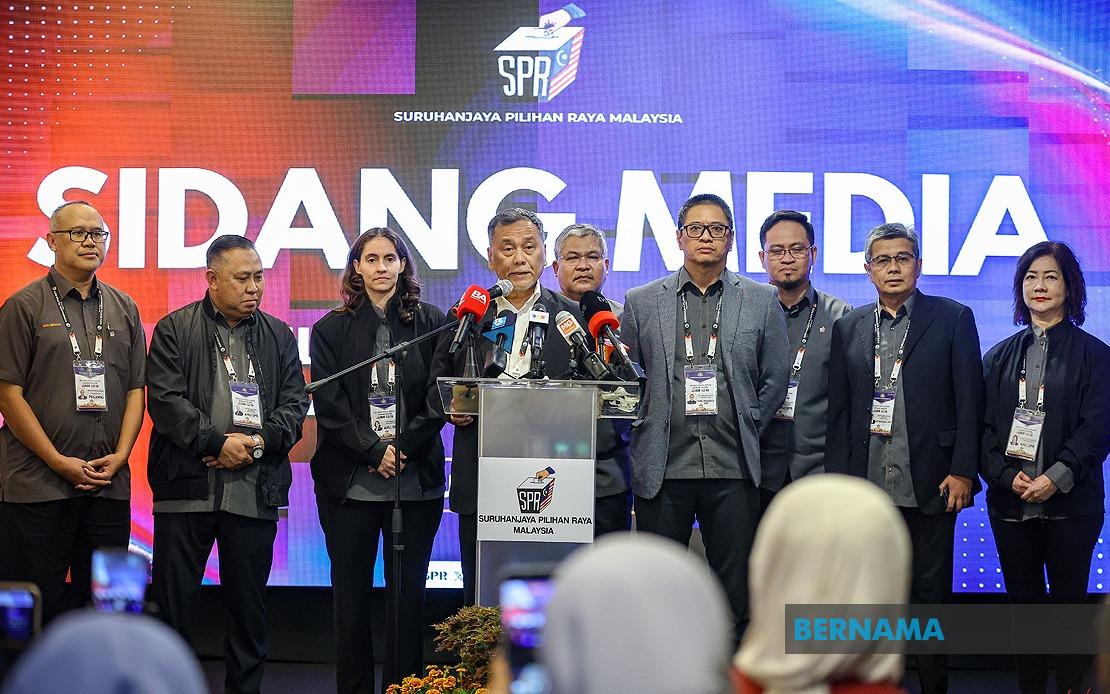
Barisan Nasional has strengthened its political hold over Johor following the 16th State Election, securing 48 of the 56 contested seats and establishing itself firmly for another term of governance. The coalition's performance marks a substantial expansion of its previous 2022 tally of 40 seats, signalling growing voter confidence in its administration. Pakatan Harapan managed to capture only eight seats, a sharp reversal of its post-2022 gains, while numerous smaller parties and independent candidates drew a complete blank, underscoring the bipolar nature of Johor's electoral landscape.
Within the BN alliance, the distribution of seats reflected the coalition's hierarchical structure. Umno's dominant position was evident in its capture of 36 seats, substantially outpacing its junior partners MCA, which won eight seats, and MIC, which secured four seats. This concentration of electoral success within the Malay-Muslim dominated party reflects both its grassroots machinery and the demographic composition of Johor's electorate. Significantly, MIC achieved a perfect record, winning all four seats it contested, demonstrating effective deployment of resources in specific constituencies where the Indian community holds sway.
The opposition's performance revealed deep fractures within the Pakatan coalition. While DAP maintained a presence by winning six seats—including Skudai, Mengkibol, Bentayan, Senai, Penggaram and Stulang—its overall performance represented a considerable retreat from previous contests. More troubling for the coalition was DAP's loss of four previously held seats: Johor Jaya, Tangkak, Jementah and Perling, all of which fell to BN's component parties MCA and MIC. This territorial loss suggests that Pakatan's urban-based support may be fragmenting, with voters in mixed constituencies gravitating back towards the BN formula. PKR and Amanah captured minimal representation with one seat each, highlighting the challenge smaller coalition partners face in penetrating Johor's competitive electoral environment.
Perikatan Nasional experienced catastrophic failure, retaining none of the three seats it won in 2022. The humiliation extended to former Johor Menteri Besar Dr Sahruddin Jamal, whose Bersatu affiliation proved unable to shield him in Bukit Kepong. The collapse of PN's presence in Johor mirrors broader trends of voter consolidation around the two major coalitions, leaving little space for third forces. Bersama, the relative newcomer to Malaysian politics, suffered particularly severe setbacks, losing deposit in all 15 constituencies it contested—a clear signal that the electorate remains skeptical of untested political vehicles. Smaller parties including PSM, MUDA, and ASLI similarly failed to gain traction, suggesting that Malaysian voters in state-level contests gravitate towards established, institutional alternatives.
Several high-profile results shaped the narrative of this election. Johor BN chairman Datuk Onn Hafiz Ghazi retained his Machap seat with a commanding majority of 15,375 votes, cementing his position as the state's likely next Menteri Besar. Former Education Minister Dr Maszlee Malik's unexpected victory in Puteri Wangsa represented a notable success for Pakatan, though his triumph proved exceptional rather than indicative of broader opposition momentum. Conversely, former Health Minister Datuk Seri Dr Adham Baba successfully reclaimed the Pasir Raja seat he had previously held for two terms, strengthening BN's depth of experienced legislative talent. The election also witnessed the defeat of two sitting Members of Parliament: Onn Abu Bakar lost in Senggarang and Suhaizan Kayat fell in Larkin, suggesting that federal parliamentary prestige offers limited protection in state-level contests.
The election outcomes carry significant implications for Malaysian federalism and coalition politics. BN's enhanced supermajority in Johor provides the coalition with near-absolute legislative authority to pass legislation without opposition input or compromise. This level of consolidated control permits the state government to pursue its agenda with minimal obstruction, though it simultaneously raises questions about legislative accountability and the institutional health of state democracy. For Pakatan, the result represents a sobering reversal that may necessitate strategic recalibration across its constituent parties, particularly regarding seat allocation and campaign resource distribution. The opposition's contraction suggests either declining voter appetite for change or successful BN messaging around governance competence and stability.
The election also illustrated evolving community representation patterns within Johor's legislature. MIC's perfect record in four constituencies demonstrates that targeted ethnic community politics remains viable within the BN framework, even as broader discourse emphasizes multiethnic coalition-building. MCA's recovery of four seats previously held by DAP—particularly in constituencies with significant Chinese populations—indicates potential shifts in voting patterns among the Chinese electorate away from the opposition towards BN's Chinese component. These micro-level demographic movements may signal a rebalancing of Malaysia's long-standing ethnic electoral alignments, with potential ripple effects for future general elections.
The electoral participation involved 2.7 million registered voters across 172 candidates, reflecting the substantive nature of the contest despite its status as a state-level election. The early morning conclusion of counting, with the final Puteri Wangsa result announced around 1 am, underscored the competitive intensity of individual contests despite the broad BN victory margin. This granular competition across constituencies revealed that while the aggregate outcome favored BN decisively, specific races remained closely contested, suggesting the electorate engaged seriously with individual candidates rather than simply endorsing wholesale coalition preferences.
For Malaysia's broader political ecosystem, the Johor result reinforces BN's continued institutional dominance in the peninsula's richest and most developed state. The coalition's capacity to expand its legislative majority despite intermittent internal friction and persistent corruption allegations demonstrates the durability of its organizational machinery and its entrenchment within state governance structures. Pakatan's retreat raises uncomfortable questions about the sustainability of opposition challenges outside urban centers and whether the coalition can reverse erosion in constituencies it previously claimed. Southeast Asian observers monitoring Malaysian democracy will note that despite competitive electoral conditions, established coalitions with state institutional resources can deliver commanding mandates, raising questions about equilibrium between democratic contestation and entrenched political power.

