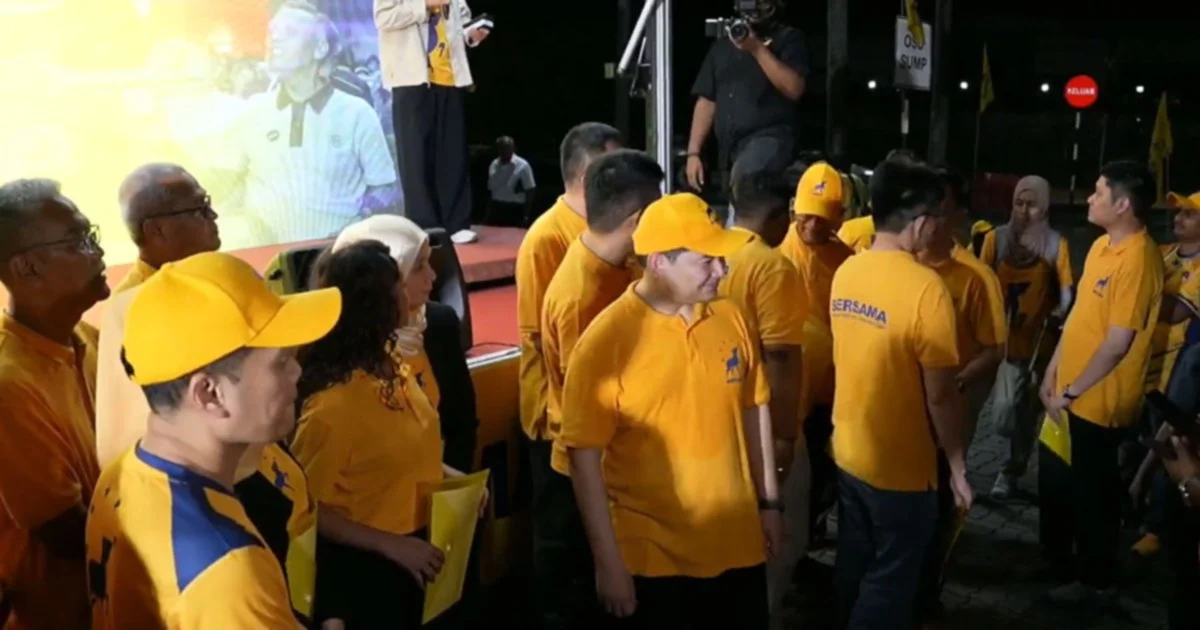
Parti Bersama Malaysia revealed its roster of 15 candidates for the upcoming 16th Johor state election on Friday, signalling the party's attempt to build broad cross-occupational appeal ahead of polling day. The announcement, made in Kuala Lumpur, reflects a deliberate strategy by the nascent political movement to position itself as representative of working Malaysians across different economic sectors and income levels.
The lineup includes candidates with backgrounds spanning entrepreneurship, retail management, and logistics operations, a composition that party strategists appear designed to communicate accessibility and practical experience outside traditional political circles. By fielding candidates from private sector roles rather than predominantly from party machinery or government appointments, Bersama is attempting to differentiate itself from more established coalitions that critics contend have become disconnected from ordinary voter concerns.
For Malaysian political observers, the emergence of Bersama as a distinct electoral force in Johor carries broader significance. The state has long been a proving ground for new political movements and shifting coalition dynamics, given its strategic location, substantial population, and historical role in kingmaking during federal negotiations. Johor's political complexion has undergone substantial realignment in recent years, with voters demonstrating willingness to switch allegiances when they perceive alternatives addressing their grievances more effectively.
The presence of a supermarket manager among the candidates reflects an implicit recognition that Bersama's growth depends on attracting candidates with direct experience managing supply chains, consumer relations, and workforce issues at operational levels. Retail management in Malaysia involves navigating complex labour regulations, managing cost-of-living pressures for consumers, and maintaining operational efficiency—experiences that party strategists evidently believe translate credibly into local governance competency.
Similarly, the inclusion of a logistics worker speaks to Bersama's apparent focus on anchoring its narrative within sectors critical to Malaysia's economy yet frequently overlooked in electoral positioning. Logistics personnel deal directly with supply chain pressures, transportation bottlenecks, and the practical implementation of government policies affecting goods movement. This grounding provides potential talking points on infrastructure, port efficiency, and supply chain resilience that resonate with voter concerns about cost-of-living impacts.
The entrepreneur presence complements this occupational diversity, suggesting Bersama wants to appeal simultaneously to business constituencies and workers. Entrepreneurship candidates historically bring narratives of risk-taking, job creation, and understanding regulatory environments—appeals that have proven effective in Malaysian elections, particularly in suburban and semi-urban constituencies where small and medium enterprise owners constitute significant voter blocs.
Bersama's timing in announcing its Johor slate carries strategic weight. The party faces the perpetual challenge facing new entrants into Malaysian electoral politics: establishing credibility and name recognition within compressed timeframes before voters make decisions. By publicising its candidates relatively early, Bersama allows time for media coverage and grassroots familiarity-building, though the challenge remains formidable given the established machinery and financial resources available to Pakatan Harapan, Barisan Nasional, and Perikatan Nasional.
For regional observers, Bersama's expansion into Johor represents a significant test of whether new political forces can gain traction in major Malaysian states. Unlike the 2022 federal election where party-switching and coalition fragmentation worked to establish Bersama's parliamentary presence, state elections typically require more deeply rooted local structures, community networks, and candidate recognition. Johor voters demonstrated in recent elections willingness to split their votes between state and federal contests, potentially creating openings for smaller parties if candidates connect authentically with local concerns.
The 15-candidate commitment signals serious intentions in Johor rather than token participation, though it falls short of attempting to contest all 56 state seats. This selective approach allows resource concentration on winnable constituencies while reducing the risk of dispersing limited campaign apparatus across hopeless contests—a pragmatic calculation facing any emerging political party with constrained funding.
Bersama's strategy of highlighting occupational diversity rather than emphasising party affiliation or leadership personalities suggests recognition that Malaysian voters increasingly evaluate candidates on demonstrated competence and tangible connection to their concerns. This contrasts with electoral approaches emphasising charismatic leaders or historical party credentials, potentially appealing to voters fatigued by personality-driven politics and seeking substantive governance promises.
The Johor campaign will test whether non-traditional candidate backgrounds genuinely influence voter behaviour or whether established political brands and coalition calculations ultimately determine outcomes. Should Bersama achieve notable vote shares despite winning few seats, it would signal shifting voter preferences warranting attention from established parties. Conversely, marginal performance would reinforce lessons from prior new party entries that Malaysia's electoral system and voter attachments favour established actors.
As campaigning intensifies, monitoring how Bersama's diverse candidate roster resonates in different Johor constituencies will provide valuable insights into Malaysian electoral evolution. The party's ability to translate occupational diversity into genuine voter connection may determine whether Bersama consolidates as a lasting political force or becomes another ephemeral entrant in Malaysia's increasingly competitive political marketplace.

