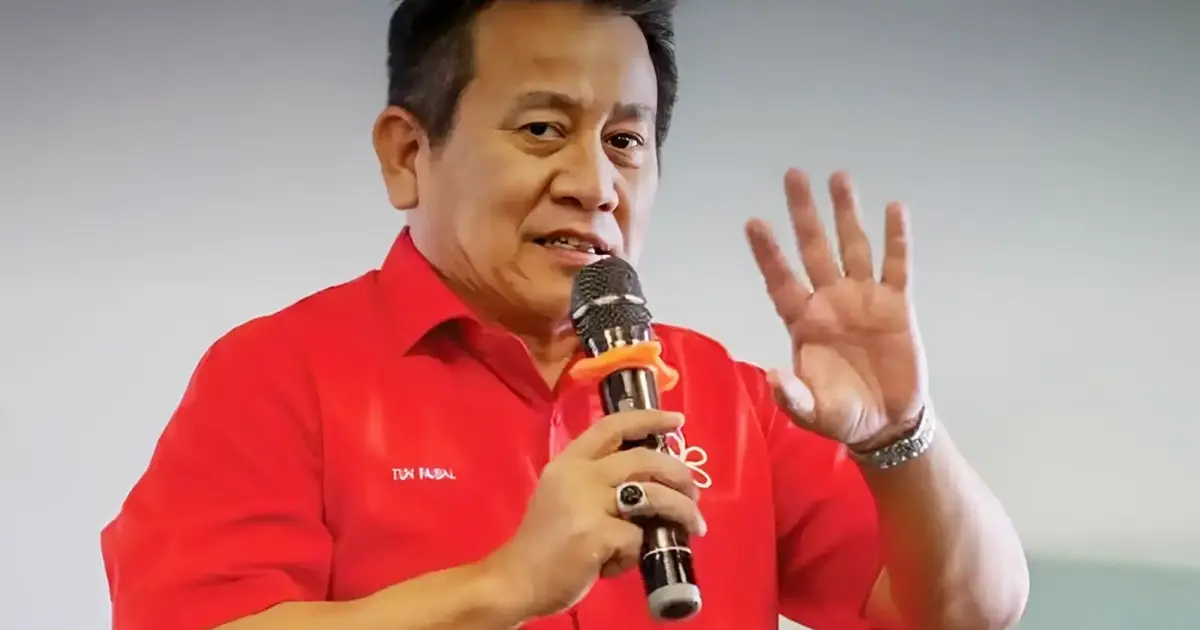
Tun Faisal Ismail Aziz, the leader of Bersatu, has cast doubt on the effectiveness of convening an emergency session of the Perikatan Nasional Supreme Council, suggesting that such gatherings lose their fundamental value when their resolutions remain subject to ratification by individual coalition partners. His comments reflect growing tensions within the opposition coalition regarding decision-making procedures and the balance of power between the central coordinating body and its constituent political organisations.
The Bersatu chief's critique addresses a structural contradiction that has long plagued multi-party coalitions in Malaysian politics. When a supreme council or coordinating body lacks the authority to reach binding conclusions—instead serving merely as a forum for preliminary deliberation before deferring to component parties—it effectively functions as a debating chamber rather than a decision-making institution. This arrangement diminishes the council's capacity to respond swiftly to crises or seize time-sensitive political opportunities that characterise Malaysia's volatile legislative landscape.
The nature of PN's governance structure places it in a precarious position. As an alliance comprising Bersatu, PAS, and several state-based parties, the coalition requires consensus-building mechanisms to maintain cohesion. However, the requirement for Supreme Council decisions to obtain approval from each member party creates a cumbersome approval process that can paralyse the coalition's ability to act decisively. This is particularly problematic during emergency situations where rapid, unified responses are essential to respond to parliamentary manoeuvres or government initiatives.
Tun Faisal's intervention suggests frustration with PN's operational methodology. His concern transcends mere procedural complaint; it hints at deeper anxieties about whether the coalition possesses the institutional flexibility required to function as an effective political force. In Malaysia's Westminster-derived system, where governments can fall rapidly through loss of parliamentary confidence, the capacity for swift decision-making can determine political survival. A coalition that requires multiple approval layers risks being outmanoeuvred by more nimble adversaries.
The statement also carries implications for intra-coalition dynamics. By publicly questioning the utility of emergency meetings, Tun Faisal may be signalling that Bersatu feels constrained by PN's decision-making framework, particularly if larger or more influential parties within the coalition can block initiatives that Bersatu considers important. This airing of grievances in the public domain suggests underlying coordination problems that have not been resolved through private discussions.
From a Malaysian political perspective, this situation reflects broader challenges facing opposition coalitions since the 2022 general election. The Pakatan Harapan and Perikatan Nasional alignments have struggled to maintain internal cohesion while operating as credible alternative governments. The PN coalition's difficulty in establishing efficient decision-making protocols undermines its ability to present itself as a serious contender for federal power, particularly when it must demonstrate that it can govern more effectively than the current administration.
Southeast Asian observers have noted that opposition coalitions across the region frequently face similar structural difficulties. Bringing together parties with divergent ideological commitments, regional power bases, and leadership ambitions requires institutional frameworks robust enough to manage competing interests. PN's apparent struggle to develop such mechanisms puts it at a disadvantage relative to the ruling coalition, which, whatever its internal disputes, operates under a single chain of command.
The timing of Tun Faisal's remarks is significant. Emergency meetings are typically convened during critical junctures when the political situation demands immediate action. If the Supreme Council cannot translate such urgency into binding decisions, the coalition's emergency response capability becomes questionable. This could prove devastating if PN faces a situation requiring immediate parliamentary action or tactical repositioning, scenarios not uncommon in Malaysia's contemporary political environment.
Looking ahead, PN faces a choice between formalising a more hierarchical decision-making structure or accepting that it will continue to operate as a loose alliance of semi-autonomous parties. The former approach risks alienating constituent parties that guard their autonomy jealously, while the latter perpetuates the inefficiency that Tun Faisal has now publicly identified. Neither option is attractive, which may explain why the coalition has not yet resolved this fundamental governance question.
Tun Faisal's critique also reflects the reality that Malaysian political coalitions typically prioritise inclusivity over efficiency. Requiring approval from all component parties ensures that no single party can impose decisions unilaterally, protecting smaller members from being sidelined. However, this protection comes at the cost of operational agility, a trade-off that becomes increasingly costly during periods of political instability when quick responses can determine outcomes.
The broader context matters too. PN currently operates as the primary opposition bloc, yet its internal coordination difficulties suggest it may struggle to translate parliamentary seats into political leverage. If the coalition cannot make timely decisions on policy responses, leadership appointments, or parliamentary tactics, its capacity to challenge the government diminishes accordingly, regardless of its numerical strength in the Dewan Rakyat.
Ultimately, Tun Faisal's questioning exposes a fundamental tension within PN's architecture. Coalitions require both unity and flexibility, both consensus-building and decisive action. When structural arrangements privilege consensus-building to such an extent that decision-making becomes paralysed, the coalition risks becoming irrelevant to political developments happening at velocities that its institutions cannot match. The coming months will reveal whether PN can address this weakness or whether it will continue to struggle with the inherent contradictions of its organisational model.

