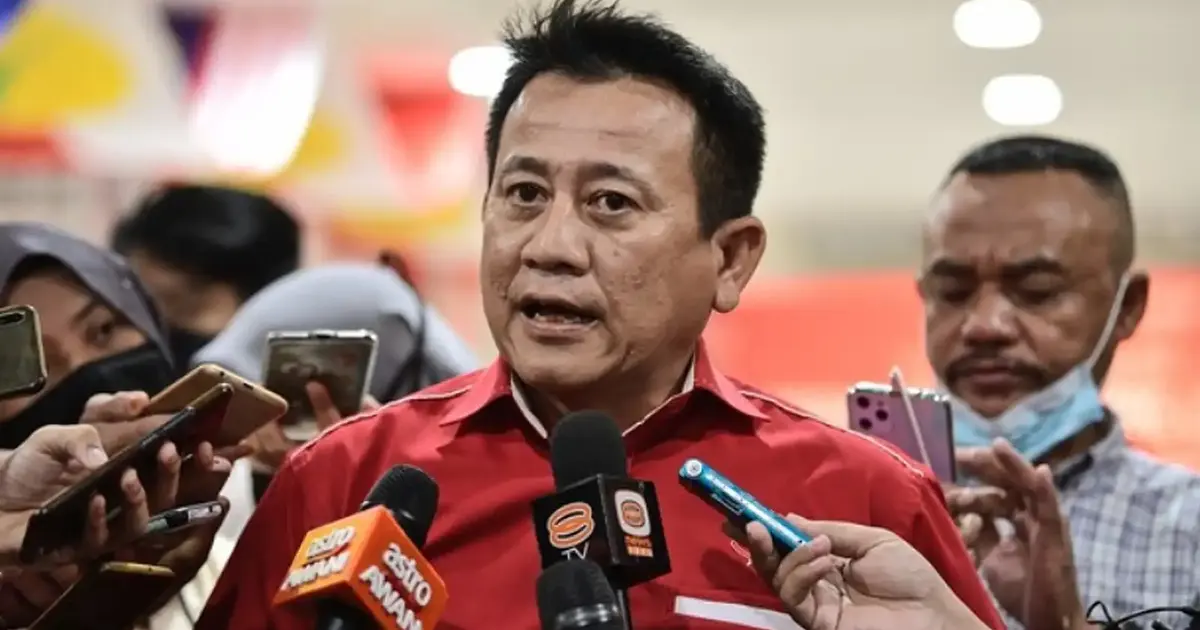
Bersatu has moved to dispel growing speculation that it blocked Pejuang's membership bid to the Perikatan Nasional coalition, with party leadership insisting the organisation's only substantive concern centred on Parti Wawasan Negara's potential admission. According to Tun Faisal Ismail Aziz, Bersatu's information chief, the distinction between the two cases is crucial to understanding the party's position within the broader political realignment currently reshaping Malaysia's opposition bloc.
The clarification arrives amid mounting pressure on PN partners to demonstrate coherence and unity as the coalition seeks to strengthen its negotiating position ahead of potential political shifts. Bersatu's statement represents an attempt to navigate the delicate balance between maintaining coalition harmony and projecting authority within an arrangement that has already experienced considerable internal friction over membership criteria and political direction. By specifically naming Parti Wawasan Negara as the focus of its reservations, Bersatu appears to be signalling that concerns about party compatibility, ideological alignment, or structural viability are at play rather than a blanket protectionist stance toward existing membership.
The situation underscores the persistent tensions within PN, a coalition that has struggled to establish itself as a cohesive alternative to the government. For Malaysian observers tracking opposition politics, the distinction drawn by Bersatu carries implications for how PN may absorb future applicants and whether emerging parties might find the coalition receptive to their participation. The coalition's ability to manage expansion without fragmenting along existing fault lines remains a fundamental test of its viability as a lasting political force.
Parti Wawasan Negara's case appears to involve dimensions that Bersatu found genuinely problematic enough to warrant formal opposition. Whether those concerns relate to the party's organisational structure, leadership composition, or ideological positioning within a coalition increasingly oriented toward specific constituencies remains unclear from available statements. What is evident is that Bersatu considered the risks of Parti Wawasan Negara's entry sufficiently grave to justify taking a public stand, even when such positioning might invite accusations of gatekeeping or protectionism.
In contrast, Bersatu's openness to Pejuang's membership—or at minimum, its refusal to block the application—suggests confidence that Pejuang's entry would not fundamentally destabilise PN's internal dynamics. This calculation may reflect assessments of Pejuang's electoral strength, its compatibility with existing power-sharing arrangements, or the political capital required to either support or oppose its bid within PN's decision-making structures. The asymmetry between the two cases reveals how membership decisions in Malaysian coalitions often turn on factors beyond formal criteria.
For PN, the challenge of absorbing new parties while preserving coalition identity remains acute. Unlike Barisan Nasional's long-established hierarchy and PAKATAN HARAPAN's relatively recent consolidation around specific parties, PN operates as a newer formation still establishing its norms, procedures, and limits. Every admission decision becomes precedent-setting, potentially influencing how the coalition evolves or how it is perceived by potential future members. Bersatu's resistance to Parti Wawasan Negara thus signals broader questions about what PN is becoming and what political space it intends to occupy.
Tun Faisal Ismail Aziz's role as information chief makes his clarification an official communication designed to shape public perception of Bersatu's position within coalition politics. By explicitly denying obstruction of Pejuang while acknowledging opposition to Parti Wawasan Negara, Bersatu is attempting to appear principled rather than obstructionist. This rhetorical distinction matters because it frames Bersatu as acting from defined political or organisational concerns rather than from factional competition within PN. How effectively this framing resonates depends partly on whether PN members and Malaysian political observers accept the substantive differences Bersatu claims justify differential treatment.
The timing of such clarifications often reflects pressure from coalition partners or public questioning of PN's internal decision-making. That Bersatu felt compelled to publicly address the matter suggests either that other PN parties sought reassurance or that media and political commentary had created narratives Bersatu wanted to correct. Coalition management in Malaysia increasingly unfolds partly through public statements rather than purely through behind-the-scenes negotiations, reflecting both the transparency expected of contemporary politics and the need for parties to demonstrate autonomy and principled positions to their own supporters.
Looking ahead, PN's trajectory will depend substantially on whether it can manage successive rounds of membership applications, ideological discussions, and power-sharing negotiations without experiencing the fracturing that eventually damaged PAKATAN HARAPAN. Bersatu's current stance on these matters carries outsized weight given the party's role as PN's largest component. Decisions about who joins the coalition will shape not only its parliamentary strength but also its identity and brand positioning in Malaysian politics. Whether Bersatu's opposition to Parti Wawasan Negara proves prescient or excessive will itself become data informing how PN approaches future applications and coalition management.

