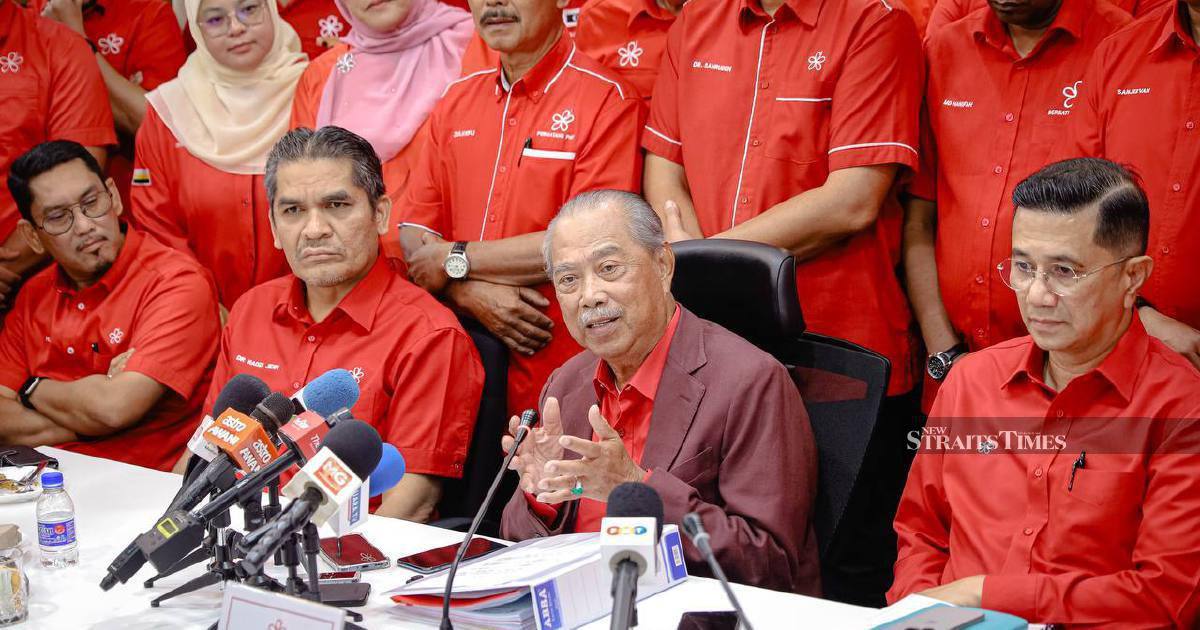
Bersatu is prepared to challenge Pas directly in Johor's state election if the two parties find themselves competing for the same seats, according to the party's president Tan Sri Muhyiddin Yassin. The statement reflects underlying tensions within Malaysia's political coalition structure as parties position themselves ahead of electoral contests, while also highlighting the delicate balance required to maintain partnership stability during seat allocation negotiations.
The readiness expressed by Muhyiddin suggests Bersatu's confidence in its grassroots organisation and electoral machinery within Johor, one of Malaysia's largest and politically significant states. Rather than viewing a potential clash with Pas as catastrophic, the Bersatu leadership appears to regard it as a manageable scenario, though clearly not the preferred outcome. This nuanced positioning indicates that while Bersatu remains committed to coalition arrangements, it will not subordinate its electoral interests entirely to larger partners.
For Malaysian observers tracking inter-party dynamics, this development carries particular weight given the historical significance of Johor's political landscape. The state has traditionally been contested by major coalitions, and any fracturing of seat-sharing agreements could reshape the broader political calculations affecting federal-level partnerships. Muhyiddin's comments thus function as both a warning to negotiation partners and a signal to Bersatu grassroots activists that their interests remain protected.
Pas, as Malaysia's largest Islamist political organisation, holds considerable sway in Johor due to its established constituency networks and voter mobilisation capacity. The potential for seat clashes with Bersatu reflects how even formally aligned coalition members maintain competing organisational interests and political ambitions. Seat allocation remains one of the most contentious aspects of coalition politics, as it directly determines which party receives electoral opportunity in specific constituencies.
The broader context involves Malaysia's increasingly fragmented political landscape, where no single coalition enjoys overwhelming dominance. This fragmentation means that state-level elections have taken on heightened importance, as parties seek to consolidate local power bases that provide leverage in federal negotiations. Johor's electoral significance is amplified by its size and economic importance within the Malaysian federation, making control of state assembly seats valuable for political prestige and policy influence.
Bersatu's position within the current coalition structure requires careful management. The party emerged from internal tensions within Umno and has sought to establish itself as a significant political force in its own right, rather than serving as a satellite organisation. This assertion of independence, while potentially beneficial for party cohesion and activist motivation, complicates coalition mathematics and creates pressure points during seat negotiations. Muhyiddin's statement appears designed to communicate that Bersatu will not accept marginalisation even within coalition frameworks.
The Malaysian political environment has witnessed increasing volatility in seat-sharing arrangements across recent electoral cycles. Parties enter negotiations with competing claims to constituencies based on organisational strength, historical performance, and demographic considerations. When these claims overlap significantly, disagreements can threaten entire coalition arrangements or force uncomfortable compromises that dissatisfy multiple stakeholders.
For Johor specifically, the implications involve potential disruption to what has been a relatively stable coalition structure at the state level. If Bersatu and Pas cannot reach accommodation on seat allocation, observers must consider whether either party might seek alternative coalition arrangements or contest independently. Such scenarios carry consequences extending beyond Johor's state assembly, potentially affecting the composition of federal coalitions and their stability.
Muhyiddin's public readiness to compete with Pas likely reflects internal party calculations regarding electoral viability. Bersatu probably possesses sufficient organisational capacity in certain Johor constituencies to compete effectively, even against established opponents like Pas. This confidence underpins the president's willingness to raise the possibility of direct confrontation, suggesting party leadership views such competition as survivable rather than existentially threatening.
The statement also carries implications for voter behaviour in Johor. Constituents accustomed to coalition politics often respond unpredictably when former partners contend directly for their votes. Bersatu's public signalling of willingness to challenge Pas may influence voter perceptions and party preference calculations, particularly among constituencies where both parties maintain active supporters. The political messaging surrounding seat allocation disputes frequently impacts electoral outcomes as much as constituency-level campaign activities.
Seat negotiation processes in Malaysian coalition politics typically occur through multiple rounds of discussion involving party leadership, regional coordinators, and sometimes federal-level coalition facilitators. These negotiations balance party preferences against coalition stability requirements, forcing compromises that rarely satisfy all participants entirely. Muhyiddin's public comments suggest those processes have not yet reached satisfactory resolution, or that Bersatu seeks to strengthen its negotiating position by demonstrating resolve.
Looking forward, resolution of seat allocation disputes between Bersatu and Pas in Johor will indicate broader coalition health and the respective parties' commitment to maintaining formal alliance structures. Successful negotiation suggests mature coalition management, while failure suggests fracturing political relationships that could have implications extending to federal parliament and national policy-making. Malaysian political observers will watch these developments carefully as indicators of coalition durability and the evolving balance of power within Malaysia's current political configuration.