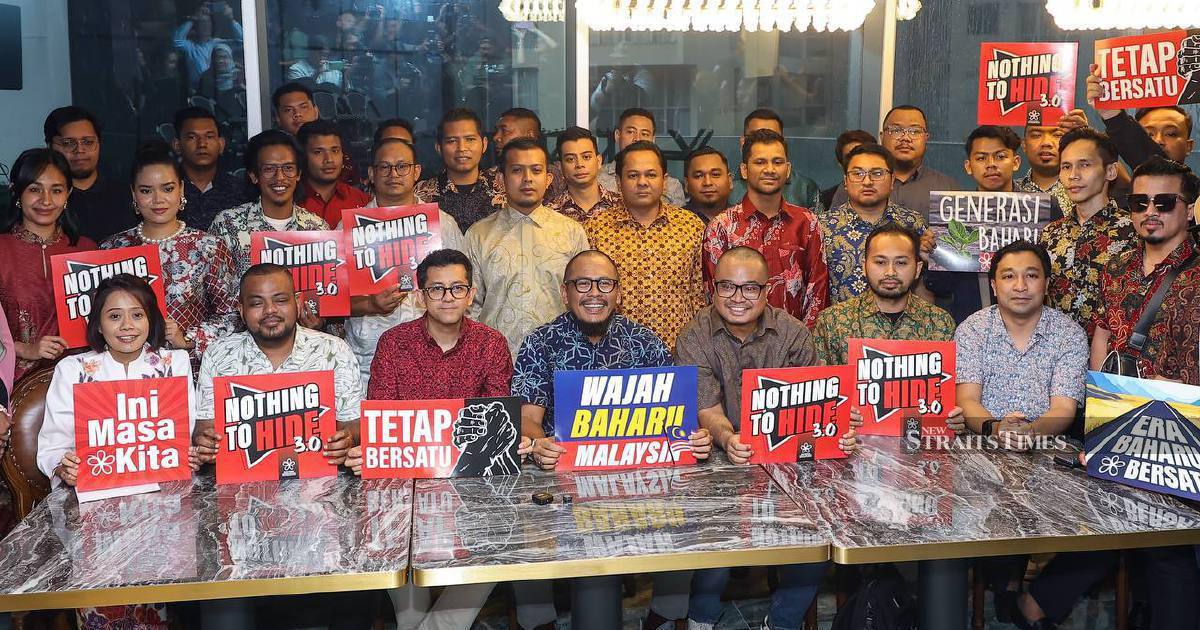
The relationship between Bersatu and PAS, two cornerstones of the Perikatan Nasional coalition, remains under strain, yet a prominent figure within Bersatu's ranks believes reconciliation is achievable. Mohd Ashraf Mustaqim Abdul Munir, who represents Kota Siputeh in the state assembly, has offered cautious optimism about rebuilding ties between the Islamic party and the Malay-Muslim outfit, framing their recent conflict through a domestic lens that suggests underlying bonds can withstand temporary ruptures.
The metaphor deployed by the Bersatu assemblyman carries particular weight given the current political climate in Malaysia. By comparing the two parties to a married couple engaged in periodic quarrels while maintaining shared domestic space, Ashraf implicitly acknowledges that deep structural connections bind Bersatu and PAS despite surface-level disagreements. This framing suggests that the coalition partners, though frustrated with one another, share sufficient ideological alignment and mutual electoral interests to prevent a complete breakdown. The analogy also hints at the resignation some within Bersatu may feel toward the cyclical nature of their relationship with PAS—spells of tension punctuated by efforts at reconciliation.
Peikatan Nasional has positioned itself as an alternative to the Barisan Nasional-led federal government, yet the coalition's stability depends heavily on maintaining functional relationships between its principal components. Bersatu, despite its relatively younger establishment compared to PAS, commands significant influence within PN, particularly following its transformation from a component of the old Mahathir administration. PAS, meanwhile, has consolidated its base as Malaysia's primary Islamist political force, controlling crucial state governments and wielding substantial parliamentary representation. When tensions flare between these two entities, the entire PN project faces questions about its viability as a cohesive political force.
The history of friction between Bersatu and PAS cannot be dismissed as merely procedural disagreement. Policy differences, resource allocation within coalition structures, and competition for the Malay-Muslim voter base have repeatedly created friction points. These tensions have occasionally threatened to splinter PN or force uncomfortable compromises that neither party found entirely satisfactory. Ashraf's optimism thus represents an attempt to signal that despite these genuine conflicts, leadership on both sides recognizes the mutual vulnerability inherent in separating. A fractured PN would benefit neither party, particularly given the strength of Barisan Nasional as an established governmental apparatus.
The assemblyman's public statement carries broader strategic implications for Malaysian politics. By speaking to the possibility of repair, Ashraf may be communicating readiness to engage in mediation efforts or signalling that Bersatu's leadership is prepared to make concessions on outstanding issues. Alternatively, his remarks might constitute a face-saving gesture designed to deflate tensions that have captured media attention and potentially demoralised grassroots supporters who invested in the PN coalition narrative. The timing and context of such statements often matter as much as their literal content in Malaysian political communication.
From a Southeast Asian perspective, Malaysia's coalition dynamics merit attention because they influence regional geopolitical positioning and governance stability. A coherent Perikatan Nasional with Bersatu and PAS functioning as reliable partners strengthens Malaysia's ability to maintain diplomatic initiatives and pursue consistent regional policies. Conversely, internal coalition fractures can distract from national governance priorities and create openings for other stakeholders to exploit political uncertainty. Neighbouring countries and trading partners maintain interest in Malaysia's political stability, making Ashraf's reconciliation message relevant beyond domestic audiences.
The question of whether such optimism proves justified depends on several unresolved factors. Personality-driven disputes between party leaders, resource scarcity in terms of electoral constituencies and ministerial positions, and fundamental disagreements over policy directions all remain potential flashpoints. The married couple metaphor, while capturing the persistence of relationship bonds, may underestimate the rational political calculations that motivate behaviour. Leaders make decisions based on electoral mathematics and institutional incentives, not merely sentiment about historical associations. If remaining together costs more than separating, even long-standing alliances fracture.
For ordinary Malaysians and Southeast Asian observers, these political configurations matter because they determine which individuals exercise executive power, shape legislative priorities, and direct bureaucratic resources. Coalition instability translates into policy uncertainty, delayed infrastructure projects, and unpredictable governance outcomes. Ashraf's statement, therefore, deserves interpretation not simply as hopeful rhetoric but as a contribution to the ongoing negotiation process that will determine whether PN survives as a functional coalition or gradually fragments into its constituent parts.
Looking forward, observers should monitor whether subsequent actions by both Bersatu and PAS leadership align with Ashraf's optimistic framing or whether underlying tensions prove too substantial for reconciliation efforts to overcome. Public statements often precede private negotiations, and apparent optimism may mask hard bargaining over the distribution of power and resources. The true test of coalition durability will emerge in concrete decisions about candidate selection, portfolio allocation, and policy coordination in coming months. Until such tangible signs of reconciliation materialise, Ashraf's hopeful comparison remains an aspiration rather than established reality.

