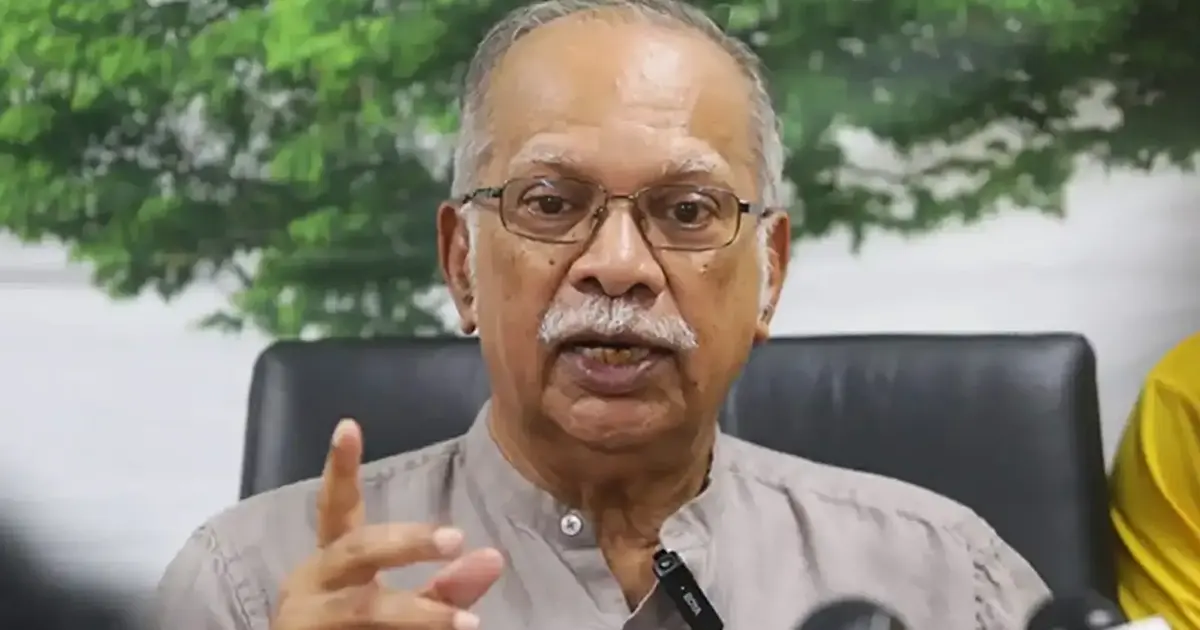
The Perikatan Nasional coalition's inability to directly confront the question of Bersatu's position within the alliance has left the opposition bloc mired in ongoing uncertainty, according to the chairman of Urimai, who expressed frustration over yesterday's emergency gathering. The failure to use the meeting as an opportunity to chart a clear path forward for the party widely perceived as the coalition's flashpoint suggests internal tensions remain unresolved and may continue to fester beneath the surface.
At the heart of the coalition's dysfunction lies the expanding chasm between Bersatu and PAS, the two most ideologically distinct components of Perikatan Nasional. While both parties technically remain members of the same political alliance, their competing visions for governance, resource allocation, and strategic direction have created friction that threatens to undermine the coalition's effectiveness. The widening rift reflects broader policy disagreements and competition for influence that analysts argue cannot be papered over with procedural meetings alone.
Urimai, representing Indian-Muslim interests within the opposition framework, occupies a precarious middle position. As a smaller coalition member, Urimai's chairman has direct insight into the behind-the-scenes dynamics that plague Perikatan Nasional's leadership structures. His public criticism carries particular weight because it suggests even peripheral members of the alliance recognise that superficial gestures—such as convening an emergency session—lack substance without addressing the fundamental question of whether Bersatu remains a committed partner.
The specific focus on Bersatu's future reflects that party's unique position as simultaneously central and controversial to the coalition. Bersatu commands significant parliamentary representation and wields considerable political influence, yet its track record of shifting alliances and internal instability has made other coalition members wary. Many observers view Bersatu's presence as essential to Perikatan Nasional's viability, yet also as a persistent source of uncertainty that prevents the alliance from functioning with coherence.
PAS, as the coalition's largest Islamist party and the dominant force in several Malaysian states, naturally occupies a different role. Its strength within the coalition contrasts sharply with Bersatu's volatility, yet the two parties have fundamentally incompatible strategic preferences. This incompatibility becomes more pronounced when discussing issues ranging from religious policy to economic priorities, creating a structural problem that no single emergency meeting can resolve.
The Urimai chairman's criticism highlights a broader governance failure: when critical issues affecting coalition stability are left unaddressed in formal settings, they migrate into informal channels and backroom negotiations. This pattern undermines institutional credibility and makes it progressively harder for the coalition to present a unified public face. For Malaysian voters and regional observers, this kind of internal dysfunction signals that Perikatan Nasional may struggle to offer coherent alternative governance if called upon to form government.
From a Southeast Asian perspective, the instability within Malaysia's opposition bloc has ramifications beyond domestic politics. A fragmented Perikatan Nasional provides less predictability for regional policymaking and potentially complicates cross-border initiatives that depend on stable Malaysian political actors. Countries in the region, particularly those with significant Malaysian business investments or defence partnerships, have interest in seeing Malaysia's political landscape stabilise around functional coalitions.
The emergency meeting's apparent avoidance of the Bersatu question also reflects a common pattern in Malaysian coalition politics: difficult decisions about membership, leadership, and strategic direction get deferred in hopes that consensus emerges organically. Instead, this approach typically permits grievances to accumulate, making eventual resolution more acrimonious and harder to achieve. The longer Perikatan Nasional postpones confronting whether Bersatu's membership serves the coalition's interests, the more entrenched the opposing positions become.
For ordinary Malaysians observing opposition politics, such institutional drift feeds a narrative that Perikatan Nasional lacks the discipline and decision-making clarity needed to present itself as a credible governing alternative. This perception directly impacts electoral prospects, as voters evaluating opposition coalitions inevitably weigh not just policy proposals but also demonstrated capacity for internal management and coherent strategy. A coalition visibly struggling with its own mechanics invites skepticism about whether it could manage national affairs.
The Urimai chairman's intervention suggests that even parties benefiting from the coalition's continued existence increasingly recognise that avoidance tactics have reached their limits. His public statement amounts to calling out what many observers already understand privately: that Perikatan Nasional's emergency machinery produces meetings rather than resolutions. Whether this criticism catalyses genuine confrontation of the underlying structural problems, however, remains uncertain given the coalition's demonstrated reluctance to engage in decisive action.
Moving forward, the coalition faces a choice between addressing the Bersatu question directly—potentially risking open conflict—or continuing the present trajectory of managed decline and erosion of internal cohesion. The Urimai chairman's remarks suggest that even smaller coalition members have reached the point where continued ambiguity serves nobody's interests. How Perikatan Nasional's leadership responds to this challenge will determine whether the coalition can consolidate around a functional arrangement or continues fragmenting through indefinite postponement.

