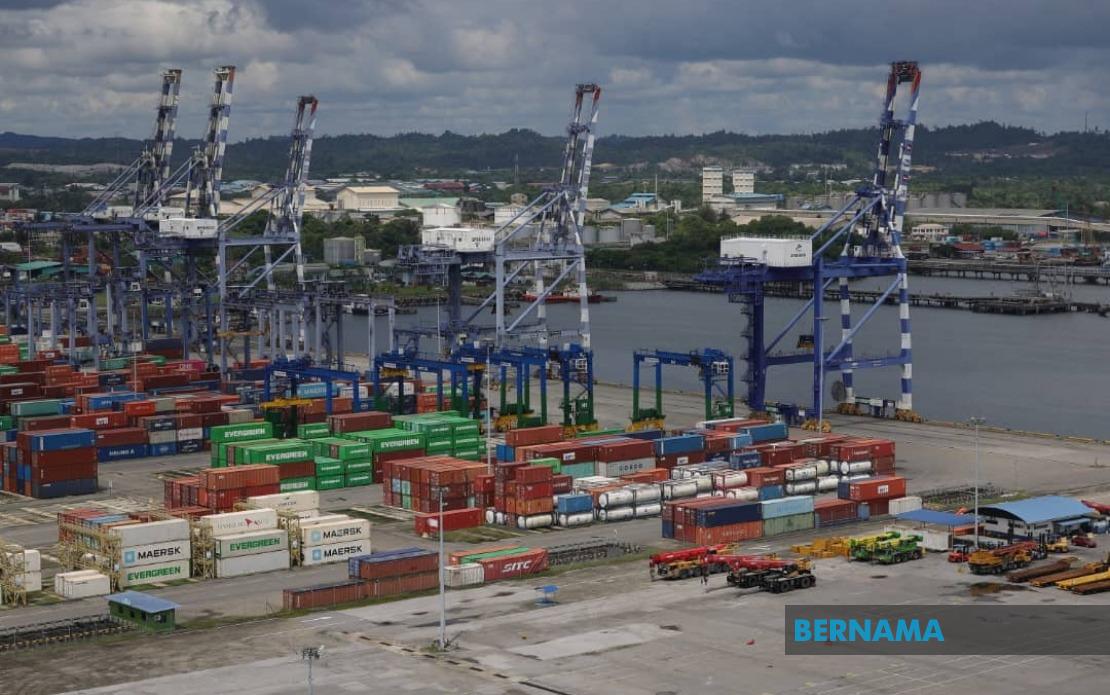
The formal handover of regulatory authority over Bintulu Port to the Sarawak state government has been hailed as one of the most significant achievements in implementing the Malaysia Agreement 1963, with federal officials emphasising the move's symbolic and practical importance for federalism. Datuk Mustapha Sakmud, Minister in the Prime Minister's Department overseeing Sabah and Sarawak affairs, characterised the transition during a ceremony attended by Prime Minister Datuk Seri Anwar Ibrahim and Sarawak Premier Tan Sri Abang Johari Tun Openg as evidence that MA63 can be executed constructively, creating mutual benefits for both the state and federal authorities.
The shift transforms Bintulu Port from a federally controlled facility to a state-managed port, representing a concrete recognition of Sarawak's standing as one of Malaysia's original partners in the 1963 federation. This transfer goes beyond administrative reclassification; it signals a recalibration of the relationship between Putrajaya and Kuching, acknowledging historical grievances and constitutional commitments that have long been debated in discussions about Sarawak's autonomy and development rights. For Malaysian readers familiar with ongoing federalism debates, the handover demonstrates how agreements from Malaysia's founding era continue to shape contemporary governance structures, even if implementation has historically proceeded at a measured pace.
Bintulu Port's significance extends far beyond its historical role as the nation's primary liquefied natural gas export gateway. The facility is undergoing transformation into a diversified economic zone encompassing industrial operations, logistics services, and emerging green energy infrastructure. This evolution reflects global trends toward decarbonisation and the port's potential to capitalise on shifting investor priorities. As multinational corporations increasingly scrutinise the carbon footprint of their supply chains and manufacturing operations, ports offering access to clean energy sources gain competitive advantages in attracting high-value industries.
Sarawak's natural endowments position it uniquely for this transition. The state possesses substantial hydroelectric power generation capacity, which provides a foundation for developing energy-intensive industries while maintaining lower carbon emissions than conventional alternatives. Coupled with Bintulu Port's strategic location on the South China Sea and its existing infrastructure, these advantages create an attractive proposition for investors pursuing low-carbon operations and sustainable manufacturing. The combination potentially transforms the state from primarily an energy exporter into a value-added manufacturing and processing hub, diversifying its economic base beyond traditional resource extraction.
The port's expanding role as a regional centre for green industries and clean energy production carries implications across Southeast Asia. As nations throughout the region grapple with balancing economic growth against environmental commitments, successful models demonstrating profitable low-carbon development attract regional attention. Sarawak's emergence as such a centre could establish benchmarks for other jurisdictions seeking similar transformations, while positioning Malaysia as a leader in sustainable industrial development within ASEAN.
Mustapha's framing of the handover as strengthening rather than weakening federal authority addresses persistent anxieties about decentralisation in Malaysian politics. By characterising MA63 implementation as enhancing national cohesion through recognition of founding partners' legitimate roles and capabilities, the minister reframes devolution discussions away from zero-sum dynamics. This rhetorical approach acknowledges that Sabah and Sarawak's development and autonomy serve Malaysian national interests rather than undermining them. For observers of Malaysian federalism, this represents an evolving understanding of how constitutional arrangements can accommodate regional aspirations while maintaining national unity.
The timing of this handover reflects broader political dynamics within Malaysia. The current federal administration has demonstrated greater willingness to address longstanding MA63 implementation issues compared to previous governments. This shift appears driven partly by political calculations regarding Sabah and Sarawak's electoral significance and partly by genuine constitutional recommitment. Successive rounds of implementation have addressed grievances spanning decades, suggesting incremental but substantive movement toward fulfilling the 1963 agreement's provisions.
For Sarawak's economic development trajectory, port authority control offers tangible advantages. State-level management enables more responsive policymaking tailored to local economic conditions and opportunities. Direct authority over Bintulu Port operations facilitates coordination between port management, state industrial policy, energy infrastructure development, and foreign investment promotion. These synergies can accelerate the diversification and modernisation that the federal framework previously constrained.
The port's trajectory also bears significance for Malaysia's broader regional positioning. As Southeast Asia experiences intensifying competition for investment in clean technology and sustainable manufacturing, Malaysian ports' competitiveness determines whether the nation captures corresponding economic benefits. Bintulu's transformation into a green industrial hub contributes to Malaysia's capacity to compete effectively within ASEAN and globally for the industries driving future growth.
Yet the handover also highlights ongoing tensions in Malaysian federalism. While celebrated as an MA63 achievement, the transfer occurred decades after the agreement's ratification, suggesting implementation remains selective rather than comprehensive. Other constitutional provisions regarding state autonomy in specific sectors remain contested or unimplemented, indicating that despite this progress, the relationship between federal and state authority continues evolving through negotiation and political calculation rather than systematic constitutional application.
Looking forward, Bintulu Port's success in attracting green industries and positioning Sarawak as a regional sustainability leader will shape assessments of whether devolved economic management benefits Malaysian development broadly. If the state port succeeds in delivering enhanced economic outcomes and attracting investment that federal management might not have achieved, it strengthens arguments for extending MA63 implementation to other domains. Conversely, challenges in management or underperformance would provide ammunition for recentralisation advocates, making the port's trajectory consequential for Malaysian federalism's long-term development.

