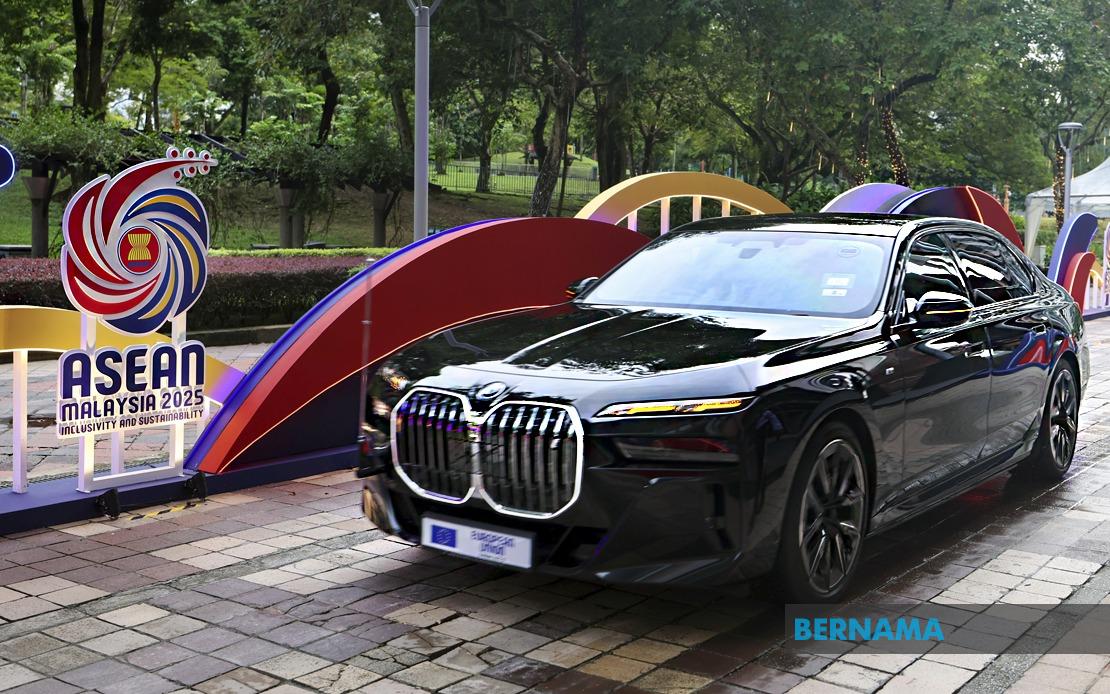
The Prime Minister's Department (JPM) has moved to quell online speculation about a luxury BMW vehicle in the Prime Minister's motorcade, confirming on Saturday that the car is an established government asset rather than a newly acquired purchase. The clarification comes after social media chatter queried the status and ownership of the vehicle, prompting JPM and the Ceremonial and International Conference Secretariat Division (BIUPA) to issue a public statement addressing the matter directly.
According to the joint statement, the BMW is held within BIUPA's inventory and designated specifically for official state logistics operations. The vehicle's presence in the Prime Minister's security detail reflects standard diplomatic protocol rather than any deviation from established government procedures. The arrangement underscores how state assets are managed across different operational requirements, with vehicles allocated based on functional need rather than personal preference.
The government emphasised that the temporary deployment stems from security considerations that extend beyond routine transportation. International protocols governing heads of state movements impose rigorous standards that Malaysian authorities must observe when hosting or facilitating the movements of presidential and prime ministerial visitors to the country. These protocols are reciprocally applied to Malaysia's own leadership when travelling abroad, ensuring consistency in how official security is managed across different nations.
The BMW in question has been specially engineered to meet demanding security specifications that ordinary vehicles cannot provide. The car's defensive features include ballistic protection rated to resist high-velocity ammunition and reinforced structural components designed to absorb explosive force. Beyond these traditional threat considerations, the vehicle incorporates defences against contemporary security risks including drone-based attacks, reflecting how security challenges have evolved in recent years. Such specifications require extensive customisation and testing, making these vehicles costly to acquire and maintain.
The temporary nature of the arrangement deserves particular emphasis, as JPM stressed that this usage pattern is not permanent. The decision to deploy the BMW followed security assessments conducted by the Royal Malaysian Police (PDRM), whose professional judgment determined that the vehicle's protective capabilities were warranted for the Prime Minister's movements during this specific period. Security decisions of this magnitude typically involve coordination between multiple agencies and reflect an abundance of caution rather than routine practice.
The reason for the temporary switch relates to scheduled maintenance of the Prime Minister's primary official vehicle. This car, gifted by the Yang di-Pertuan Agong as part of ceremonial protocol, requires regular servicing and inspection to maintain operational integrity. Such maintenance cycles are standard practice for high-use government vehicles, particularly those in constant public view and subjected to rigorous security protocols. Rather than operating the official car while it undergoes necessary work, authorities opted to temporarily utilise another asset from the government fleet.
The matter illustrates how government assets are pooled and deployed according to operational requirements across different state functions. Malaysia maintains various specialised vehicles for diplomatic, security, and ceremonial purposes, with their allocation determined by specific circumstances rather than permanent assignment. This flexible approach allows efficient resource management while ensuring that state functions maintain appropriate standards and protections. The availability of such vehicles within government inventory reflects the infrastructure requirements of a nation hosting international diplomatic activities and maintaining secure transport for senior officials.
The social media discourse that prompted the clarification highlights the public's reasonable interest in how government resources are utilised and allocated. Transparency about such matters serves the broader principle of public accountability, even as security considerations necessarily restrict certain operational details. By confirming the vehicle's status as an existing asset and explaining the contextual reasons for its deployment, JPM has addressed legitimate questions while maintaining operational security standards. The statement reflects a balance between openness and the legitimate confidentiality requirements that accompany security matters.
For Malaysian readers, the clarification provides reassurance that government protocols governing official vehicles and security arrangements follow established procedures and international standards. The involvement of PDRM in security assessments and the framing of the arrangement as temporary underscore that these decisions emerge from professional security judgment rather than arbitrary choices. Understanding these procedural safeguards helps contextualise how government operates at the intersection of public interest, international obligation, and security necessity.
The incident also demonstrates how quickly modern communication channels can amplify questions about government operations, making timely and transparent responses increasingly important for maintaining public confidence. By promptly addressing the speculation rather than allowing misconceptions to circulate unchecked, authorities have reinforced that government functions operate within accountable frameworks. As Malaysia continues to develop as a modern state with growing international responsibilities, similar questions about resource allocation and official protocols are likely to emerge periodically, requiring consistent commitment to clear public communication alongside security imperatives.

