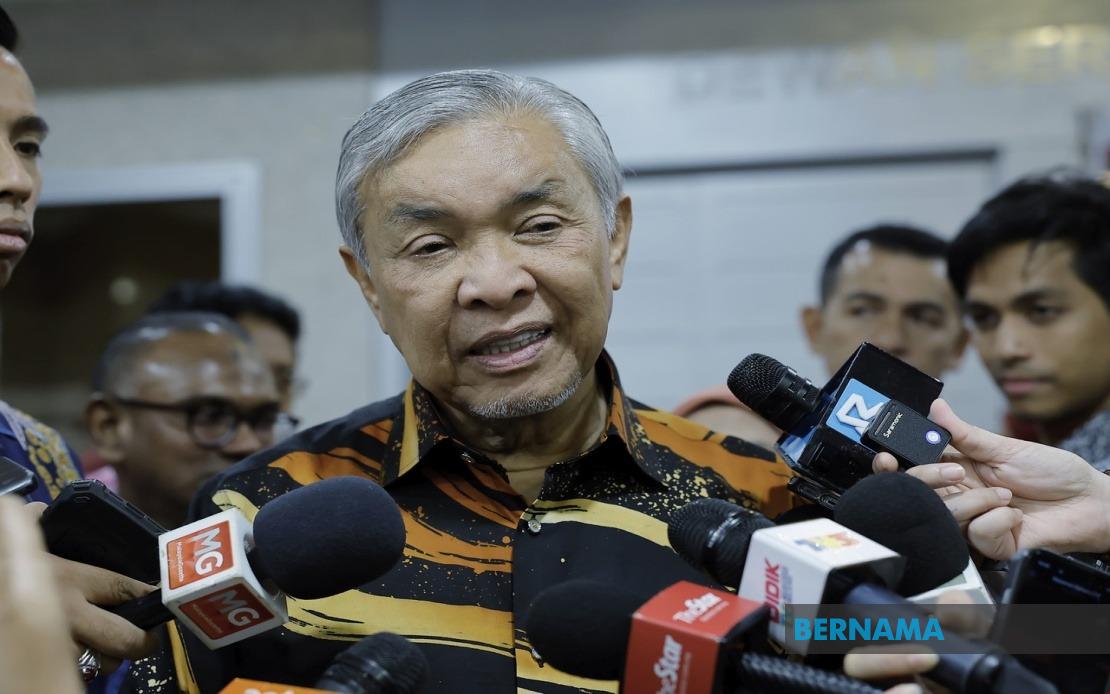
Deputy Prime Minister Datuk Seri Dr Ahmad Zahid Hamidi has issued a firm commitment that Barisan Nasional and UMNO will brook no tolerance for breaches of trust or administrative failures at Lembaga Tabung Haji, signalling the coalition's intent to demonstrate accountability in the wake of a damaging inquiry into the Islamic pilgrimage fund. Speaking after a gathering of the Rural and Regional Development Ministry in Putrajaya, Ahmad Zahid underscored that individuals implicated in wrongdoing or poor stewardship within government agencies and statutory bodies must face the full weight of consequence, stressing that the political leadership refuses to make concessions on such matters.
The comments come as the nation approaches a crucial parliamentary session scheduled for August 11, when lawmakers will deliberate on the findings of the Royal Commission of Inquiry into Tabung Haji's operations. Released on July 29, the RCI report has painted a troubling picture of the fund's management over a seven-year period, revealing evidence of questionable financial dealings and deliberate withholding of critical information from stakeholders and the public. The inquiry examined the institution's stewardship between 2014 and 2020, a period that coincided with significant portfolio losses and raises questions about the governance structures that permitted such deterioration.
Among the RCI's key recommendations is a call for forensic auditing of preceding investment decisions that precipitated a substantial erosion in Tabung Haji's asset base. This proposal underscores the seriousness with which investigators treated their mandate, suggesting that the losses did not result from benign market conditions alone but potentially from flawed decision-making or worse. For Malaysian Muslims who depend on Tabung Haji as their primary savings vehicle for the hajj pilgrimage, a central pillar of Islamic faith, the revelation of systemic management weaknesses strikes at both their financial security and their trust in institutions designed to serve their spiritual obligations.
The RCI's discovery of suspicious transactions extends beyond mere accounting irregularities; it speaks to a pattern of opacity that may have prevented proper oversight by boards, regulators, and the investing public. The concealment of information, as documented in the inquiry, raises fundamental questions about corporate governance standards at an institution entrusted with billions of ringgit in Muslim savings. Such lapses are particularly damaging at a statutory body where transparency and fiduciary responsibility are not merely operational niceties but moral imperatives rooted in Islamic principles of stewardship.
Ahmad Zahid's public stance reflects the political sensitivity surrounding the issue, particularly given that revelations of mismanagement at major government-linked entities can erode public confidence not only in the institutions themselves but in the coalition's broader claim to administrative competence. By explicitly rejecting any compromise on accountability, the Deputy Prime Minister appears to be positioning the government as responsive to public concern while simultaneously bracing for potential personnel changes or legal proceedings that may follow the parliamentary debate. This posture becomes increasingly important as Malaysia navigates a complex political landscape where coalition cohesion depends partly on demonstrating that no individual or faction within government stands above scrutiny.
The parliamentary session on August 11 will likely prove decisive in determining the trajectory of any institutional reforms or disciplinary actions flowing from the RCI investigation. Lawmakers will have an opportunity to press for clarity on which officials bore responsibility for the decisions that harmed the fund, whether civil or criminal proceedings will be initiated, and what structural changes will be implemented to prevent recurrence. The debate also provides a platform for opposition members to hold the government accountable for its stewardship of the institution during the period in question, potentially sharpening political divisions around questions of governance and public trust.
For Tabung Haji's estimated two million account holders, many of whom are ordinary Malaysians relying on the fund for their hajj savings, the RCI findings and the subsequent government response carry profound implications. Beyond the immediate concern about asset recovery or compensation, there looms the larger question of whether the institution possesses the management depth and oversight mechanisms to rebuild credibility and ensure future financial security. The pilgrimage represents not merely a financial commitment but a spiritual milestone, and the erosion of trust in the vehicle designated to facilitate it carries emotional and religious dimensions that transcend conventional corporate accountability metrics.
The broader Southeast Asian context amplifies the significance of this episode. As Islamic finance grows increasingly important across the region, including in Malaysia's role as a financial hub, the handling of a prominent case of institutional mismanagement sends signals about the regulatory environment and the viability of faith-based financial instruments. How decisively and transparently Malaysian authorities address the Tabung Haji scandal may influence investor confidence in other Islamic financial products and in the region's commitment to robust governance standards.
Ahmad Zahid's remarks also carry implications for internal coalition dynamics. UMNO, as the largest component of Barisan Nasional, has historically drawn substantial support from rural and provincial Muslims for whom Tabung Haji represents an important financial institution. Demonstrating zero tolerance for mismanagement becomes a way to reinforce the party's social contract with this constituency at a time when political competition for Malay-Muslim voters remains intense. The messaging essentially frames accountability as a non-negotiable commitment rather than a bureaucratic exercise, a framing that may resonate with voters concerned about institutional integrity and proper stewardship of public resources.

