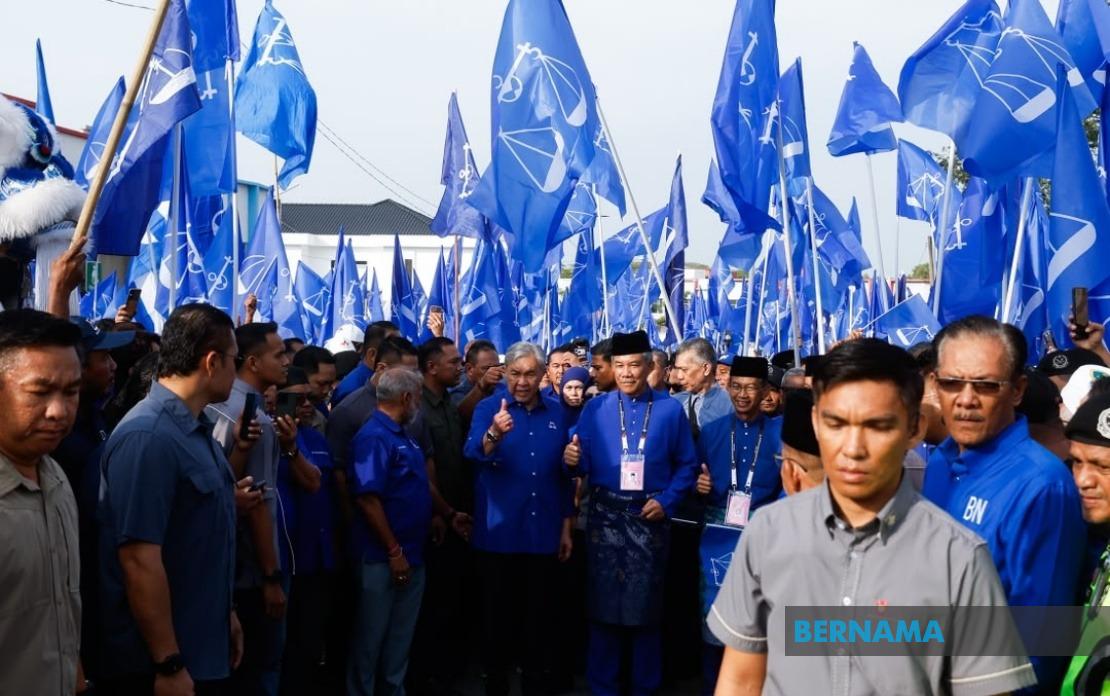
Negeri Sembilan's electoral landscape shifted into high gear on July 18 as Barisan Nasional marshalled its senior figures to support candidates filing nomination documents across the state. The show of solidarity at the eight nomination centres underscored the coalition's determination to retain control of the assembly, even as opposition parties mounted their own campaigns in Malaysia's least-populous state.
The opening hours of nomination day saw Barisan Nasional chairman Datuk Seri Dr Ahmad Zahid Hamidi arrive at the Dewan Seri Rembau nomination centre at 8.40 am, flanking his deputy Datuk Seri Mohamad Hasan as the latter submitted papers to defend the Rantau seat. Mohamad Hasan has represented this constituency since 2004, making his nomination a symbolic assertion of the coalition's grip on established political strongholds. Ahmad Zahid's personal attendance highlighted the national significance Kuala Lumpur places on the state contest, even though Negeri Sembilan commands just 36 state assembly seats and minimal federal parliament representation.
Across the state, a similar pattern unfolded as coalition heavyweights deployed themselves strategically to bolster candidates' profiles. In Port Dickson, BN secretary-general Datuk Seri Dr Zambry Abd Kadir championed Datuk Mohd Faizal Ramli's candidacy in the Linggi seat, while UMNO vice-president Datuk Seri Johari Ghani lent his endorsement to Suhaimizan Bizar, who is pursuing the Gemencheh state seat within the Tampin parliamentary boundary. These assignments reflected internal coalition calculations about which constituencies demanded reinforcement from established figures.
The Jempol parliamentary zone drew particular attention from party machinery, with UMNO secretary-general Datuk Dr Asyraf Wajdi Dusuki shepherding three candidates through the nomination process. Datuk Mustapha Nagoor, Datuk Mohd Zaidy Abdul Kadir, and Chong Fui Ming sought to retain or capture the Palong, Jeram Padang, and Bahau seats respectively, each accompanied by the machinery's visible backing. This concentrated deployment suggested internal assessments that Jempol requires aggressive defence or offensive action.
PAS, Barisan Nasional's Islamist junior partner, maintained its own presence as Tan Sri Abdul Hadi Awang accompanied Mohd Fairuz Mohd Isa to submit nomination papers for the Serting state seat. The Islamist party's participation continues a three-decade alliance with UMNO within the broader coalition framework, though PAS contests fewer seats in Negeri Sembilan than UMNO. Meanwhile, the niche Parti Orang Asli Malaysia fielded Dayana Dal as a candidate for the Jeram Padang seat, with party president Rashid Ka in attendance—representing the coalition's attempt to mobilise even peripheral constituencies and demographic communities.
Nomination day operations proceeded with technical efficiency, with all eight centres opening simultaneously at 9 am and closing after one hour, concluding by 10 am. This compressed timeframe reflected Election Commission standardisation across state polls, though it forced candidates and supporters to coordinate carefully to beat deadlines. The tight schedule meant that last-minute withdrawals or surprises—common in Malaysian electoral drama—were unlikely, as nomination papers must be submitted during the designated window.
The official calendar leading to August 1 polling day offers both campaigns roughly two weeks for ground mobilisation. Early voting, scheduled for July 28, will cater to essential service personnel and overseas voters—a category that likely favours the incumbent coalition given its administrative reach. The compressed campaign period means television advertising, ceramah rallies, and digital outreach must work at accelerated pace to shape voter perceptions in a state where political engagement often lags behind peninsular hotspots like Selangor and Perak.
Negeri Sembilan's political trajectory since the assembly's June 5 dissolution has been shaped by Barisan Nasional's desire to consolidate power after a challenging federal election in 2022. The state remains a traditional coalition stronghold, though rural constituencies increasingly show volatility, and younger voters in Port Dickson and Seremban demonstrate shifting preferences toward opposition narratives. The coalition's leadership mobilisation on nomination day represented a calculated signal that Kuala Lumpur intends to fight for retention rather than assume incumbent advantage.
The Negeri Sembilan contest carries implications beyond the state itself. As a smaller assembly election, it serves as a testing ground for campaign strategies and messaging that may scale to larger contests. The results on August 1 will inform calculations about voter mood heading toward potential snap elections in other states or the federal parliament. Barisan Nasional's performance here—whether it holds all 23 seats it currently occupies or loses ground to PAS or opposition alliances—will broadcast signals about the coalition's recovery trajectory or ongoing vulnerability post-2022.
For Malaysian political observers and regional analysts tracking Southeast Asian electoral dynamics, the Negeri Sembilan poll offers a window into how Malaysia's dominant coalition adapts to post-pandemic electorates and new opposition formations. The deployment of national figures to a small state's nomination centres underscores the interconnected nature of Malaysian federalism, where even minor contests receive central party attention because state assemblies function as nurseries for federal talent and reflect broader coalitional health.

