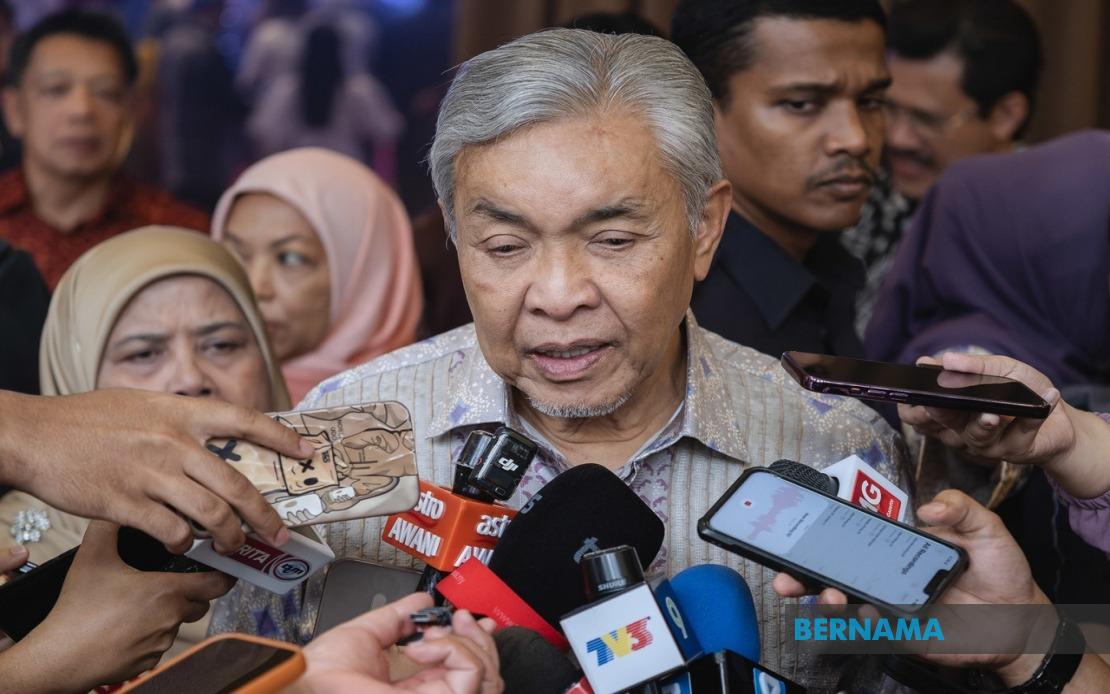
Deputy Prime Minister Datuk Seri Dr Ahmad Zahid Hamidi has assured that Barisan Nasional will maintain strict distance from issues pertaining to the Negeri Sembilan Palace and the state's Council of Justice and Laws (DKU) in the run-up to the 16th state election scheduled for August 1. The pledge came during a meeting with the coalition's state leadership, where Ahmad Zahid, who also serves as UMNO president, reiterated that such sensitive matters fall entirely outside the party's remit as it prepares its campaign machinery for the contest.
The assurance appears strategically significant given the history of electoral politics in Negeri Sembilan, where the royal institution has occasionally intersected with political developments. By explicitly declaring non-interference in DKU affairs—an advisory body dealing with Islamic law and royal protocol—the BN leadership is signalling respect for institutional boundaries at a critical juncture when public sensitivity to such matters runs high. Ahmad Zahid's emphasis on remaining "outside of that sphere" underscores the coalition's awareness that overstepping into palace-related or judicial council domains could provoke backlash or accusations of political manipulation.
This approach marks a distinct shift from BN's positioning in the 15th Negeri Sembilan state election, when the coalition collaborated with component parties from Pakatan Harapan in a joint electoral arrangement. Ahmad Zahid made clear that such cooperation will not be replicated this time, with the coalition instead concentrating its energies on strengthening cohesion within its own ranks. For Malaysian readers, this signals an intensifying polarisation of state politics, where BN now contest independently rather than through cross-coalition alliances that characterised the immediate post-2018 era.
The upcoming election will determine control of 36 state assembly seats, making it a significant barometer of political sentiment in the central region. Negeri Sembilan has traditionally been an UMNO stronghold, though electoral patterns have shifted in recent years as voter preferences have become more volatile. BN's explicit focus on internal party unity reflects awareness that fragmentation or dissonance among its rank-and-file could prove costly against a more cohesive opposition.
Ahmad Zahid's comments, delivered after attending a Ministry of Rural and Regional Development service excellence ceremony, were accompanied by Deputy Minister Datuk Rubiah Wang. The timing of such reassurances before a state election is not coincidental; Malaysian politics has repeatedly seen instances where royal institutions have become inadvertently entangled in partisan disputes, occasionally leading to public controversy or constitutional questions. By proactively distancing itself from DKU and palace matters, BN appears keen to foreclose any narrative suggesting political interference in sensitive domains.
For voters in Negeri Sembilan, understanding the distinction between BN's electoral campaign and these protected institutional spheres remains important. The DKU's jurisdiction over Islamic law and royal privileges cannot be subordinated to electoral considerations, and Ahmad Zahid's statement reinforces this principle. This is particularly relevant in a state with a substantial Muslim population where questions of Islamic governance and royal prerogatives carry cultural and religious weight.
The broader context of Malaysian politics also illuminates Ahmad Zahid's statement. The past six years have witnessed heightened scrutiny of the relationship between political parties, state institutions, and the monarchy. By explicitly ruling out interference, the BN leadership is attempting to position the coalition as a defender of institutional integrity rather than as a force seeking to exploit palace connections for political advantage. This framing could resonate with voters who value stability and institutional respect, though sceptics might view such assurances as standard political messaging.
The August 1 election itself represents the second major state-level contest since the last general election in 2022. Electoral outcomes in Negeri Sembilan will have ripple effects across Malaysia's political landscape, particularly for UMNO's standing within BN and for the broader competition between the coalition and opposition alliances. A strong BN performance would reinforce the coalition's comeback narrative, while a disappointing result could intensify internal questioning about the partnership's viability.
From a governance perspective, Ahmad Zahid's emphasis on party unity carries implications for post-election administration. Should BN retain or gain control of the state, cohesion among party members and component parties will prove essential for implementing policies and managing state development. Conversely, if the coalition loses ground, internal discipline becomes crucial for mounting an effective opposition. Either way, the message being sent is that BN intends to contest this election on the basis of its political platform and organisational strength rather than through manipulation of royal or institutional levers.
The distinction Ahmad Zahid draws between BN's electoral activities and the protected domain of the palace and DKU also reflects evolving norms in Malaysian politics. While political parties in the past occasionally blurred these lines, contemporary Malaysian governance increasingly emphasises institutional separation. This reflects both constitutional requirements and changing public expectations about the proper bounds of partisan engagement with state institutions. BN's explicit statement aligns with these emerging standards, though observers will watch carefully to assess whether such pledges translate into practice during the campaign and beyond.

