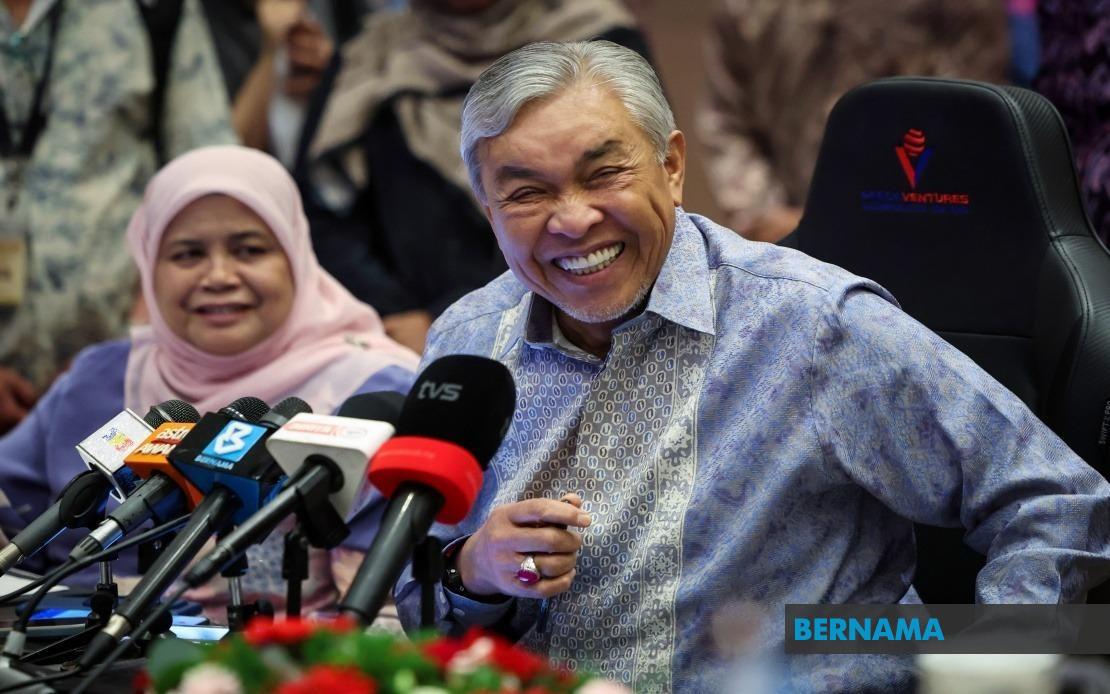
Barisan Nasional has moved to quash persistent speculation about potential political realignments by publicly reaffirming its commitment to remain within the Unity Government coalition until Parliament's current term concludes. Deputy Prime Minister Datuk Seri Dr Ahmad Zahid Hamidi, who chairs the BN coalition, made the declaration while addressing reporters in George Town following a coordination meeting on rural development, effectively drawing a line under months of rumours regarding the stability of Malaysia's governing arrangement.
The BN chairman's statement carries particular weight given the coalition's historical role as a dominant political force in Malaysia. By explicitly rejecting references to "Bangkok Move" and "Dubai Move"—coded phrases used in Malaysian political discourse to describe clandestine efforts to orchestrate government transitions outside parliament—Ahmad Zahid has signalled that BN intends to honour the commitment it made following the 2022 General Election. This positioning proves significant because BN's participation remains essential for Anwar Ibrahim's administration to maintain its parliamentary majority, making any defection consequential.
Ahmad Zahid anchored BN's commitment to a higher principle: the Royal decree that mandated formation of the Unity Government following the 2022 election results. By framing the coalition's loyalty in terms of respect for the Yang di-Pertuan Agong's directive, the BN leader sought to elevate the matter beyond ordinary political calculation and present it as a constitutional obligation that transcends factional interests. This rhetorical strategy appeals to the deep-rooted reverence for the monarchy that characterises Malaysian political culture, positioning BN's stance as not merely tactical but fundamentally aligned with constitutional governance.
The timing of Ahmad Zahid's reassurance reflects growing anxiety about Malaysia's political equilibrium. Since the Unity Government's inception, various signals—from internal BN grumbling to overtures from opposition parties—have periodically triggered concerns about its durability. By making an unequivocal declaration in a public forum, Ahmad Zahid attempted to provide reassurance to international investors, fellow coalition members, and the general public that political instability of the sort that plagued Malaysia between 2020 and 2022 has been arrested.
Yet the emphatic nature of Ahmad Zahid's denial itself underscores the persistence of these concerns within Malaysia's political sphere. The repeated need to dismiss speculation suggests that questions about BN's long-term loyalty continue circulating within political circles despite the coalition's formal commitment. For Malaysian investors and businesses that depend on policy continuity, such reassurances provide only conditional comfort, as political commitments in the country have occasionally proven malleable when circumstances shift.
During the same press conference, Ahmad Zahid addressed a separate controversy involving Barisan Nasional's grassroots operations in Negeri Sembilan. A polling district centre in Klawang had suspended operations following BN's decision not to field a candidate for the state seat in the ongoing state election, prompting local party members to express their discontent. Ahmad Zahid indicated that party leadership was working to resolve the matter, suggesting that internal dissatisfaction over candidate selection—a perennial source of friction within political coalitions—was being managed through dialogue rather than allowing festering grievances to undermine broader unity.
The Klawang controversy also illuminated tensions inherent within Malaysia's complex electoral ecosystem. The contested seat would feature three candidates representing three separate political forces: Pakatan Harapan, Perikatan Nasional, and Bersatu, with BN's absence leaving its supporters without an official representative. Such scenarios, increasingly common in Malaysian politics, force coalitions to make difficult strategic calculations about resource allocation and seat distributions that inevitably disappoint some party members.
Regarding speculation about potential cooperation between BN and Perikatan Nasional under a proposed "Perikatan Barisan Nasional" alliance, Ahmad Zahid maintained that no formal discussions had occurred between the two major coalitions. He characterised the proposal as rhetoric from campaign speeches rather than a serious political initiative, suggesting that any such arrangement would require careful deliberation by relevant party leaderships. This measured response avoided categorical rejection while signalling that BN had not secretly engaged in negotiations that might contravene its public commitments to the current government.
The Deputy Prime Minister's characterisation of the PBN proposal as premature and requiring careful consideration reflected political realism. Such alignments could fundamentally reshape Malaysia's political landscape by combining the country's two largest non-Pakatan political forces, yet Ahmad Zahid's comments suggested that immediate implementation remained unlikely given current circumstances. His response indicated awareness that even discussing such possibilities too openly could trigger concerns about the Unity Government's stability among investors and the international community.
Interestingly, Ahmad Zahid also highlighted the cordial nature of his personal relationship with Prime Minister Anwar Ibrahim, noting that they had campaigned on opposing sides in the Negeri Sembilan state election without this creating lasting friction. By emphasising this personal warmth despite electoral opposition, Ahmad Zahid sought to demonstrate that Malaysia's political system could accommodate vigorous competition between coalition members without threatening the broader government structure. This presentation of competitive cooperation may resonate with Malaysian voters seeking evidence that political maturity has evolved beyond the acrimony that characterised previous transitions of power.
The exchange of pantuns—traditional Malay poetry—between Anwar and Ahmad Zahid underscored this lighter tone while conveying serious political messages. Anwar's verse had emphasised unity and discipline within friendships and political partnerships, while Ahmad Zahid reciprocated with his own composition, suggesting that even Malaysia's most senior leaders could employ cultural idioms to communicate political commitments in ways that appealed to broader audiences. Such symbolic gestures, while seemingly ceremonial, carry weight in Malaysian political communication where cultural resonance often proves as important as explicit policy statements.
Looking forward, Ahmad Zahid's statements suggest that BN intends to remain a stabilising force within Malaysia's current political arrangement. However, the frequency and firmness required for such reassurances indicates that ongoing vigilance will be necessary to maintain coalition cohesion as Malaysia approaches the latter stages of the 15th Parliament's term. For Malaysian observers and international stakeholders, the real test will come not from rhetorical commitments but from how the coalition navigates the inevitable pressures and opportunities that arise during the remaining years of this parliamentary session.

