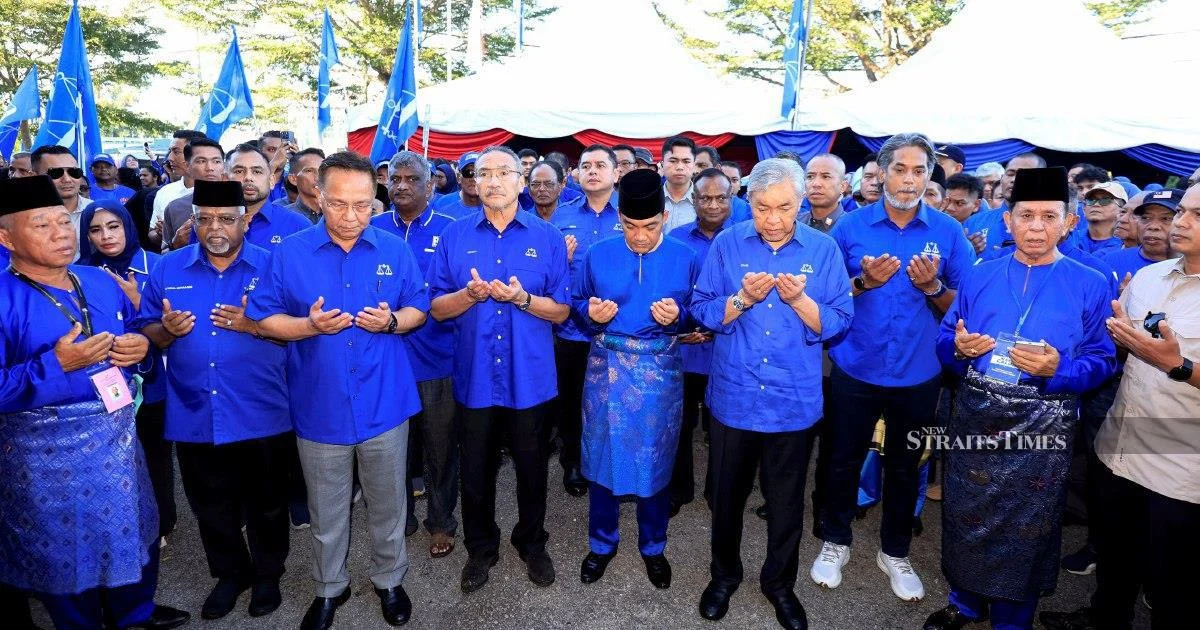
The arrival of senior Barisan Nasional figures at Simpang Renggam District Council underscored the coalition's resolve to project unity and strength as Johor heads toward a critical electoral contest. The public gathering served as a potent symbol of institutional backing for Chief Minister Datuk Onn Hafiz Ghazi, whose leadership has become central to BN's electoral calculus in Malaysia's southern powerhouse.
Johor's political significance extends well beyond its borders. As Malaysia's second-most-populous state and a traditional BN stronghold, its electoral trajectory carries implications across the broader coalition network. Any slippage in Johor would reverberate through BN's organizational confidence nationally and complicate calculations for federal coalition stability. The mobilization of party heavyweights at Simpang Renggam thus represented more than ceremonial support—it reflected strategic urgency within BN's leadership circles.
The symbolism of gathering at district level, rather than in urban centres or state capitals, carried deliberate messaging about grassroots engagement. Simpang Renggam, located in Kluang District, sits in a region where BN's traditional vote-banking networks remain substantial but face persistent erosion from Opposition mobilization. The choice of venue signalled the coalition's intention to contest territory once considered secure, acknowledging that electoral complacency in Johor—as elsewhere in Malaysia—no longer guarantees victory.
Onn Hafiz's position as Chief Minister places him at the intersection of state governance and federal coalition dynamics. His leadership record, particularly on economic development, infrastructure projects, and administrative efficiency, has become contested political ground. Opposition parties have launched sustained critiques of his administration's performance on key issues including education, healthcare accessibility, and urban-rural development disparities. The BN show of force represented a direct attempt to restore narrative momentum around his stewardship.
The coalition's internal cohesion, however, remains complex despite outward displays of unity. BN comprises multiple component parties—UMNO, MCA, MIC, and regional partners—whose electoral interests do not always align perfectly. In Johor, UMNO dominates, but tensions between UMNO and MCA over seat allocations and policy priorities have occasionally surfaced. The presence of multiple BN heavyweights suggested an attempt to manage these internal dynamics while presenting a consolidated front to voters.
Regional competition from neighbouring Selangor and Penang, both Opposition-governed states, has intensified scrutiny of BN's Johor performance. The ruling coalition in those states has accumulated substantial administrative experience and voter approval through specific policy achievements. Johor's electorate, increasingly exposed to comparative policy narratives through social media and cross-state migration, now evaluates BN's tenure against these alternatives more directly than in previous decades.
The Opposition's organizational strength in Johor has expanded considerably since 2018. Pakatan Harapan and related coalitions have invested in grassroots networks and targeted youth and urban professional voters with messaging emphasizing governance alternatives. The PKR, specifically, has positioned itself as a credible challenger in Johor, while DAP maintains influence in Chinese-majority urban constituencies. This competitive pressure necessitated BN's visible reassertion of its political machinery.
Economic factors shape electoral sentiment in Johor in measurable ways. The state's economy, anchored in petroleum refining, port operations, manufacturing, and increasingly technology sectors, faces transitional challenges. Youth unemployment, skills mismatches in emerging industries, and cost-of-living pressures affect voter dispositions across demographic groups. BN's economic messaging at events like Simpang Renggam aimed to counter perceptions of economic mismanagement or insufficient forward-thinking development strategies.
Federal-state governance relationships introduce additional complexity. Johor remains administered by BN even as the federal government comprises Pakatan Harapan-aligned coalitions in recent years. This divided governance creates tensions around resource allocation, project approvals, and credit-claiming on development initiatives. Onn Hafiz's position requires navigating these federal-state tensions while maintaining political support among BN's federal-level actors who gathered at Simpang Renggam.
The timing of such mobilizations reflects electoral calendars and cycle dynamics. Johor's state election timing remains within the Chief Minister's discretion, though legal term limits and political momentum typically compress available windows. The showing of party heavyweights suggested leadership consensus around readiness for electoral contest, signalling potential commencement of formal campaigns in coming months.
Malaysian political observers note that such public demonstrations serve both material and psychological functions. Materially, they energize local party machinery, coordinate resource distribution, and reaffirm organizational hierarchies. Psychologically, they convey certainty and forward momentum to supporters while attempting to intimidate Opposition organizers through show of institutional capacity. The Simpang Renggam gathering operated simultaneously on both registers.
Longer-term implications for Malaysian federalism depend partly on Johor's electoral outcome. If BN strengthens its position, it reinforces the coalition's national relevance and provides federal-level momentum regardless of other state-level results. Conversely, significant Opposition gains would reshape BN's strategic calculations and potentially accelerate institutional reforms or leadership transitions. The stakes transcend Johor's borders.

