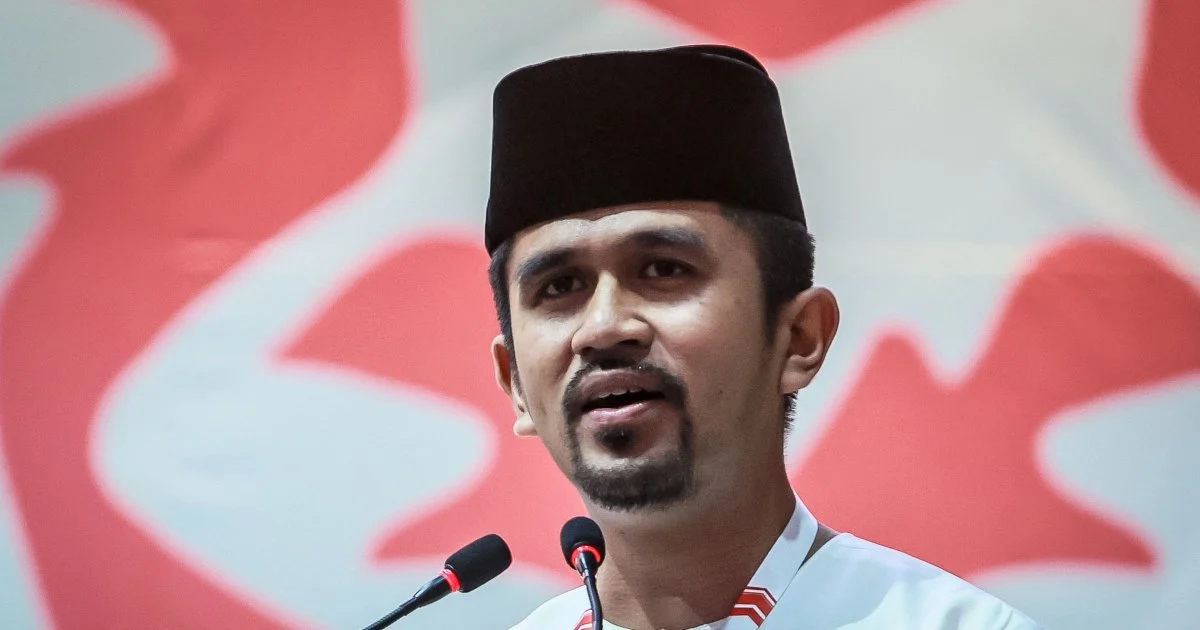
Hafiz Ariffin, the secretary-general of Umno Youth and a senior Barisan Nasional figure, has levelled criticism at Johor's Pakatan Harapan leadership for their notable absence from the state election roster scheduled for July 11. The observation raises questions about the readiness and confidence of the opposition coalition as it prepares to contest the southernmost Peninsular state, where BN has maintained considerable political dominance for decades.
The decision by Johor PH to sideline its prominent figures in favour of relatively lesser-known candidates represents a strategic departure from conventional electoral practice, where parties typically showcase their strongest and most recognised personalities to voters. Hafiz's challenge cuts to the heart of campaign credibility, suggesting that the opposition may lack conviction in either its leadership bench or its electoral prospects in a state where demographic and political dynamics have historically favoured the ruling coalition.
This development arrives amid broader realignments within Malaysia's political landscape, where opposition parties continue to search for viable pathways to electoral success at the state and federal levels. Johor, with its substantial population and economic significance, remains a proving ground for both coalition and opposition strategies. The choice to field less prominent candidates could indicate internal constraints within Johor PH—whether through fear of losing established figures to electoral defeat or disagreements over candidate selection that discouraged high-profile participation.
For Malaysian observers of electoral politics, the candidate line-up decisions reveal much about party calculations. Opposition parties in states where they hold limited legislative presence often struggle to attract capable individuals willing to stake their reputations on uncertain campaigns. Johor presents precisely this challenge: PH's representation in the state assembly remains thin compared to BN's entrenched position, making candidacies less attractive to ambitious politicians with established track records to protect.
The timing of Hafiz's comments, coming as the campaign enters its critical phase, reflects BN's strategy to undermine opposition credibility before voters make their final choices. By highlighting the absence of recognisable PH figures, the ruling coalition effectively argues that the opposition lacks sufficient strength or confidence to field its best people. This narrative, if it gains traction among voters, could suppress opposition turnout and reinforce perceptions of BN's inevitability in the state.
For Johor's electorate, the composition of candidate lists carries practical implications. While less famous individuals may bring fresher perspectives and community-level engagement, they typically command fewer resources and lack the political machinery that established names provide. Voters accustomed to dealing with seasoned representatives may view the relative inexperience of PH's roster as a disadvantage, particularly in a state where incumbent BN assemblymen have built personal machinery and constituent service networks over multiple election cycles.
The broader context matters significantly for understanding this situation. Johor has not experienced meaningful PH governance at the state level, unlike Selangor or Penang, where the opposition has demonstrated administrative capacity. This absence of demonstrable track record in Johor governance makes the opposition's task substantially harder, creating a vicious cycle: weak electoral positioning discourages quality candidates, while weak candidacies further weaken electoral prospects. PH's decision thus reflects not merely choice but necessity—the party may simply lack sufficient pools of experienced figures willing to contest unwinnable or marginal seats.
Regional political dynamics add another layer to this analysis. Johor's proximity to Singapore and its role as a regional economic hub mean that state-level political stability attracts business and investment attention. The business community's traditional alignment with BN, reinforced by predictability and continuity, further disadvantages any opposition effort that appears internally uncertain or led by untested candidates. Such perceptions can affect not only electoral outcomes but also the ability of opposition representatives, should they win, to command the relationships necessary for effective governance.
The question Hafiz raises also highlights the internal debates within PH itself. Whether junior party leaders championed an approach to develop new political talent, or whether the actual pool of candidates willing to contest proved surprisingly shallow, remains unclear. These selection processes often involve tough compromises between idealism about regeneration and pragmatism about winning winnable races. The visible absence of senior figures suggests that pragmatism may have lost this particular battle.
For voters in Johor, the commentary around candidate selection becomes itself a political factor. Opposition supporters may interpret the move as either encouragingly progressive—investing in new leaders—or troublingly defeatist. BN supporters gain ammunition to question PH's readiness, while uncommitted voters may view the opposition as simply outmatched in the state's political environment. These perceptions, shaped partly by tactical commentary like Hafiz's criticism, often prove as consequential as the candidates' actual capabilities.
As the July 11 election approaches, such exchanges between coalitions over candidate selection encapsulate deeper questions about political competition in Malaysia. Whether voters prioritise proven experience and established connections, or whether they value fresh approaches and new ideas, will help determine not only the election outcome but also the future direction of opposition politics in Johor and similar states where BN maintains structural advantages.

