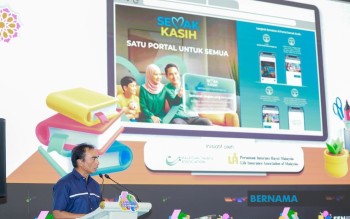
Bank Negara Malaysia has opened a new digital gateway intended to reunite Malaysian families with forgotten financial protection benefits. Unveiled in Kuala Terengganu on June 26, the Semak Kasih portal represents a coordinated effort between the central bank and the insurance and takaful industry to bridge a significant gap in benefit distribution, where tens of thousands of policies remain unclaimed despite being paid for by now-deceased policyholders.
Deputy Governor Adnan Zaylani Mohamad Zahid framed the initiative as part of a broader recognition that financial literacy and protection remain unevenly distributed across Malaysian households. The portal addresses a fundamental problem: many beneficiaries simply do not know that their relatives purchased insurance or takaful coverage, leaving them unable to access funds that could prove critical during periods of financial hardship. This information gap, Adnan Zaylani explained, undermines the entire purpose of insurance protection, which is meant to provide a safety net for families facing medical expenses, property damage, or other catastrophic events.
Industry leaders underscored the scale of the challenge. According to combined estimates from the Life Insurance Association of Malaysia and the Malaysian Takaful Association, approximately 50,000 insurance policies and takaful certificates carrying death benefits remain unclaimed by eligible beneficiaries. These dormant claims represent substantial sums that could meaningfully improve household financial resilience. The associations have previously attempted direct outreach through letters and agent contact, but these manual approaches have proven insufficient to reach all eligible parties.
The Semak Kasih portal streamlines what was previously a cumbersome process. Rather than requiring beneficiaries to contact individual insurance companies without knowing which providers hold policies on their relatives, the centralised portal allows them to verify coverage existence and initiate contact with the appropriate provider. This structural innovation removes a critical barrier to benefit realisation and potentially addresses hundreds of millions of ringgit in unclaimed funds. For Malaysian families, particularly those in lower-income brackets with limited financial literacy, the portal could represent a meaningful opportunity to access resources they did not know they possessed.
The portal's launch reflects broader anxieties within Malaysia's financial sector regarding household financial preparedness. Adnan Zaylani stressed that strengthening individual and family financial protection through insurance or takaful represents essential groundwork for navigating economic volatility and persistently rising living costs. This messaging carries particular resonance given Malaysia's inflation pressures and wage stagnation in certain sectors, which have strained household budgets and increased vulnerability to income shocks.
Beyond addressing unclaimed benefits, Bank Negara has intensified support for Malaysia's micro, small, and medium enterprise sector, which remains critical to employment generation and inclusive growth. The central bank has extended microfinancing facilities of up to RM100,000 without requiring guarantees or collateral, removing traditional barriers that have historically excluded smaller operators from formal credit markets. Additionally, Bank Negara allocated RM5 billion under the SME Stabilisation Relief Facility to support companies disrupted by regional conflicts in West Asia, providing working capital financing of up to RM750,000.
Educational initiatives complement these structural supports. The iTekad programme has engaged over 14,000 participants nationwide, including approximately 600 in Terengganu, generating measurable improvements in household income and living standards. Such programmes address the reality that financial access alone proves insufficient without corresponding capability. The Financial Education Forum initiative extends financial literacy resources to traditionally marginalised groups, including persons with disabilities, through an expanded digital platform designed for accessibility and usability across skill levels.
However, Adnan Zaylani's remarks also flagged emerging risks accompanying Malaysia's accelerating financial digitalisation. Research indicates that approximately 37 per cent of Malaysians engage in impulsive online purchasing, while 26 per cent carry debt burdens they characterise as unsustainable. These statistics suggest that expanded financial access, while necessary, creates new vulnerabilities to overspending and fraudulent activity. Adnan Zaylani urged the public to approach digital financial tools with disciplined decision-making, emphasising that technological advancement opens economic opportunities only if individuals possess the judgment to navigate expanded choices responsibly.
Addressing these risks requires sustained financial education beginning in formative years. Bank Negara has pursued this objective through initiatives including the MyDuitStory competition and the FEN Proaktif 2.0 Programme, developed in collaboration with Universiti Malaysia Terengganu to establish financial management foundations among students preparing for workforce entry. The central bank's reasoning reflects evidence that early financial habit formation creates durable impacts on lifetime decision-making patterns. Consistent saving from childhood, even in modest amounts, generates compound returns that substantially enhance long-term financial security.
Adnan Zaylani concluded by articulating a philosophy emphasising individual agency within structural constraints. While global economic conditions and technological disruption remain beyond household control, individual Malaysians retain control over daily financial decisions. This framing—consistent across central banking communications globally—positions financial literacy and disciplined spending not merely as personal preferences but as essential components of macroeconomic stability. For Malaysia's policymakers, the convergence of rising living costs, increased digital financial exposure, and uneven financial literacy distribution creates both urgent challenges and substantial opportunities for intervention through tools like Semak Kasih.

