Flight operations at Labuan Airport came to an abrupt halt on June 26 after authorities discovered explosives positioned 150 metres from the main runway, triggering immediate safety protocols and widespread travel disruptions across Sabah and beyond. The Royal Malaysian Air Force issued a Notice to Airmen at 5pm that same day, formally closing the runway to all traffic pending completion of safety inspections and clearance procedures. This development underscores the ongoing security challenges facing critical aviation infrastructure in Malaysia's more remote regions and the stringent measures authorities must implement to protect public safety.
The discovery prompted a coordinated response from both the RMAF and Labuan Airport management, who launched joint inspection operations to assess the extent of the threat and determine when normal operations could safely resume. The collaborative approach reflects established protocols for handling potential security incidents at civilian airports, where military expertise in ordnance disposal complements airport authority responsibilities for passenger and asset protection. Authorities made clear that the runway would remain sealed until inspections concluded and formal safety clearance was issued, a precautionary stance that prioritises thoroughness over speed in re-opening.
The immediate impact on flight schedules proved substantial. Departure and arrival slots scheduled between 4:05pm and 7:25pm were directly affected, with cancellations confirmed for services connecting Labuan to Miri and Kota Kinabalu, two crucial commercial hubs in Malaysian Borneo. Additional flights serving Kuala Lumpur faced either diversions to alternate airports or operational delays as the airport's capacity contracted to zero. For a regional airport serving a federal territory with limited alternative transport links, such disruption creates cascading problems throughout Sabah's aviation network.
Labuan Airport occupies strategic importance within Malaysia's domestic aviation system, functioning as a connector between the federal territory and major population centres across East Malaysia. The facility typically handles steady traffic flows supporting both commerce and government functions, given Labuan's status as an international financial centre. Any extended closure reverberates through regional supply chains and business operations that depend on reliable air connectivity. The incident therefore carries consequences extending far beyond inconvenienced passengers to affect economic activity and administrative functions across multiple stakeholder organisations.
The discovery raises questions about how such explosives came to be positioned near active aviation infrastructure, though authorities have not yet released detailed information regarding the circumstances of the find or ongoing investigations. The proximity to the runway—exactly 150 metres—suggests deliberate placement rather than accidental proximity, though speculation remains premature pending official statements from security agencies. Such incidents, while uncommon at Malaysian airports, demand thorough investigative response to determine whether this represents an isolated incident or signals broader security concerns requiring enhanced preventative measures.
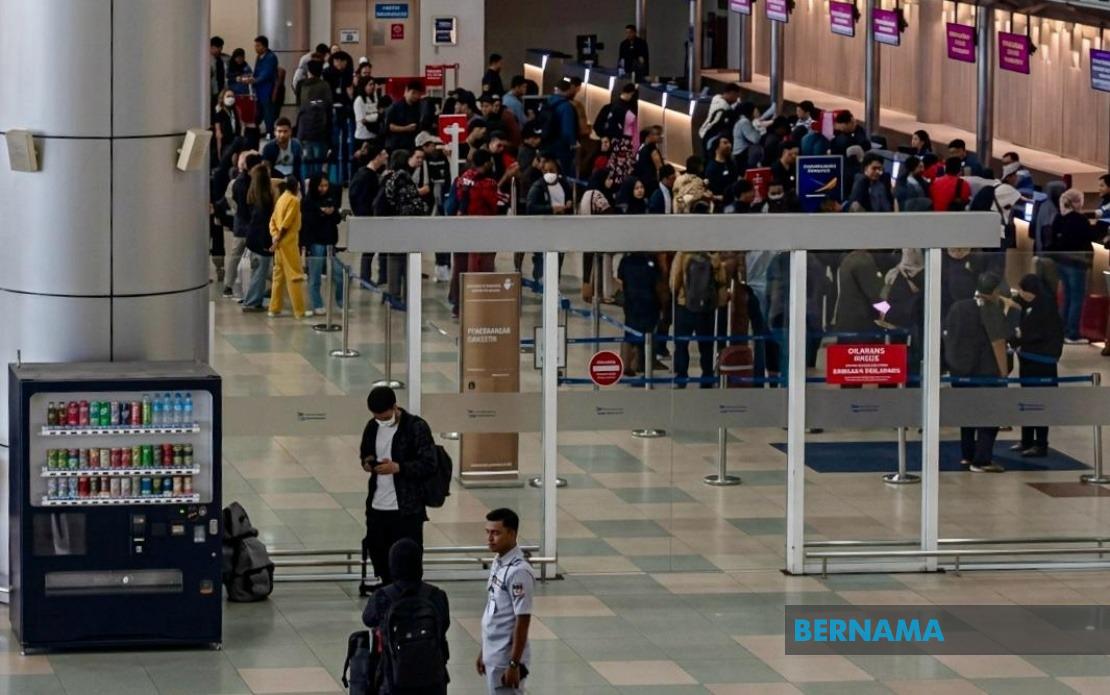
Passengers and airlines operating from Labuan faced immediate uncertainty regarding travel plans, with authorities advising all parties to contact airlines directly for the latest schedule information and alternative arrangements. For business travellers and those with time-sensitive commitments, the disruption created significant inconvenience and financial exposure, particularly given limited alternative transport options from this relatively isolated regional airport. The incident highlights how aviation security concerns, once detected, create legitimate but disruptive operational impacts on the travelling public.
The Royal Malaysian Air Force's involvement in the response reflects the military's integral role in Malaysia's aviation security framework, particularly at facilities without dedicated civilian ordnance disposal capabilities. RMAF expertise in identifying, assessing, and safely neutralising explosive devices proves essential for restoring operational confidence and ensuring that airports can confidently resume normal traffic patterns. The joint inspection model adopted here represents standard practice for managing potential threats at civilian aviation facilities where public safety considerations demand cautious, methodical approaches.
From a broader regional perspective, the Labuan Airport incident serves as a reminder of the multifaceted security challenges facing Southeast Asian aviation infrastructure. While Malaysia maintains relatively robust airport security standards compared to some regional counterparts, the discovery demonstrates that vigilance cannot diminish. Both private and public sector stakeholders across the region must continuously assess threat vectors, improve detection capabilities, and maintain coordinated response mechanisms to address potential security incidents swiftly and comprehensively.
The incident's resolution timeline remained uncertain as of reporting, with authorities committing only to providing further updates as inspections progressed. This cautious communication approach, while potentially frustrating for affected travellers, reflects appropriate security practice—releasing operational status only once safety protocols are definitively satisfied rather than speculating about reopening timelines. For Malaysian aviation authorities, balancing transparent public communication with security imperatives during active incidents represents an ongoing operational challenge, particularly given social media's amplification of speculation and misinformation.
Looking forward, the Labuan Airport incident will likely prompt broader security reviews not only at that facility but potentially across Malaysia's network of regional airports. The discovery so close to an active runway raises legitimate questions about perimeter security, surveillance capabilities, and access controls at facilities handling passenger aircraft. Such reviews, while potentially increasing operational costs and complexity, ultimately serve the essential function of maintaining public confidence in Malaysia's aviation system—confidence that remains fundamental to the sector's economic and social contributions.

