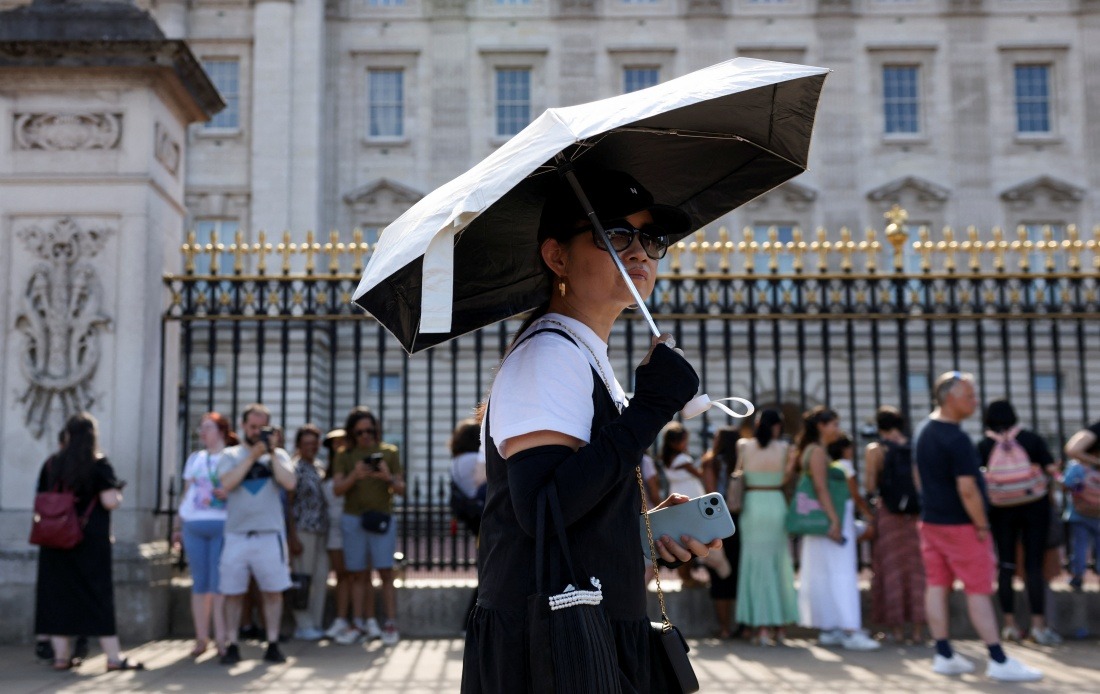
The United Kingdom's Household Division has made the unprecedented decision to suspend all ceremonial guard changes across London and Windsor this week, citing dangerous heat conditions that are forecast to bring record-breaking temperatures to parts of the country. The cancellations affect some of Britain's most iconic ceremonies, including the famous guard change at Buckingham Palace, marking a rare disruption to traditions that have remained largely uninterrupted for centuries.
The Met Office, Britain's national weather service, issued a red weather alert on Monday covering large swathes of England and Wales, indicating conditions that pose a significant risk to public health and safety. Meteorologists are predicting that temperatures will reach 39 degrees Celsius on Wednesday and Thursday, with some regions potentially experiencing even higher readings that could shatter the previous June temperature record for the United Kingdom.
In a statement released Tuesday, the Household Division explained that the decision prioritises the wellbeing of serving soldiers, the military horses that form an integral part of the ceremonies, and the thousands of members of the public who gather to witness these events. The organisation noted that there will be no ceremonial Guard Changes in Windsor or London on Tuesday, Wednesday, or Thursday, representing a significant departure from normal scheduling.
For those ceremonies that do proceed, the Household Division has implemented several protective measures. The Royal Horse Guards' changing ceremony, which was originally scheduled for Wednesday with full ceremonial pageantry, will now take place earlier in the morning and will operate without the traditional ceremonial elements that normally characterise the event. Additionally, soldiers participating in any remaining operations will be positioned in shaded areas wherever possible, and rotation schedules have been increased to reduce their exposure to the extreme heat and minimise the risk of heat-related illness.
The extreme weather conditions have created widespread disruption across the United Kingdom's educational system. Hundreds of schools in southern England have opted to close their doors during the period of peak temperatures, with local authorities citing concerns about the ability to maintain safe indoor environments for students and staff. In Somerset alone, approximately 100 schools announced closures, while Buckinghamshire reported a similar number of school shutdowns. Gloucestershire suspended classes in more than 80 schools, and London's major educational institutions, with nearly 10 significant schools cancelling in-person lessons, reflecting the scale of the challenge posed by the forecasted heat.
All of these affected regions fall within the area designated for the red weather alert, which covers much of southern England including the capital. This geographic concentration demonstrates how severe the anticipated temperature spike is expected to be in Britain's most densely populated areas, where millions of residents lack air conditioning systems as the nation is historically unaccustomed to such extreme summer conditions.
The decision to cancel the Buckingham Palace ceremonies highlights an important shift in how Britain's institutions are responding to climate-related challenges. Traditionally, such ceremonial functions have been considered so integral to national identity and continuity that they have proceeded through various weather conditions and even during times of national crisis. The willingness of the Household Division to suspend these events underscores the seriousness with which authorities are now treating extreme heat events.
For Southeast Asian observers, this situation presents an interesting contrast with regional norms. While countries like Malaysia routinely operate under temperatures exceeding 30 degrees Celsius with established protocols for managing heat exposure, the United Kingdom's response to 39-degree forecasts demonstrates how climate resilience is relative to local adaptation and infrastructure. Britain's lack of widespread air conditioning, combined with housing stock and urban design developed for temperate conditions, means that equivalent temperature levels pose significantly greater public health risks than they would in tropical regions where populations and systems are adapted to manage such heat routinely.
The heatwave affecting the UK this week is part of a broader pattern of extreme weather events becoming increasingly common across Europe. Climate scientists have linked the frequency and intensity of such heat events to longer-term climate change trends, making decisions like those of the Household Division part of an emerging necessity for institutions to build flexibility into long-standing traditions and protocols when facing environmental extremes.
For the British public and international observers, the cancellations serve as a reminder that even the most established and ceremonially significant institutions must adapt to changing environmental realities. While the suspension is temporary and limited to this particular week, it raises questions about how such iconic ceremonies might need to evolve in the coming years if extreme heat events continue to increase in frequency and severity across the United Kingdom.

