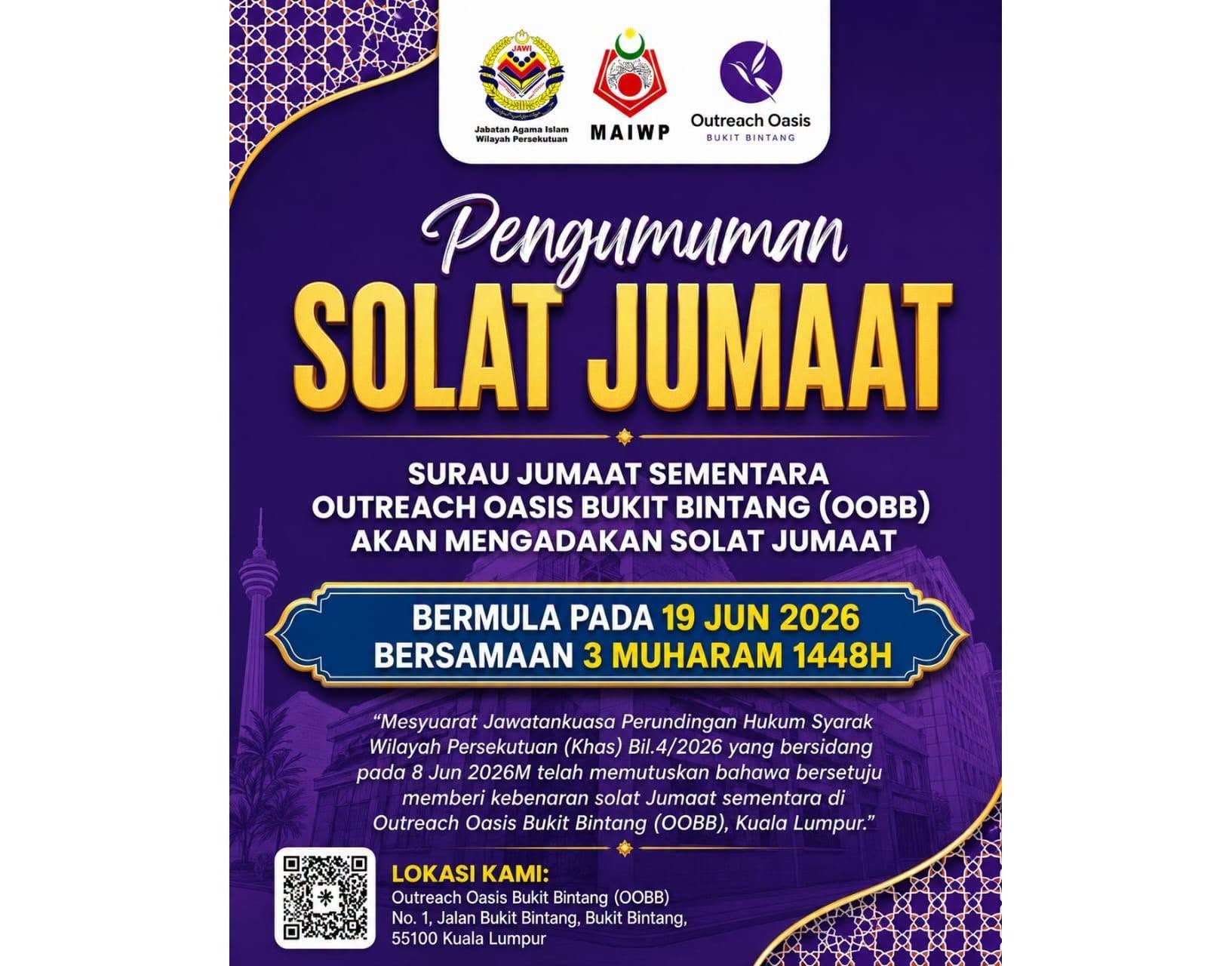
Muslims working and visiting the Bukit Bintang district now have access to dedicated Friday prayer facilities following the opening of a temporary prayer space at the Bukit Bintang Outreach Oasis. The facility, which commenced operations from June 19, represents a significant development for the religious needs of the Muslim community in one of Kuala Lumpur's most vibrant and congested commercial zones. The decision to establish this interim arrangement was announced by Dr. Zulkifli Hassan, Minister in the Prime Minister's Department (Religious Affairs), who described the development as a historic milestone for the locality.
The temporary facility addresses a long-standing gap in religious infrastructure within the Bukit Bintang precinct, where the constant flow of shoppers, office workers, and tourists has historically made it challenging for Muslims to fulfil their Friday prayer obligations without significant inconvenience. The minister's announcement emphasised that this arrangement would persist only until a permanent, purpose-built Friday surau is fully operational at the site. The government had previously been engaged in planning and constructing this more substantial facility to ensure dignified and comfortable worship conditions for the Muslim population in the area.
Dr. Zulkifli's public statement on social media platforms underscored the religious and social significance of the initiative, framing it within the context of Islamic values and community solidarity. He highlighted that the special approval enabling the temporary prayer space represented a collaborative effort to accommodate the spiritual needs of Bukit Bintang's diverse population. The minister's invitation for the broader Muslim community to participate in Friday prayers at the location carried an implicit message about the importance of public engagement with the new facility as a demonstration of collective support for Islamic religious infrastructure development.
The practical implications of this facility extend beyond mere convenience for individual worshippers. Bukit Bintang's status as a major commercial and tourism destination means that Muslims visiting or working in the area include not only local employees but also residents from surrounding neighbourhoods who commute to the district, as well as Muslim tourists and business visitors. Previously, the absence of dedicated prayer facilities in the immediate vicinity forced these individuals to either travel considerable distances to find a suitable surau or delay their prayers until returning to their home areas. The new temporary facility substantially reduces this burden.
The construction of the permanent Friday surau represents part of the broader government agenda to enhance Islamic religious infrastructure in major urban centres across Malaysia. Kuala Lumpur, as the nation's capital and commercial heart, has witnessed rapid urbanisation and demographic changes that have occasionally outpaced the development of religious facilities. By establishing a dedicated surau in Bukit Bintang, the government is responding to the evolving needs of the Muslim population in an area previously characterised by limited religious amenities relative to its daytime population density.
The temporary status of the current facility carries implications for both the Muslim community and the broader Bukit Bintang district. Worshippers can expect this arrangement to persist for a period whose exact duration remains unspecified, dependent on construction progress of the permanent structure. During this interim phase, the temporary facility serves as both a functional solution and a symbol of government responsiveness to religious infrastructure gaps. The eventual completion of the permanent surau will likely feature improved facilities, greater capacity, and permanent operational status.
From a urban planning perspective, the initiative reflects a growing recognition among Malaysian authorities that major commercial districts require integrated religious facilities to serve diverse populations effectively. Bukit Bintang's unique character as a shopping and entertainment destination means its daily population vastly exceeds its residential population. This demographic reality had created a mismatch between the number of Muslims requiring prayer facilities and the availability of such amenities. The temporary facility and planned permanent surau address this structural gap.
For Malaysian readers and particularly those in the Klang Valley region, this development carries significance beyond the immediate Bukit Bintang community. The successful implementation of this initiative may serve as a precedent for addressing similar infrastructure gaps in other commercial zones and business districts across the country. As Malaysia continues to urbanise and develop its business centres, questions about integrating religious facilities into commercial planning have become increasingly relevant to policymakers.
The reception of this facility among the Muslim community and broader public may also provide insights into public expectations regarding religious infrastructure development in secular commercial spaces. The minister's emphasis on community participation and solidarity suggests that the government views this facility as having symbolic value beyond its practical function. By encouraging strong attendance and engagement, the initiative aims to foster a sense of collective religious observance and social cohesion within the Bukit Bintang community.
Looking forward, the successful operation of the temporary facility will be closely monitored, particularly regarding its capacity, user experience, and ability to accommodate the expected volume of Friday worshippers. The data and feedback gathered during this interim period will likely inform the design and operational parameters of the permanent surau. Community input on facility adequacy, scheduling, and amenities may shape how the final structure addresses the religious needs of Bukit Bintang's users.

