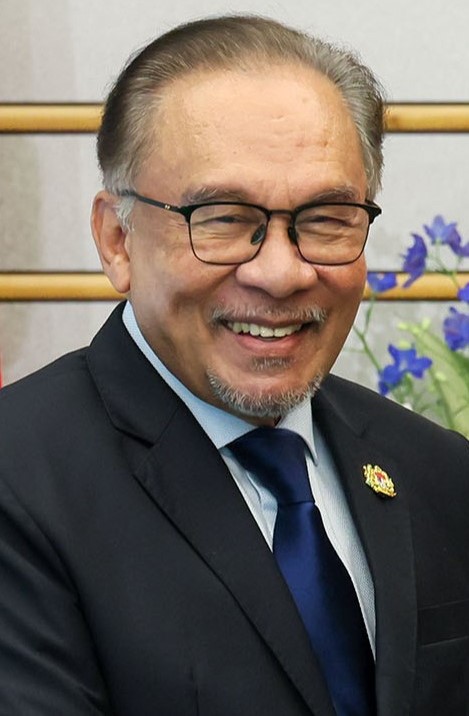
Malaysia's senior government figures have used the occasion of Awal Muharram 1448H to urge the nation towards deeper reflection on values of transformation, sacrifice and collective responsibility. The Islamic new year, marking the beginning of 1448H, has become a focal point for Cabinet leaders to articulate themes of reform and resilience that extend beyond religious observance into the realm of national governance and economic stewardship.
Deputy Prime Minister Datuk Seri Dr Ahmad Zahid Hamidi framed Maal Hijrah not merely as a calendar transition but as a philosophical watershed demanding tangible commitment rather than rhetorical flourish. His emphasis on the requirement for effort, discipline and determination reflects a broader governmental narrative linking spiritual principles to practical nation-building. The Deputy Prime Minister contended that the Hijrah narrative—rooted in historical migration undertaken for principle—carries lessons applicable to contemporary Malaysia's pursuit of reform and institutional strengthening. By positioning the new year as an inflection point for addressing national weaknesses and embracing necessary change, he connected Islamic tradition to the government's reform agenda.
The second Deputy Prime Minister, Datuk Seri Fadillah Yusof, extended this framework to address Malaysia's immediate economic vulnerabilities. His articulation of global supply chain disruptions, economic uncertainty and inflationary pressures demonstrates how religious observance has been integrated with pragmatic economic messaging. By invoking the Islamic principle of moderation and discouraging wastefulness, Fadillah drew a direct line between individual household prudence and macroeconomic resilience. His emphasis on collective action producing systemic outcomes—"small steps taken collectively"—offered a rationale for frugality extending from personal consumption to national resource management. This framing transforms religious duty into economic policy advocacy, positioning Malaysian citizens as stakeholders in national economic stabilization.
Communications Minister Datuk Fahmi Fadzil approached Maal Hijrah primarily through its psychological and spiritual dimensions, characterizing the new year as opportunity for introspection and renewed commitment. His distillation of Hijrah principles—courage for positive change, patience amid adversity, sincerity in endeavour—presents a humanistic interpretation of the Islamic calendar that transcends sectarian specificity. This inclusive framing may resonate with Malaysia's multi-faith population while maintaining the religious significance for Muslim citizens.
Minister in the Prime Minister's Department (Religious Affairs) Zulkifli Hasan provided specific spiritual guidance, directing Muslims toward particular prayer practices at designated times and emphasizing the psychological process of self-assessment and improvement. His characterization of Muharam's arrival as simultaneously public holiday and introspective moment bridged the civic and the personal, suggesting that national holidays should catalyze individual transformation rather than merely provide days of rest.
The breadth of ministerial participation—encompassing portfolios from agriculture to digital affairs—indicates institutional embedding of Hijrah messaging across governmental structures. Ministers responsible for economy-facing areas such as investment, trade and domestic cost-of-living underscores the government's intent to link religious observance to economic consciousness. This coordinated messaging suggests a deliberate strategy to leverage religious occasions for broader policy communication.
For Malaysian readers navigating persistent economic headwinds, the ministerial emphasis on prudence and resilience carries immediate relevance. The invocation of sacrifice and perseverance addresses citizen concerns about inflation, employment stability and household financial pressures by framing these challenges within a larger narrative of collective national transformation. This rhetorical approach attempts to elevate individual economic anxiety into shared national purpose.
The regional context further illuminates this messaging. Across Southeast Asia, governments have variously employed religious and cultural occasions for policy communication and national unity advocacy. Malaysia's Cabinet-level deployment of Hijrah as framework for discussing economic adaptation and institutional reform follows this pattern while reflecting the nation's particular demographic composition and constitutional positioning of Islam.
The emphasis on unity and diversity in ministerial statements—particularly Fadillah's invocation of Malaysian strength rooted in people's unity—addresses underlying social tensions that periodically surface around religious and communal identity. By positioning the Hijrah spirit as calling for mutual respect and cooperation, senior leaders attempted to preempt potential communal fragmentation while rallying diverse populations toward shared economic objectives.
The government's messaging strategically positions transformation as occurring at multiple levels simultaneously: personal spiritual renewal, household economic discipline, institutional reform and national economic adaptation. This multi-scalar framing offers entry points for citizens across different contexts to understand their roles within larger national narratives. Whether engaged through prayer practice, household spending decisions or workplace productivity, Malaysians are invited to participate in a coordinated national transformation project.
However, the efficacy of religious-cultural messaging in addressing structural economic challenges remains contested. While Cabinet ministers invoked spiritual principles as sources of national resilience, underlying economic pressures—global supply chain fragility, energy transition costs, regional competition—operate according to material rather than moral logic. The government's rhetorical strategy essentially asks citizens to embrace sacrifice and discipline while largely structural factors remain beyond individual control.
The celebration of Awal Muharram 1448H ultimately reflects both Malaysia's institutional attempt to mobilize collective commitment toward national objectives and the enduring challenge of translating religious and cultural observance into concrete economic and social outcomes. By uniting ministerial voices around Hijrah principles, the government seeks to establish shared interpretive frameworks within which contemporary challenges become intelligible and addressable through culturally-rooted values of transformation, perseverance and collective responsibility.