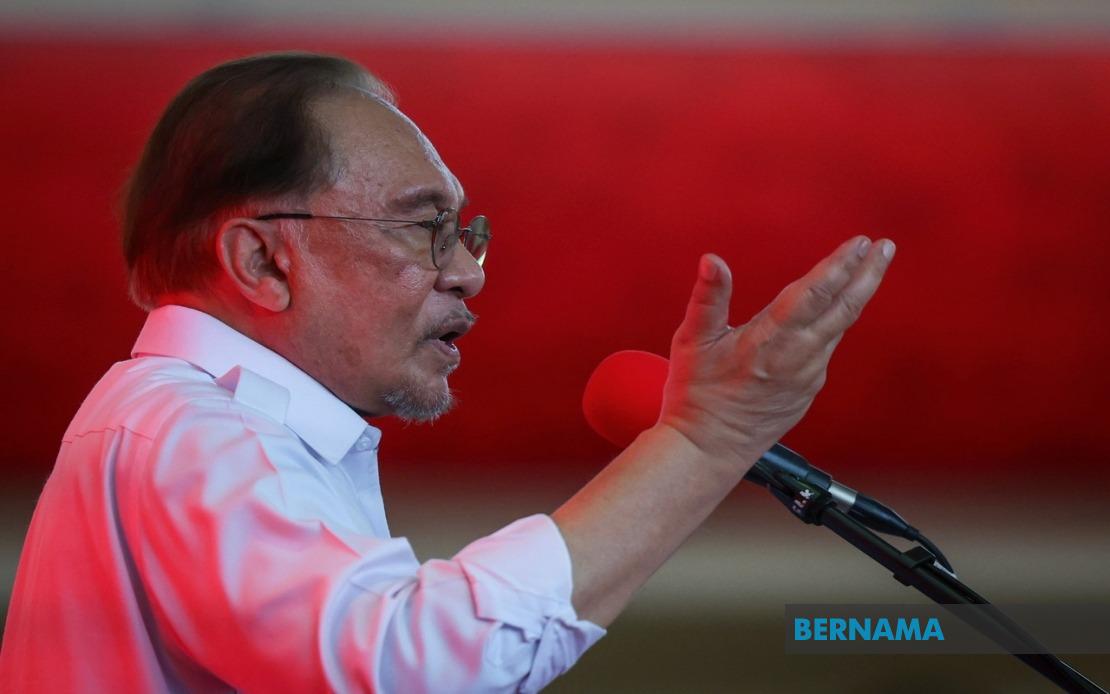
Prime Minister Datuk Seri Anwar Ibrahim signalled on Sunday that the government would resolve the contentious question of releasing the Royal Commission of Inquiry report into Lembaga Tabung Haji during the weekly Cabinet meeting scheduled for Wednesday. Speaking in Tampin, the PM outlined that deliberations at that gathering would determine whether the findings should enter the public domain, ending weeks of uncertainty over the report's status.
The Tabung Haji inquiry has attracted sustained political attention following allegations concerning the pilgrimage fund's disposal of valuable assets. The investigation sought to establish the circumstances and propriety of these transactions, which touched on governance and financial stewardship at an institution managing billions in savings from Malaysian Muslims preparing for the Hajj pilgrimage. Public interest in the outcome reflects broader concerns about transparency and accountability in the management of funds entrusted to government-linked entities.
Anwar's comments underscore a principled approach to administrative governance, emphasising the separation of powers between the Executive, judiciary, and law enforcement. He articulated that if wrongdoing emerged from the report's findings, the appropriate channels existed to pursue justice through investigation and prosecution by competent authorities, followed by court adjudication. The Prime Minister characterised these institutional safeguards as fundamental to Malaysia's legal system, deliberately positioning the Cabinet's role as limited to determining disclosure rather than influencing investigative or judicial outcomes.
The timing of Wednesday's Cabinet decision carries particular significance for stakeholders awaiting clarity. Last Thursday, Anwar had already signalled governmental readiness to disclose the RCI findings imminently, pending consultation with the Chief Secretary to the Government on procedural requirements. That earlier indication suggested momentum toward publication, though the final green light required Cabinet endorsement. The week-long interval afforded time for administrative coordination and potentially for Cabinet members to familiarise themselves with the report's contents prior to formal discussion.
Tabung Haji occupies an especially sensitive position within Malaysia's institutional landscape. As custodian of savings accumulated by millions of Muslim Malaysians throughout their working lives, the fund carries both financial and spiritual significance. Any inquiry into its asset management consequently attracts heightened public concern, transcending ordinary corporate governance questions to engage matters of trust and religious obligation. The delay in releasing the RCI report has fuelled speculation and concern among depositors, many of whom view disclosure as essential to confidence in the institution's future direction.
The debate surrounding the report's release reflects deeper tensions within Malaysian governance regarding transparency and executive discretion. Some quarters have advocated for immediate, unredacted publication, arguing that the public interest and institutional credibility demand complete openness. Others have counselled a more measured approach, considering whether certain portions might require protective handling under established legal conventions. Anwar's framing suggests the Cabinet would weigh these competing considerations through formal deliberation rather than arbitrary decision-making.
The invocation of constitutional process and established legal procedures carries resonance in contemporary Malaysian politics, where governance standards have become a focal point of public discourse. By repeatedly emphasising adherence to legal frameworks and the independence of prosecutorial and judicial institutions, Anwar positioned the government as committed to rule-based administration rather than executive intervention in justice matters. This rhetorical positioning matters considerably for public perception of the government's commitment to institutional integrity, particularly given Malaysia's history of concerns about political influence over legal processes.
The composition of officials present at the Tampin event—including Chief Secretary to the Government Tan Sri Shamsul Azri Abu Bakar, Deputy Defence Minister Adly Zahari, Armed Forces Chief General Tan Sri Malek Razak Sulaiman, and Army Chief General Tan Sri Azhan Md Othman—suggested the seriousness with which the government regarded the occasion, though the gathering appeared primarily ceremonial rather than focused specifically on the Tabung Haji matter.
The implications for Malaysian stakeholders extend beyond immediate institutional governance. Should the Cabinet authorise release, public access to the RCI findings would establish an important precedent for governmental transparency regarding inquiries into sensitive matters. Conversely, any decision to withhold or substantially redact the report would invite renewed questions about the boundaries of public disclosure and executive prerogative. For international observers and regional peers monitoring Malaysian governance standards, the manner in which the government handles this decision carries broader significance regarding institutional maturity and commitment to accountability.
Looking ahead to Wednesday's Cabinet meeting, multiple outcomes remain possible. A straightforward approval for full release would signal confidence in both the inquiry process and the government's willingness to face potentially uncomfortable findings. A conditional release might suggest some material requires protective treatment. Any further postponement would likely intensify public frustration. Whichever path the Cabinet chooses, the decision will offer valuable insight into the government's practical commitment to the transparency principles Anwar has articulated.

