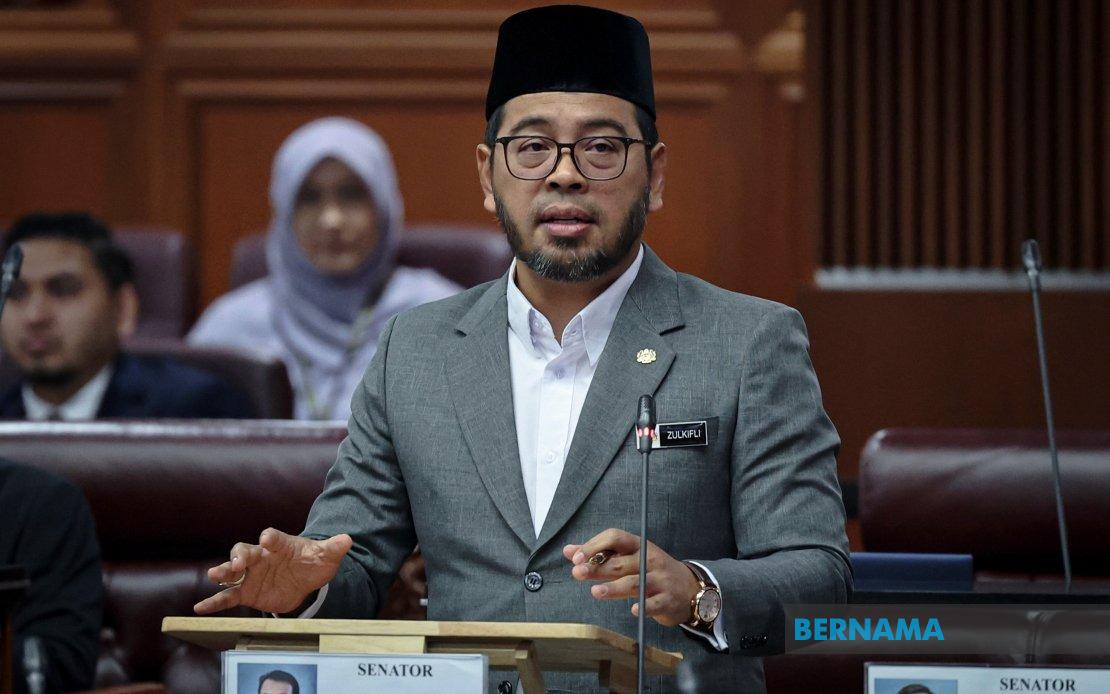
The Malaysian Cabinet will soon deliberate on whether to release the final Royal Commission of Inquiry report concerning Tabung Haji, according to Minister in the Prime Minister's Department (Religious Affairs) Dr Zulkifli Hasan. The decision comes amid public confusion and accusations that the pilgrimage institution's valuable properties were sold off improperly by a former Treasury official, claims that the government has moved swiftly to address and dispel.
Dr Zulkifli firmly rejected characterizations of the transaction as an asset fire-sale, instead describing the 2018 intervention as a carefully orchestrated financial rescue aimed at preserving a critical institution that serves the Muslim community. He emphasized that the core issue underlying TH's difficulties was not reckless management by current leadership, but rather large-scale misappropriation of depositor funds that occurred before 2018, when the institution was under different administration. This distinction matters significantly for public understanding: the government's argument is that it inherited a crisis rather than created one.
The controversy stems partly from confusion about what actually transpired when Tabung Haji transferred underperforming and problematic assets to Urusharta Jamaah Sdn Bhd, a government-owned special purpose vehicle created for this purpose. Dr Zulkifli characterized this as a Cabinet-level decision made collectively in 2018, suggesting it was not a unilateral action by any individual but rather a deliberate policy choice by the broader government leadership.
The severity of Tabung Haji's predicament in 2018 cannot be overstated. Both the Auditor-General and Bank Negara Malaysia documented that the institution faced a staggering asset-liability deficit of RM10.9 billion. Simultaneously, approximately RM6 billion was withdrawn by worried depositors within a compressed timeframe, reflecting a collapse of confidence in the institution's ability to safeguard their savings. Compounding these pressures, efforts to secure emergency standby financing from external sources had failed, leaving the government with few palatable options.
The financial exposure facing the government was substantial and alarming. Had Tabung Haji been permitted to collapse, the government would have been forced to assume liabilities totalling approximately RM74.5 billion, given that all deposits held within the institution carried a government guarantee. From this perspective, the bailout represented not charity or political expediency, but rather sound financial management aimed at limiting public sector losses.
The intervention appears to have succeeded by most conventional metrics. Deposits held in Tabung Haji have rebounded dramatically, climbing from roughly RM69.4 billion in 2019 to more than RM95.1 billion as of mid-2024, suggesting restoration of depositor confidence and operational stabilization. This recovery is particularly significant for Malaysian Muslims who depend on Tabung Haji for pilgrim financing and savings services.
Returns to depositors have also improved substantially. The profit distribution rate, which had fallen to just 1.25 per cent in 2018, has been restored to 3.5 per cent for 2025, marking the highest payout in eight years. This improvement directly benefits millions of Malaysian savers and potential pilgrims. Concurrently, the government managed to keep the cost of performing the haj stable for three consecutive years spanning 2024 to 2026, despite inflationary pressures that would normally drive such expenses upward.
The timing of the RCI report's potential release carries political weight. Publishing the findings would allow the government to present its version of events supported by an independent investigative body, potentially closing off further speculation and rumour. However, the Cabinet's cautious approach suggests recognition that the report's contents may contain uncomfortable details or recommendations, necessitating careful review before public disclosure.
For Malaysian readers, the broader lesson here concerns how government handles financial crises in institutions that directly affect millions of citizens. The Tabung Haji case demonstrates both the dangers of institutional mismanagement and the capacity of determined intervention to reverse course, provided political will exists. The recovery of depositor confidence and improved returns suggest that whatever specific actions were taken, they have delivered tangible benefits to the Muslim community that relies on this institution.
The public disclosure decision also reflects evolving standards of governmental transparency in Southeast Asia. Citizens increasingly expect detailed explanations and independent scrutiny of major policy decisions involving public funds, particularly those affecting essential services. By considering publication of the RCI report, the Malaysian government acknowledges this shift in public expectations, even as it carefully manages the information release process.

