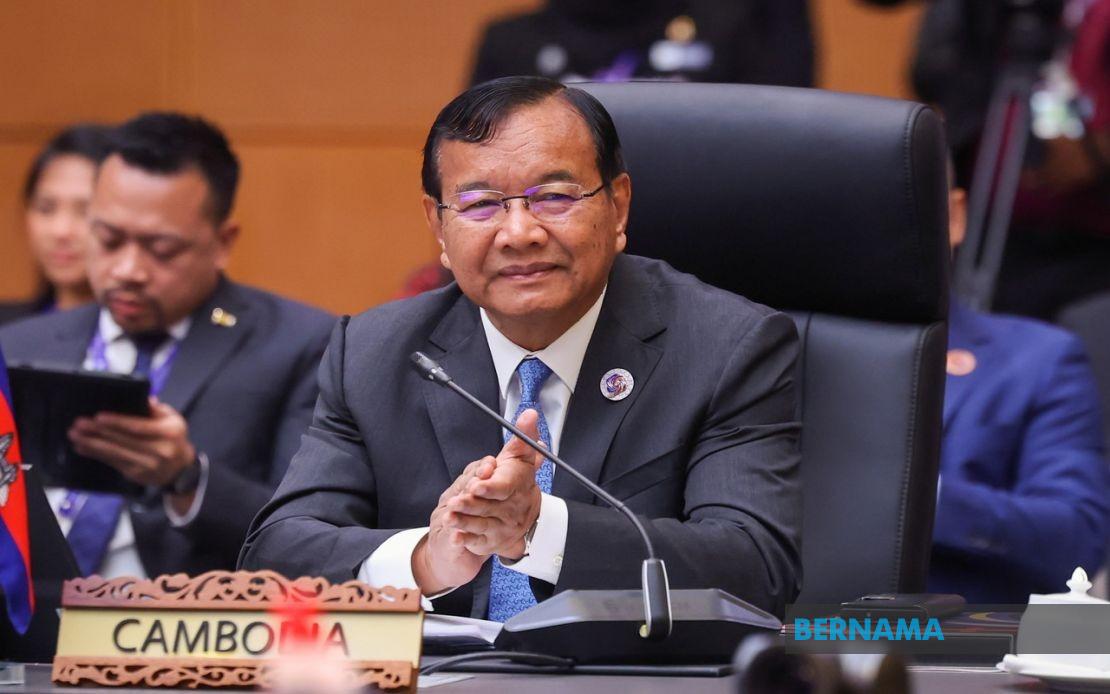
Cambodian Deputy Prime Minister and Minister of Foreign Affairs and International Cooperation Prak Sokhonn touched down in Malaysia on a two-day official visit aimed at revitalising the deepening partnership between Phnom Penh and Kuala Lumpur. His arrival at Kuala Lumpur International Airport Terminal 1 in early August signals renewed momentum in one of Southeast Asia's key bilateral relationships, reflecting both nations' commitment to expanding economic and diplomatic collaboration in an increasingly interconnected region.
The high-ranking delegation's presence underscores Cambodia's strategic importance to Malaysia's broader engagement within Southeast Asia. Sokhonn's visit represents more than ceremonial diplomacy; it provides a critical opportunity to assess and accelerate the implementation of commitments made under bilateral frameworks. The timing of the visit, coupled with robust economic indicators between the two countries, suggests both governments view their partnership as foundational to regional stability and prosperity.
Upon arrival, Sokhonn was received by Cambodian Ambassador to Malaysia Ouk Chandara and Datuk Rozainor Ramli, the Malaysian Government's chief ceremony officer, demonstrating the formal significance accorded to the engagement. The welcoming protocol reflects the level of importance both capitals place on this interaction, positioning it beyond routine diplomatic courtesy. This reception sets the tone for substantive discussions at the highest political levels.
A scheduled courtesy call with Prime Minister Datuk Seri Anwar Ibrahim represents a cornerstone of the visit's diplomatic architecture. Direct engagement between premiership levels allows for candid discussion of broader strategic considerations, from regional security to economic integration challenges. Such interactions often establish or reaffirm the political will necessary for implementing complex bilateral arrangements that require sustained governmental commitment and coordination across multiple agencies.
The centrepiece of Sokhonn's visit is the third meeting of the Cambodia-Malaysia Joint Commission for Bilateral Cooperation, convening in Kuala Lumpur. This forum serves as the institutional mechanism through which both nations systematically review implementation progress on previously negotiated agreements. The agenda encompasses a comprehensive assessment of the agreed minutes from the second JCBC meeting, ensuring accountability and identifying any implementation bottlenecks that require political or technical resolution. Such structured reviews prevent bilateral commitments from becoming dormant undertakings.
Foreign Minister Datuk Seri Mohamad Hasan will engage Sokhonn in bilateral talks, allowing the two foreign ministries to coordinate on sectoral priorities and address emerging policy challenges. These conversations typically extend beyond trade and investment to encompass shared concerns regarding maritime security, transnational crime, environmental cooperation, and regional multilateral engagement through mechanisms like ASEAN. The foreign ministry channel provides technical depth and allows negotiators to explore incremental expansions of cooperation.
Malaysia-Cambodia economic ties have demonstrated impressive dynamism, with bilateral trade surging 27.4 per cent year-on-year to reach RM5 billion in 2025. This trajectory reflects growing consumer engagement and supply chain integration between the neighbouring economies. For Malaysian readers, this growth underscores the expanding opportunities for businesses seeking regional expansion, particularly in sectors where Malaysian expertise and capital can complement Cambodia's labour advantages and natural resources.
Malaysia's investment position in Cambodia carries particular significance for understanding the depth of commercial integration. With cumulative investments totalling USD3.20 billion across 162 registered projects as of 2024, Malaysia ranks as Cambodia's third-largest foreign investor. This investment footprint spans manufacturing, real estate, telecommunications, and financial services, creating interdependencies that strengthen political incentives for maintaining stable bilateral relations. For Malaysian investors and policymakers, this presence reflects successful market penetration and ongoing expansion potential.
The scale of Malaysian investment in Cambodia reveals the confidence the private sector places in the country's medium-term economic trajectory and institutional stability. These projects employ thousands of Cambodian workers while generating repatriated profits for Malaysian parent companies and development gains for Cambodia. The investor community's continued engagement, demonstrated by the 162 registered projects, indicates that despite occasional policy uncertainties, Cambodia remains an attractive destination for Malaysian capital seeking regional diversification.
For Southeast Asia more broadly, the strengthening of Cambodia-Malaysia ties carries implications for regional cohesion and economic integration. As ASEAN members navigating a complex geopolitical environment characterised by great power competition and technological disruption, Cambodia and Malaysia benefit from deepening pragmatic cooperation. Enhanced bilateral frameworks create models for other regional partnerships and contribute to a denser network of intra-ASEAN economic and political relationships that reinforce regional autonomy.
Sokhonn's visit occurs within a context of Cambodia's efforts to position itself strategically within ASEAN and the broader Indo-Pacific. By strengthening ties with Malaysia, Cambodia signals its commitment to partnerships based on mutual economic benefit and political respect. Similarly, Malaysia's active engagement reinforces its role as a significant economic actor in the region and demonstrates its capacity to build partnerships across diverse political systems and development levels.
The bilateral relationship's economic momentum creates space for exploring new cooperation areas and deepening existing ones. Beyond traditional trade and investment, opportunities exist for collaboration in digital economy development, renewable energy, human capital development, and tourism. The JCBC framework provides the institutional mechanism for identifying and pursuing these opportunities systematically.
As both countries navigate evolving regional dynamics and global economic challenges, the institutionalisation of their relationship through mechanisms like the JCBC becomes increasingly valuable. Regular high-level visits and structured dialogue prevent misunderstandings while maintaining momentum in bilateral cooperation. Sokhonn's visit, therefore, represents more than a diplomatic courtesy; it embodies a commitment to sustaining and expanding a partnership that benefits both nations' citizens and contributes to regional prosperity and stability.

