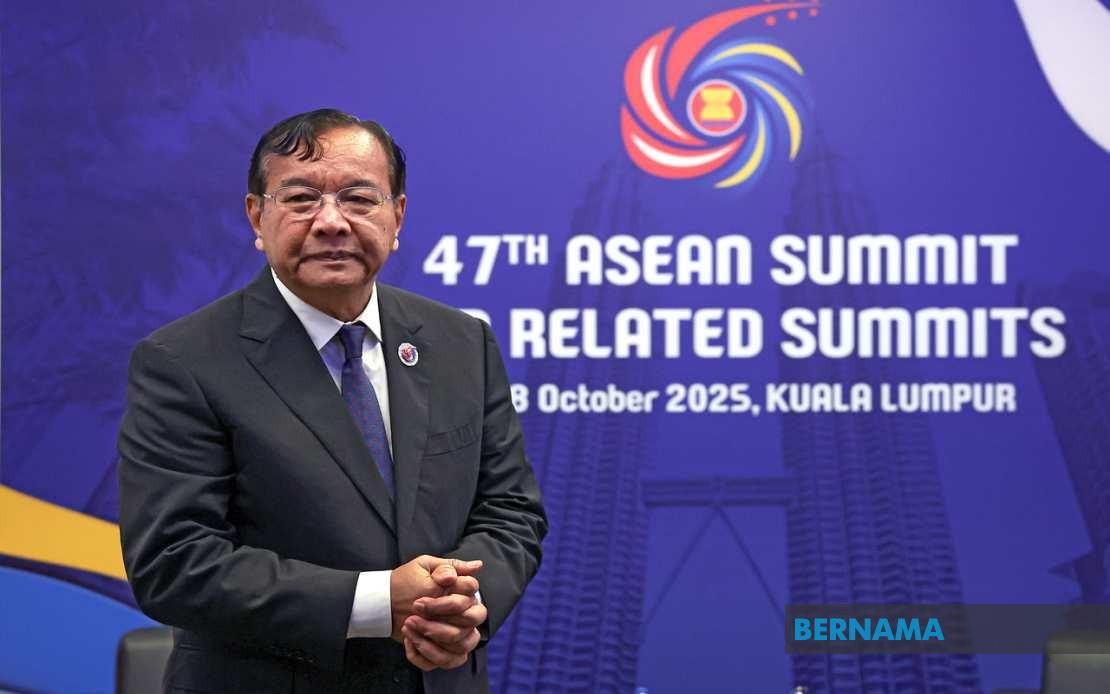
Cambodia's Deputy Prime Minister and Foreign Minister Prak Sokhonn arrived in Malaysia on Monday for a two-day official visit that signals a significant thaw in bilateral relations and a commitment to deepening partnership between Kuala Lumpur and Phnom Penh. The centerpiece of the visit is the third meeting of the Malaysia-Cambodia Joint Commission for Bilateral Cooperation (JCBC), which Prak Sokhonn will co-chair with Malaysian Foreign Minister Datuk Seri Mohamad Hasan on Tuesday. The resumption of this high-level dialogue mechanism comes nearly two decades after the last formal meeting convened in Siem Reap in 2006, representing a watershed moment for institutional cooperation between the two Southeast Asian neighbours.
The timing of this visit carries particular symbolic weight as Malaysia and Cambodia prepare to commemorate the 70th anniversary of their diplomatic relations in 2027. By reactivating the JCBC, both nations are establishing a structured platform to manage bilateral affairs at the ministerial level, ensuring that the relationship remains institutionalised rather than episodic. This forward-looking approach reflects a conscious effort by both capitals to build momentum ahead of this significant milestone, transforming what could have remained a historical footnote into a living, breathing institutional relationship.
As part of his visit protocol, Prak Sokhonn met with Prime Minister Datuk Seri Anwar Ibrahim on Monday to pay a courtesy call. These types of encounters, while often ceremonial in nature, provide critical opportunities for the two leaders to signal political commitment to the bilateral relationship and to establish personal rapport that can facilitate cooperation at working levels. The meeting allowed both sides to reaffirm long-standing ties and to exchange perspectives on regional and multilateral issues of shared concern, setting the diplomatic tone for the more technical discussions that would follow in the JCBC meeting.
The revival of the JCBC after two decades underscores the extent to which bilateral mechanisms can fall into disuse without sustained political attention. The 20-year gap between 2006 and 2024 represents a period during which Malaysia-Cambodia relations, while not strained, lacked a formal high-level dialogue structure to address emerging issues, coordinate policies, and manage disagreements. The recommencement of these meetings demonstrates that both countries recognise the value of having institutional channels through which to conduct bilateral business in a systematic and transparent manner. This restoration reflects broader regional trends towards deeper institutional integration within ASEAN and among bilateral partnerships.
Trade data reveals the economic foundation underpinning this diplomatic renewal. Malaysia-Cambodia bilateral trade surged 27.4 per cent year-on-year in 2025 to reach RM5 billion, with Malaysian exports to Cambodia totalling RM4.13 billion and imports standing at RM880 million. These figures, while modest by regional standards, demonstrate growing commercial interdependence and suggest that economic ties are driving political interest in deepening formal cooperation. Malaysia's role as a significant investor in Cambodia further reinforces this economic dimension. As of 2024, Malaysia ranked as Cambodia's third-largest foreign investor with cumulative investments of US$3.20 billion spread across 162 registered projects, indicating substantial business confidence in Cambodia's economy and creating constituencies in both countries with vested interests in stable, predictable bilateral relations.
The significance of Malaysia's investor position in Cambodia cannot be understated. With US$3.20 billion committed across diverse sectors, Malaysian companies have embedded themselves throughout Cambodia's economic landscape, creating employment, transferring technology, and facilitating knowledge transfer. This investment portfolio generates ongoing engagement between business communities, technical experts, and government officials in both countries, creating informal networks that complement formal diplomatic channels. The revival of the JCBC provides an opportunity to address regulatory issues, facilitate dispute resolution, and create a more business-friendly environment for these investors.
The JCBC's agenda, as outlined in the expected Agreed Minutes to be signed by both foreign ministers, will likely encompass multiple cooperation pillars. Trade and investment promotion will certainly feature prominently, given the economic trajectory outlined above. Beyond commerce, the agenda probably addresses regional security cooperation, people-to-people exchanges, cultural preservation, and coordination on multilateral issues within ASEAN and the United Nations. The breadth of potential topics underscores why formalised mechanisms matter: they ensure that bilateral relations are not confined to singular issues but instead develop comprehensively across multiple dimensions.
For Malaysia specifically, the renewed focus on Cambodia holds several strategic implications. Cambodia remains an important ASEAN partner and a neighbour with which Malaysia shares water resources, maritime boundaries, and cultural ties through Muslim Cham populations. Deepening institutional relationships with Cambodia contributes to broader ASEAN cohesion and Southeast Asian stability. From a Malaysian perspective, this visit reinforces the country's diplomatic pivot towards deepening bilateral ties across the region, a priority that has characterised recent foreign policy under the current administration. The JCBC's resumption sends a signal that Malaysia remains committed to maintaining substantive relationships with all ASEAN members.
Cambodia's perspective on this engagement reflects its own strategic calculations. By reactivating high-level dialogue with Malaysia, Cambodia signals openness to renewed engagement with a significant investor and trading partner. This move aligns with Cambodia's efforts to maintain balanced relationships across the region and beyond, particularly important given the country's geopolitical situation and its interests in securing foreign investment and technical cooperation. The visit also provides Cambodia an opportunity to strengthen its position within ASEAN through demonstrated diplomatic engagement with key partners.
The conclusion of the JCBC meeting with signed Agreed Minutes will formalise whatever outcomes both delegations have negotiated. These minutes typically include commitments to specific joint projects, timelines for cooperation, and mechanisms for follow-up engagement. Critically, they establish benchmarks against which both governments can be held accountable, creating mutual expectations for implementation. The signature of these documents provides transparency to stakeholders in both countries about what each government is committing to accomplish in the period before the next JCBC meeting, which ideally will occur within a more reasonable timeframe than the preceding 18-year interval.
Looking forward, the resumption of the JCBC after such an extended hiatus raises important questions about how Malaysia and Cambodia will maintain momentum in this renewed engagement. Institutional mechanisms require sustained political will and dedicated resources to function effectively. Both governments must ensure that the JCBC does not again fall into abeyance but instead becomes a regular fixture of the bilateral calendar, perhaps meeting annually or biannually. The success of this mechanism will depend on whether both sides view it as a genuine forum for addressing bilateral concerns rather than merely a ceremonial exercise.

