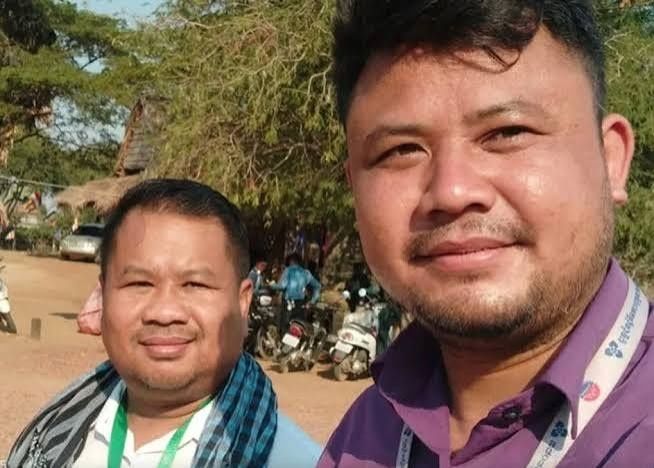
Cambodia's Supreme Court was poised to deliver its verdict on whether two photojournalists should remain imprisoned on treason charges for documenting military operations along the disputed Thai border. Phorn Sopheap and Pheap Pheara, who work for separate local television news outlets, have already spent months in custody and endured a conviction at the provincial level that was upheld on appeal in March. Their case has become emblematic of what international observers describe as the systematic weaponisation of Cambodia's legal system against independent media and dissent.
The photographers were detained in July following assignments covering the intensifying border skirmishes that defined the region's geopolitical tensions throughout 2023 and into early 2024. Upon returning from the contested zone, authorities arrested them on the grounds that they had entered a restricted military area without authorisation and subsequently shared their images on social media. The journalists maintain they possessed proper clearance to visit the location and to undertake their professional duties. Their legal team has filed the appeal seeking a complete acquittal and restoration of their freedom, arguing that the charges represent a fundamental miscarriage of justice.
The inflammatory nature of the photographic evidence underpinned the gravity with which Cambodian officials prosecuted the case. One particularly significant image depicted anti-personnel mines positioned along the border, which Thai media organisations rapidly disseminated throughout their networks. This photograph became pivotal to Thailand's diplomatic narrative, supporting Bangkok's assertions that Cambodia had recently deployed new mine fields in the disputed area, thereby threatening Thai military personnel engaged in routine patrol activities. The visual documentation effectively contradicted Cambodia's official position denying any deployment of such weapons along the frontier.
Cambodia's government responded to these allegations by claiming adherence to international treaties prohibiting landmine manufacture and placement, while suggesting that any ordnance discovered in the border region originated from the country's decades of internal armed conflict that formally concluded in the late 1990s. This explanation sought to reframe the mines as legacy weapons rather than evidence of contemporary Cambodian aggression. However, the existence of documented photographs showing the weapons' presence undermined this defensive posture, transforming the journalists' work into a diplomatic liability for the administration in Phnom Penh.
The armed clashes themselves inflicted substantial humanitarian costs on both nations during the volatile period spanning July through December. Approximately one hundred military personnel and civilians lost their lives across the border region, whilst the displacement crisis affected hundreds of thousands of inhabitants in both Cambodia and Thailand. The conflict destabilised border communities and strained bilateral relations between two countries whose long-standing disputes over territorial demarcation remain unresolved. A ceasefire declared in December has largely held, yet underlying tensions persist despite the absence of fresh combat operations.
The December conviction handed down by the Siem Reap Provincial Court found Phorn Sopheap and Pheap Pheara guilty under provisions criminalising the act of furnishing adversarial nations with classified information damaging to national security interests. Each journalist received an identical 14-year custodial sentence, representing a severe penalty that signals the judicial system's willingness to enforce such statutes with considerable rigour. The conviction was subsequently affirmed by a lower appellate court, leaving the Supreme Court as the final arbiter of their fate.
The timing of this Supreme Court hearing carries additional significance given its proximity to another controversial ruling from the same judicial body. Just days earlier, the court upheld the incitement conviction of Rong Chhun, a 56-year-old opposition figure whose prosecution followed his attendance at community meetings with residents displaced by government-sponsored development projects. Chhun's conviction last year followed his meetings with villagers, which authorities characterised as seditious agitation. Observers and human rights monitors widely interpret such prosecutions as components of a broader governmental campaign to neutralise political opponents and silence critical voices.
The succession of coordinated legal actions targeting journalists, opposition politicians, and activists has triggered international alarm regarding Cambodia's judicial independence. Human Rights Watch characterised the Rong Chhun verdict as symptomatic of the Cambodian court system's structural subordination to the ruling political apparatus, directly contradicting government assertions that the Supreme Court operates autonomously. This contradiction exposes the fundamental legitimacy crisis afflicting Cambodia's legal institutions.
Prime Minister Hun Manet, who assumed office in August 2023 following his father Hun Sen's three-decade tenure, inherited institutional structures deeply embedded with mechanisms of political control. Despite Hun Manet's Western education and generational distinctiveness from his predecessor, his administration has demonstrated minimal inclination toward meaningful democratic reform or liberalisation of political space. International observers have documented a continuity in repressive governance patterns rather than rupture from them.
The Committee to Protect Journalists, based in New York, has specifically indicted Cambodia's approach to prosecuting Pheap Pheara and Phorn Sopheap as illustrative of governmental misuse of expansive national security legislation to criminalise routine journalistic work. The organisation contends that vaguely formulated legal provisions grant authorities excessive discretion to classify ordinary reporting as threatening conduct warranting criminal sanctions. This prosecutorial strategy effectively chills legitimate news gathering and editorial decision-making among Cambodia's already beleaguered media community.
Cambodia's standing in international press freedom assessments reflects this deteriorating environment. The 2025 Reporters Without Borders World Press Freedom Index ranked Cambodia 161st among 180 countries assessed, categorising the nation within the group of territories where press freedom faces the most severe constraints. This placement underscores the systematic nature of Cambodia's attack on independent information dissemination and journalistic autonomy.
For Malaysia and Southeast Asia more broadly, Cambodia's judicial persecution of journalists illustrates the region's vulnerability to authoritarian consolidation and the instrumentalisation of legal systems for political purposes. The case demonstrates how security rhetoric can obscure suppression of legitimate expression, and how international treaty obligations prove hollow without genuine institutional independence. The Supreme Court's decision will signal whether Hun Manet's government intends meaningful departure from the coercive governance model perfected under his father.

