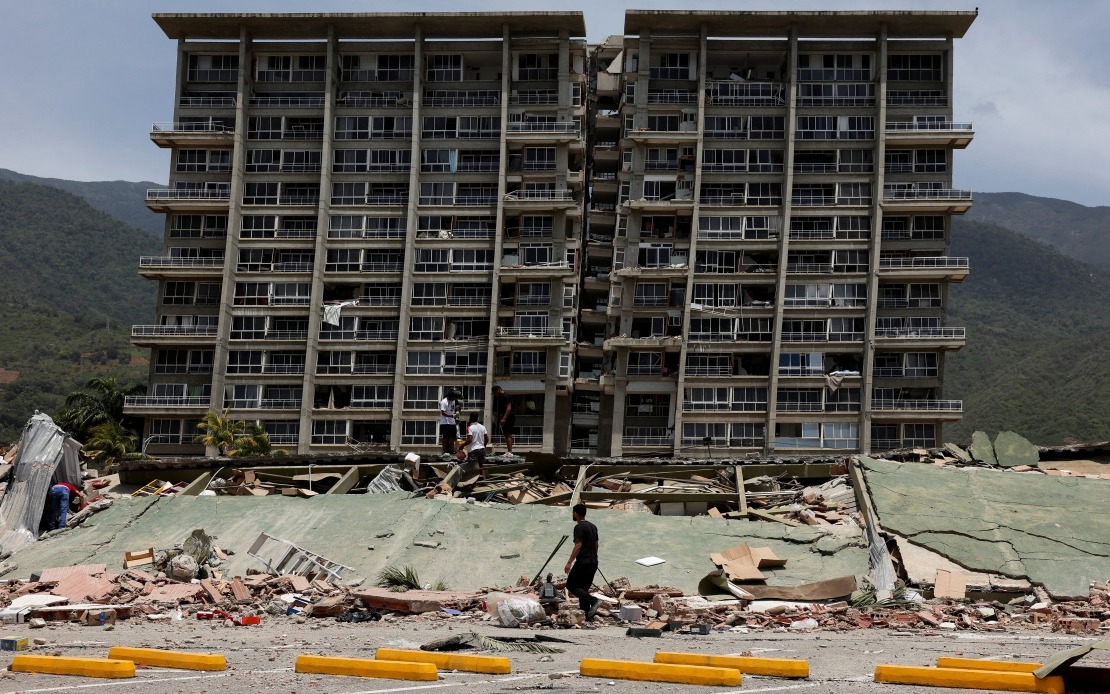
Canada has committed an initial US$5 million in humanitarian assistance to aid Venezuela's recovery from devastating earthquakes, Foreign Minister Anita Anand announced on Thursday through the Canadian Foreign Ministry. The contribution represents a significant international response to one of the region's most severe natural disasters in recent years, underscoring the scale of the catastrophe and the urgent need for coordinated global relief efforts.
The earthquake sequence has inflicted severe humanitarian consequences across Venezuela, with authorities warning that the true extent of the damage and loss of life remains unclear. Initial assessments indicate that hundreds of thousands of people face acute displacement, injury, and deprivation of basic services. The tremors have destroyed critical infrastructure, including hospitals, water treatment facilities, and supply chains essential for survival, leaving vulnerable populations without access to shelter, clean water, and medical care.
Canadian officials characterize the situation as requiring immediate, large-scale humanitarian intervention. Foreign Minister Anand issued a formal statement emphasizing the gravity of the crisis, noting that families have been torn apart by the disaster and entire communities face the prospect of prolonged suffering. This rhetorical commitment signals Ottawa's intention to maintain sustained engagement with Venezuela's humanitarian needs rather than treating this as a one-time emergency response.
The US$5 million allocation will be channelled through established humanitarian organizations with proven operational capacity in Venezuela. These partner agencies will deploy resources toward providing emergency food supplies, potable water distribution, sanitation infrastructure and hygiene assistance, as well as essential health services including medical treatment and disease prevention. Additionally, the funding encompasses protection mechanisms for vulnerable groups—particularly children, women, and the elderly—and logistical support to ensure aid reaches remote and severely affected areas.
This new commitment builds upon Canada's existing humanitarian footprint in Venezuela. The Canadian government had previously allocated nearly US$4.5 million in humanitarian funding earlier in 2024 to address ongoing humanitarian challenges in the country, which has faced years of political instability and economic crisis. The earthquake assistance therefore represents an acceleration and deepening of Canada's engagement rather than an entirely new initiative, reflecting both the magnitude of the current emergency and Canada's recognition that Venezuela's humanitarian needs will persist long after the immediate crisis subsides.
The disaster underscores Venezuela's extreme vulnerability to natural hazards, compounded by institutional fragility and resource scarcity. Years of economic collapse have degraded Venezuela's disaster response infrastructure, leaving the country ill-equipped to manage large-scale emergencies. Critical facilities including hospitals, emergency services, and government administrative centres operate at severely reduced capacity, amplifying the impact of the earthquakes on civilian populations. International humanitarian assistance therefore assumes outsized importance in filling gaps that domestic resources cannot address.
Canadian officials have signalled that monitoring of the situation will remain continuous and that additional details regarding the allocation and deployment of the emergency funding will be released in coming days. This measured approach allows Canadian authorities to coordinate more precisely with humanitarian partners and Venezuelan authorities to identify the most pressing needs as the full scope of the disaster becomes apparent. The timing of aid disbursement will be calibrated to maximize impact during the critical early recovery phase.
For Southeast Asian observers, Canada's rapid response offers relevant lessons about humanitarian burden-sharing among developed nations and the mechanisms through which multilateral aid reaches crisis zones. Malaysia and other ASEAN countries have themselves mobilized humanitarian assistance following regional disasters, and Canada's approach—combining immediate financial commitments with sustained engagement through credible partner organizations—reflects international best practices. The emphasis on coordination with regional partners and humanitarian organizations mirrors approaches that have proven effective in Asian contexts.
Venezuela's earthquake crisis also illustrates how natural disasters in strategically important Latin American nations receive sustained attention from developed democracies. Canada's engagement reflects both humanitarian principles and the Canadian government's broader foreign policy interest in Latin America. The commitment signals to regional governments that Canada remains an active participant in hemispheric affairs and views humanitarian emergencies as opportunities for demonstrating solidarity and building diplomatic relationships.
The scale of Canadian support—US$9.5 million cumulative in 2024—reflects Ottawa's assessment that Venezuela faces a protracted humanitarian emergency requiring more than conventional disaster relief. This framing suggests that Canadian policymakers view the earthquake not as an isolated catastrophe but as a catalyst that may accelerate existing humanitarian challenges. The funding trajectory indicates that additional commitments are likely if the situation deteriorates or if emerging needs outpace current resources.

