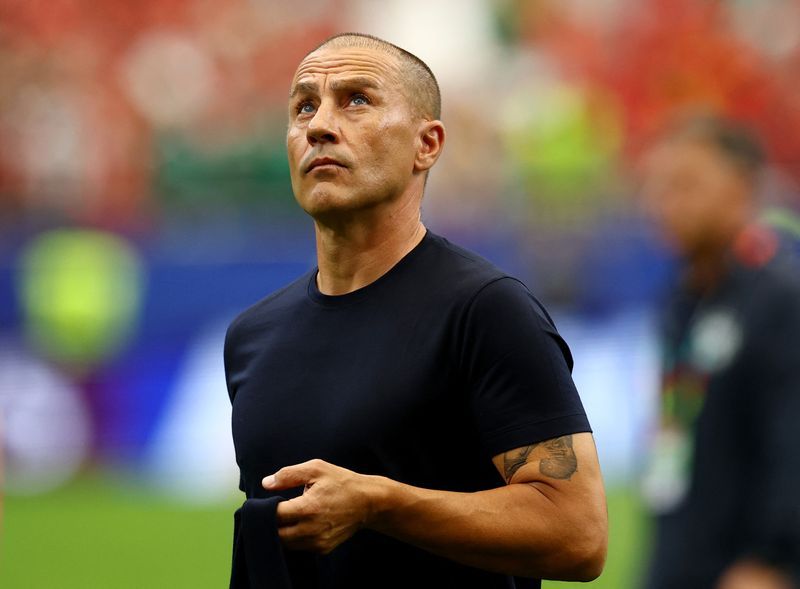
Uzbekistan's World Cup journey has become a cautionary tale of heavy punishment meted out by tournament heavyweights, and their coach Fabio Cannavaro is not shying away from the consequences. Following a devastating 5-0 loss to Portugal in Group K, the Italian tactician took the fall squarely on his own shoulders during his post-match media commitments in Houston on Tuesday, even as he sought to salvage some positives from an otherwise bleak afternoon for the Central Asian nation.
The European powerhouse dismantled Uzbekistan with ruthless efficiency, exposing defensive frailties that have haunted the newcomers throughout their inaugural World Cup campaign. This result compounds mounting pressure on the squad, which had already suffered a 3-1 reverse against Colombia in their opening fixture. With one match remaining against the Democratic Republic of Congo on Saturday, Uzbekistan's mathematical hopes of advancing to the round of 32 have been reduced to a thread requiring not merely a win but likely goals on a significant scale.
Cannavaro's acceptance of accountability represented an unusual moment of humility from a manager who can point to his credentials as the defender who lifted the World Cup trophy with Italy in 2006. Rather than deflecting criticism toward his players or external circumstances, he deliberately positioned himself as the architect of the tactical and strategic failures that allowed Portugal to run riot. This approach differs markedly from typical post-match excuses offered by embattled coaches seeking to protect their standing.
The Uzbek manager emphasised that his players had given maximum effort within the constraints of a match that quickly spiralled beyond their technical and physical capabilities. In his assessment, the players had attempted to execute his instructions, but the implementation fell short of what was required to compete at the sport's highest level. He resisted the temptation to criticise individual performers, instead framing the defeat as a collective institutional shortcoming rooted in coaching decisions and preparation.
Cannavaro's philosophy around player development became evident when discussing how he manages expectations for a team at their debut World Cup. He articulated a deliberate strategy of encouraging his squad to take risks and embrace the learning curve, even when such an approach might temporarily increase their vulnerability. Rather than implementing a defensive bunker mentality designed solely to limit damage, he has pushed them to play with attacking ambition and technical boldness, accepting that this mindset will occasionally result in punishing scorelines.
A pivotal moment in the match—when Azizjon Ganiev's goal was disallowed for a foul in the lead-up at 2-0—proved psychologically damaging. Cannavaro acknowledged that this contentious decision to rule out what would have been a morale-boosting equaliser fundamentally altered the trajectory of the game. What had begun as a competitive encounter featuring Uzbekistan's characteristic bold approach soon transformed into a one-sided affair as the team's confidence drained away.
The disallowed goal served as a turning point that shifted the psychological balance decisively in Portugal's favour. For Uzbekistan, what might have been a confidence-building response became instead a deflating moment that exposed the mental fragility of a squad still learning to cope with World Cup pressure and the calibre of opponents. Cannavaro did not use this incident as an excuse for the comprehensive defeat but rather identified it as a critical juncture where his team's resilience crumbled.
His messaging to reporters reflected a deliberate choice to maintain the squad's morale and commitment despite the bleak mathematical reality. Cannavaro insisted that belief must be sustained until absolute elimination is confirmed, emphasising that his role involves maintaining psychological stability and forward-looking perspective even in the face of accumulated disappointment. This approach seeks to preserve the integrity of remaining fixtures and ensure that the squad exits with dignity.
The broader context for Uzbekistan's struggles extends beyond individual matches to encompass the structural disadvantages faced by emerging football nations at world tournaments. As a debut participant, they lack the accumulated experience, resources, and competitive exposure available to established footballing powers. Yet Cannavaro's insistence that his players embrace this learning opportunity rather than retreat defensively suggests a long-term vision that extends beyond these three matches.
For Malaysian and Southeast Asian observers, Uzbekistan's experience carries instructive weight. Like many nations in the region, Uzbekistan faces the challenge of developing competitive capacity while operating at a resource disadvantage relative to traditional football powers. The manner in which Cannavaro has chosen to frame defeat—as experience and education rather than catastrophe—offers a philosophical template for emerging football nations seeking sustainable development rather than quick-fix solutions.
The final match against the Democratic Republic of Congo represents perhaps not merely a fight for World Cup survival but an opportunity for Uzbekistan to demonstrate that growth and learning have occurred across the tournament. Whether they achieve the goals necessary for progression becomes secondary to whether they can display the technical and tactical improvements that Cannavaro's strategic vision has prioritised throughout these three matches.
Cannavaro's continued emphasis on maintaining belief and continuing to pursue attacking football despite the evident gap in quality suggests he is thinking beyond this tournament. By building a culture of courage and ambition rather than defensive capitulation, he is attempting to establish foundations for future competitive development. The 5-0 defeat, while humbling, may prove less significant than the manner in which this squad responds in their remaining opportunity.

