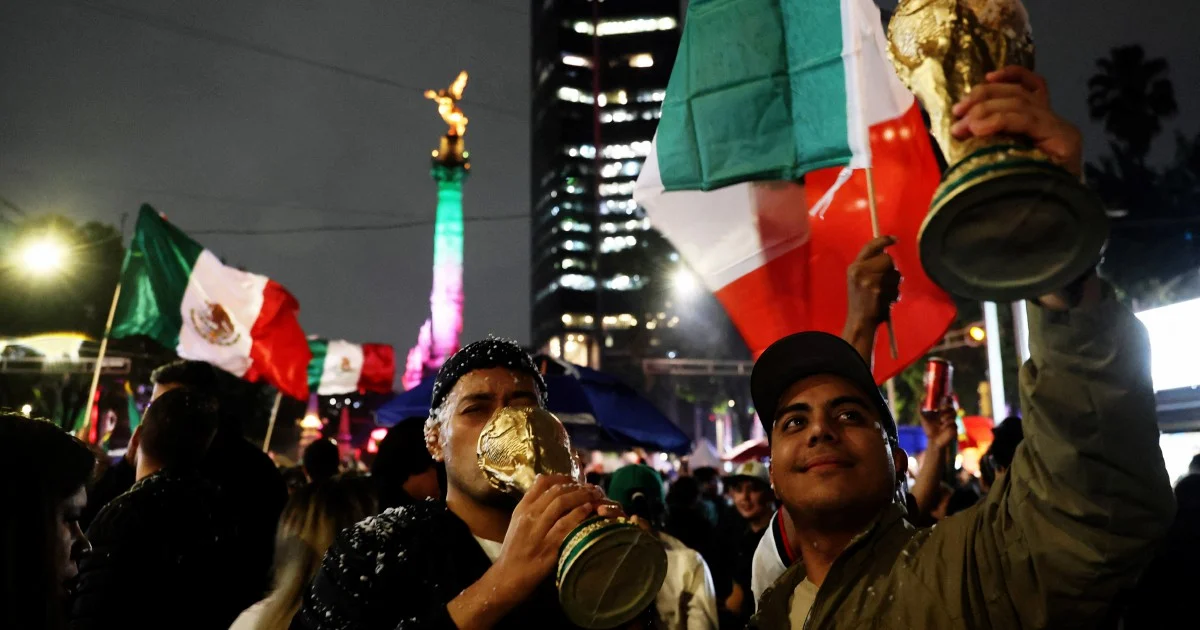
A vehicle deliberately accelerated into a throng of Mexico football fans celebrating their team's World Cup victory in the beachside resort town of Cabo San Lucas on Wednesday evening, leaving 17 people injured and triggering a chaotic scene that unfolded across multiple social media recordings. Local authorities in Los Cabos confirmed the incident through an official statement, detailing that the driver was apprehended immediately following the attack. The nature of the event—whether the act was deliberate, reckless, or part of an escalating confrontation—remains unclear from initial reports, though footage suggests significant intent given the vehicle's sudden acceleration.
Social media videos verified by Reuters capture the moment a black car found itself surrounded by supporters wearing Mexico's national football team colours. The footage shows what appears to be mounting tension between the vehicle occupant and the assembled crowd, before the car suddenly surged forward with apparent force, propelling spectators through the air and causing visible injuries. The vehicle subsequently struck protective bollards, likely limiting further damage. The incident unfolded during celebrations of Mexico's match victory, when thousands typically flood public spaces in the resort to honour their national team's success on the international stage.
Cabo San Lucas, situated at the southern tip of the Baja California Peninsula where the Pacific Ocean meets the Sea of Cortez, ranks among Mexico's most visited destinations for international tourists and domestic holidaymakers alike. The resort generates substantial revenue through its hospitality sector, and such incidents raise questions about public safety during large-scale celebrations. The timing of this event during peak tourist season compounds concerns about crowd management and security protocols during major sporting events that draw concentrated gatherings.
Footage circulating on digital platforms shows the immediate aftermath of the collision, with bystanders visibly distressed and several individuals lying on the ground displaying signs of injury. The crowd's reaction to the driver appeared immediate and forceful, with multiple people extracting the vehicle's occupant and engaging in what appeared to be a confrontation. The exact sequence of events leading to the collision—whether the crowd initiated contact with the vehicle or whether tensions escalated beforehand—cannot be definitively established from available footage alone.
The decision to arrest the driver reflects local authorities' preliminary determination that criminal culpability warranted immediate detention. However, the classification of the incident as either vehicular assault or a more complex interaction remains pending formal investigation. Mexican law enforcement will need to establish motive and intent through interviews with witnesses, analysis of surveillance footage beyond social media recordings, and examination of the vehicle itself for mechanical failure or evidence of deliberate operation.
This incident echoes broader patterns of violence that have occasionally marred celebratory gatherings across Latin America during major sporting events. Football celebrations in particular have sometimes deteriorated into confrontations between rival fan groups or between supporters and security forces. The resort setting and tourist season timing make this incident especially significant for Mexico's tourism industry and its reputation as a safe destination for international visitors seeking entertainment and relaxation.
For Malaysian and Southeast Asian observers, the incident underscores the security challenges that accompany large public gatherings during major sporting moments. Regional authorities managing World Cup celebrations, Asian Cup tournaments, and domestic league victories must balance permissive public assembly with adequate police presence and crowd management infrastructure. The incident demonstrates how quickly celebratory atmospheres can transform into dangerous situations when tensions escalate or individuals act with apparent disregard for surrounding crowds.
The medical response to the incident appears to have been coordinated through Los Cabos' healthcare system, with all 17 injured persons—including the driver—receiving treatment. The severity of injuries ranging from minor to potentially serious remains undocumented in preliminary reports. Authorities have not yet disclosed whether any victims suffered life-threatening injuries requiring extended hospitalization or whether the incident resulted in permanent physical harm to any participants.
Investigative work proceeding from the arrest will likely examine communications records, surveillance systems throughout the resort area, and testimonies from numerous witnesses present during the celebration. The black vehicle itself may yield forensic evidence regarding mechanical condition, driver impairment, or other causative factors. Establishing clear causation between the driver's actions and the injuries suffered by 17 individuals represents the foundation for any potential criminal prosecution in Mexican courts.

