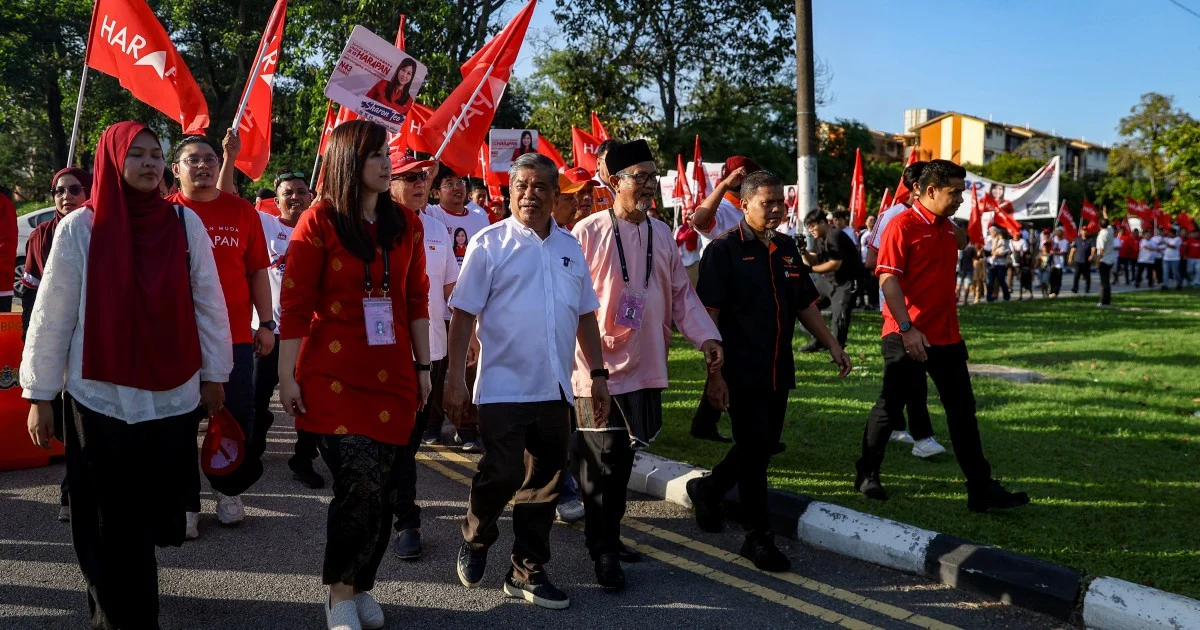
Sharon Teo, fielded by Pakatan Harapan for the Permas state seat, arrived at the Dewan Muafakat Taman Mawar nomination centre in Pasir Gudang to a rousing reception from party supporters. The gathering demonstrated the coalition's organisational strength in the constituency, with attendees repeatedly chanting "Johor undi Pakatan Harapan"—a rallying cry calling for voters to support the opposition alliance in the state election.
The nomination filing marked a crucial moment in the electoral calendar, signalling Pakatan Harapan's formal commitment to contesting the Permas seat. The constituency, located in Pasir Gudang, has historically been a significant battleground in Johor politics, often reflecting broader statewide trends. Teo's candidacy represents the coalition's strategy to consolidate support in urban and semi-urban areas where opposition coalitions have traditionally performed well.
Pakatan Harapan's decision to field Teo in this particular seat reflects careful constituency analysis and resource allocation. The coalition has invested effort in mobilising grassroots support, evident from the turnout at the nomination ceremony. Such displays of activism serve multiple purposes: they energise party members, signal strength to rival campaigns, and generate media attention that extends the campaign's reach beyond immediate participants.
The Permas constituency encompasses diverse demographic profiles, including established residential areas, industrial zones, and commercial centres. This mix presents both opportunities and challenges for any candidate seeking to build a winning coalition. Teo's background and positioning would need to resonate with this varied electorate, addressing concerns ranging from economic issues to local infrastructure and service delivery.
For Pakatan Harapan, the Johor election represents a critical test of its viability as a governing coalition. The state has been a stronghold of other political forces, making gains here particularly meaningful for the opposition's national trajectory. A strong performance would validate the coalition's claim to be a credible alternative government and strengthen its hand in future federal politics.
The opposition alliance's reliance on organised chanting and visual demonstrations reflects contemporary campaign strategies that emphasise momentum and enthusiasm. These moments, captured and shared through social media and news coverage, extend the rally's impact far beyond those physically present. In Malaysia's connected political environment, such imagery becomes part of the broader narrative that campaigns construct around their candidates and broader message.
Support levels in urban constituencies like Permas often hinge on specific local issues rather than purely national considerations. Voters in Pasir Gudang may prioritise concerns such as traffic congestion, flood management, business opportunities, and social facilities. Candidates must demonstrate understanding of these ground-level realities to connect authentically with constituents beyond rallies and campaign events.
The nomination process itself carries symbolic weight. When candidates file their papers amid visible public support, it sends a message to both allies and opponents about perceived electoral viability. Conversely, contested or poorly attended filings can signal internal divisions or waning confidence. Teo's well-attended registration therefore carries implicit communication about Pakatan Harapan's assessment of her prospects.
Johor's political landscape has evolved considerably, with former dominance patterns shifting as voter preferences diversify and new coalitions emerge. The state's urban centres, particularly Pasir Gudang and Johor Bahru, have witnessed increasing electoral competitiveness. Pakatan Harapan's participation in Permas reflects this strategic focus on contestable urban and semi-urban territories where organisational networks and grassroots mobilisation can translate enthusiasm into votes.
The chanting constituency represents a cross-section of Pakatan Harapan's broader support base in Johor. These volunteers and party members form the foundation of campaign machinery—they conduct house visits, distribute materials, man polling stations, and crucially, influence opinion within their own networks. Their visible enthusiasm at nomination ceremonies underscores the importance of maintaining morale among these essential workers throughout the campaign period.
Teo's entry into the race adds another element to the competitive dynamics in Permas. The constituency's final outcome will depend on multiple factors: the strength of competing candidates from other coalitions, voter turnout patterns, and how effectively different campaigns mobilise their respective support bases. The early enthusiasm demonstrated by Pakatan Harapan supporters provides momentum, but elections are ultimately decided through voting at the ballot box rather than in ceremonial gatherings.
Looking forward, the Permas race will likely intensify as other candidates file their nominations and campaigns enter higher gear. The coming weeks will reveal whether the initial enthusiasm generated for Teo translates into sustained voter engagement and ultimately electoral support. For Pakatan Harapan strategists analysing Johor's competitive landscape, success in multiple constituencies including Permas would be essential to achieving their broader political objectives in Malaysia's third-largest state by population.

