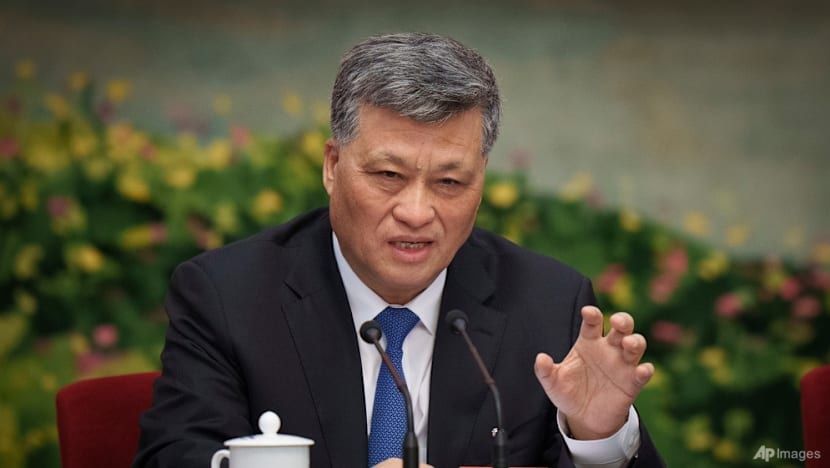
The Chinese government has moved against one of its most senior officials in the resource-rich Xinjiang region, expelling Ma Xingrui from the Communist Party over allegations encompassing abuse of power, corruption, and misconduct. The 66-year-old, who served as a member of the Politburo—the party's highest policy-setting body that operates under President Xi Jinping's direct authority—has been stripped of all official positions following the Politburo's approval of an anti-corruption investigation report on Tuesday (July 14). The action underscores Beijing's continuing campaign against graft within its own ranks, though critics question whether such enforcement applies uniformly across the party apparatus.
Ma's fall from grace represents a striking reversal for a figure who wielded considerable influence over Xinjiang between 2021 and 2025. The investigation, which commenced in April, uncovered what state media described as a "particularly serious" pattern of misconduct spanning multiple categories of wrongdoing. According to Xinhua, the party's official news agency, Ma exploited his position to facilitate property purchases for family members at prices substantially below market value—a common method through which officials and their relatives accrue wealth while obscuring the source of their advantage. This arrangement allowed Ma's relatives to accumulate real estate assets without transparent financial transactions that might otherwise attract scrutiny.
The allegations against Ma extend well beyond real estate dealings into more explicit abuses of authority. The investigation determined that Ma engaged in what Chinese officials characterize as "power-for-sex and money-for-sex transactions," euphemistic terminology referring to exchanges of sexual favours in return for political influence or financial gain. Such conduct represents a particularly damaging form of corruption in hierarchical bureaucratic systems, as it weaponizes state authority to coerce or exploit vulnerable individuals. The party's findings further indicate that Ma permitted his family members to leverage his political standing to accumulate enormous financial benefits, suggesting a systematic pattern whereby his position became a family enterprise rather than a public trust.
Financial malfeasance constituted another substantial element of the charges. Ma illegally accepted what investigators termed "huge amounts of money and valuables" in exchange for using his authority to benefit individuals and businesses. The investigation specified that he had sought to advance the interests of others in commercial ventures, construction projects, and career advancement opportunities—all areas where his Xinjiang position granted him significant gatekeeping authority. By directing valuable opportunities toward favoured parties while accepting personal enrichment, Ma exemplified the type of patronage networks that undermine governance effectiveness and public confidence in institutions across many developing economies.
The timing and context of Ma's expulsion carries particular significance for international observers monitoring China's governance of Xinjiang. The northwestern region has experienced enormous political scrutiny globally over the past decade due to China's comprehensive security crackdown targeting the Uyghur Muslim minority population. Beijing has justified these policies as necessary counter-terrorism and counter-extremism measures, pointing to a series of violent attacks that occurred through the mid-2010s. However, international human rights organizations have extensively documented concerns about the proportionality and methods of this security apparatus, with criticism focused on mass surveillance, arbitrary detention, and restrictions on religious freedom affecting Uyghur communities.
A landmark 2022 investigation by Michelle Bachelet, the former United Nations High Commissioner for Human Rights, added significant international pressure to Beijing's record in the region. Bachelet's report suggested that Chinese authorities' actions in Xinjiang potentially constituted crimes against humanity, a designation carrying severe reputational and potential legal consequences. The report catalyzed diplomatic tensions and contributed to sanctions imposed by Western countries against Chinese officials and entities involved in Xinjiang administration. Against this backdrop, Ma's corruption charges may be interpreted by some observers as providing Beijing an opportunity to distance itself from previous leadership while maintaining the underlying security framework.
Ma's removal from the Politburo itself represents a notable consequence of the investigation. Membership in this elite body, comprising roughly two dozen senior figures, constitutes one of the most prestigious positions within China's political hierarchy. Politburo members shape policy across all dimensions of governance and typically enjoy protection and influence that shields them from ordinary accountability mechanisms. The fact that Ma faced expulsion suggests either genuine anti-corruption enforcement or, alternatively, that factional disputes within the party leadership resulted in his elimination as a political rival. Such insider dynamics frequently accompany high-level purges in single-party systems, where corruption charges can serve as vehicles for consolidating power or eliminating competitors.
The broader significance of this action for Southeast Asian observers relates to implications for how China manages its periphery and projects power throughout the region. Officials who have overseen contested territories or sensitive border regions may face heightened vulnerability to corruption investigations, particularly if geopolitical circumstances or leadership transitions create opportunities for their rivals. Malaysia and other regional nations should monitor whether similar enforcement patterns emerge against other officials responsible for strategic or controversial portfolios. Such developments could indicate shifts in Beijing's governance priorities or internal power consolidation efforts affecting China's regional policies.
For Chinese citizens and party members, Ma's expulsion reinforces Xi Jinping's anti-corruption narrative that has defined much of his tenure. This campaign, launched over a decade ago, has resulted in investigations of thousands of officials and has been framed as essential to restoring party legitimacy and effectiveness. However, critics note that anti-corruption enforcement in authoritarian systems often lacks transparent standards and impartial adjudication, creating uncertainty about whether sanctions are applied according to objective criteria or factional considerations. The absence of public trial records or opportunities for independent legal challenge complicates assessments of whether the charges against Ma reflect genuine misconduct or serve other political objectives.

