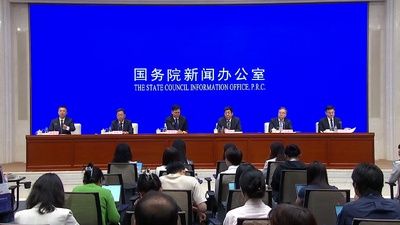
Beijing has categorically dismissed accusations of forced labour and compulsory population transfers in the Xinjiang Uygur autonomous region, with Chen Ruifeng, Minister of the National Ethnic Affairs Commission, characterising such claims as unfounded during remarks on Wednesday, June 24. The minister's statement represents an official pushback against repeated assertions by Western governments and international organisations alleging systematic coercion of Uygur and other ethnic minorities into labour schemes.
Chen emphasised that China's constitutional framework and domestic legislation explicitly prohibit forced labour in all its manifestations, underscoring Beijing's legal commitment to preventing such practices. The government's position rests partly on recently updated legislative measures designed to strengthen worker protections and clarify employment rights across the region.
A pivotal piece of this legislative apparatus is the Law on Promoting Ethnic Unity and Progress, which was adopted on March 12 and enters into force on July 1. The statute expands provisions governing cross-regional employment, establishing mechanisms for rights protection and legal assistance applicable to workers across all ethnic communities. These provisions are intended to ensure that migrant workers retain full access to legal remedies and institutional safeguards regardless of their origin or ethnicity.
According to Chen's account, individuals departing Xinjiang for work opportunities elsewhere do so entirely of their own volition, driven by personal aspirations to elevate living standards for their families and acquire new occupational skills. The minister rejected characterisations of these movements as coerced, instead framing them as rational economic choices made by autonomous individuals seeking self-improvement through employment mobility.
The official narrative positions labour transfers as instruments of genuine economic development rather than population control. Chen stressed that such schemes are calibrated to expand job availability and boost household incomes, with outcomes measured against material benefits accruing to Xinjiang's residents. This framing emphasises practical outcomes and livelihood enhancement as the underlying rationale for facilitating employment across provincial boundaries.
The economic data presented by the government illustrates Xinjiang's employment trajectory over the preceding five years. The region reportedly generated more than 2.39 million new urban employment positions through multifaceted policy interventions. Meanwhile, agricultural workers undertook approximately 16.1 million employment-related relocations beyond their home counties, a figure suggesting substantial labour mobility within the sector.
Income growth statistics further underscore the government's development narrative. Urban residents experienced average annual increases in per capita disposable income of 5.3 per cent, while their rural counterparts registered 8.1 per cent annual gains over the same period. These growth rates, should they be independently verified, would indicate material improvement in household purchasing power across both demographic segments.
Chen attributed these employment and income outcomes to the establishment of comprehensive policy frameworks designed to guarantee equitable access to work and robust protections for labourers' rights. The government has constructed mechanisms intended to safeguard the legitimate entitlements of employed individuals and ensure that all able-bodied residents can access gainful work, according to the minister's account.
The minister characterised the voluntary employment system as maximising protection for dignified work arrangements across Xinjiang's diverse ethnic populations. This framing positions the employment mobility framework as enhancing rather than constraining individual agency and occupational choice. The official position reflects an interpretation of worker protections that emphasises individual autonomy in employment decisions alongside institutional safeguards.
These statements arrive amid sustained international scrutiny of labour practices in Xinjiang, with the United States, European Union, and various human rights organisations continuing to raise concerns about allegations of systematic coercion. Beijing's rejection of these claims underscores a fundamental disagreement regarding factual characterisations of employment patterns and governance practices in the region. The gap between Beijing's assertions of voluntary participation and external allegations of systemic coercion represents a persistent point of contention in international discourse surrounding Xinjiang.
For Southeast Asian observers, the dispute carries implications for regional geopolitics and supply chain accountability. Several ASEAN nations maintain significant economic ties with China and Xinjiang, while simultaneously facing international pressure regarding labour standards and ethical sourcing. The credibility of employment protections in Xinjiang thus intersects with broader questions about corporate due diligence, supply chain transparency, and adherence to international labour conventions that affect businesses operating across Southeast Asia.
The new legislative framework, set to take effect in early July, will represent an additional layer of official regulation governing employment relations in Xinjiang. Whether these mechanisms, as implemented, successfully address international concerns or merely formalise existing practices remains an open question likely to generate continued scrutiny from international observers, labour rights advocates, and trading partners seeking clarity regarding ethical sourcing and responsible business practices in the region.

