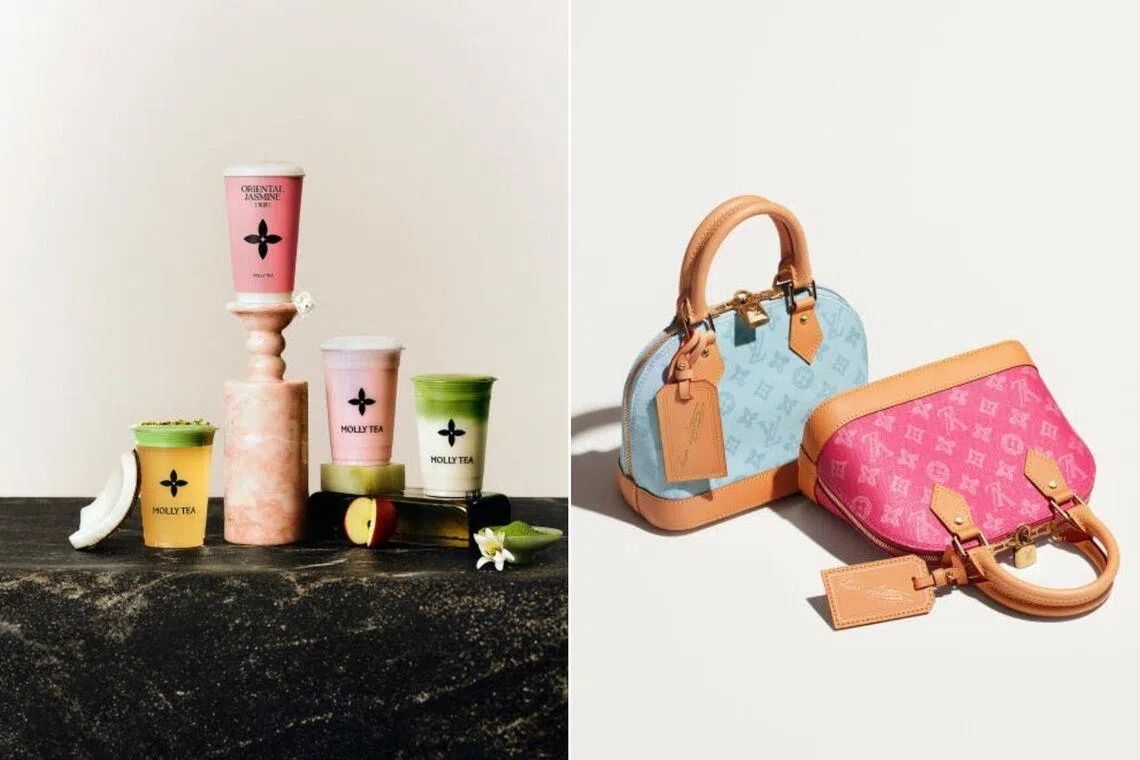
A Chinese court has dealt a significant blow to homegrown beverage brands by ordering the Shenzhen-based Molly Tea to pay Louis Vuitton 10.3 million yuan—equivalent to approximately US$1.5 million—for trademark infringement involving a four-petal flower logo. The Suzhou Intermediate People's Court in Jiangsu province handed down the ruling on 29 June, finding that Molly Tea and one of its franchise outlets in Wuzhong district had unlawfully used graphic designs that copied seven of the French luxury conglomerate's registered floral trademarks. Beyond the financial penalty, the milk tea operator must cease using the contested imagery and issue a formal public apology, according to reports released on 2 July.
The dispute centres on the visual similarity between Molly Tea's brand emblem—a minimalist four-petal flower motif—and Louis Vuitton's iconic monogram patterns that have become instantly recognisable symbols of the Paris-based luxury house globally. Louis Vuitton initiated the legal action in May 2025, and the court's decision has since ignited widespread discourse across Chinese social media platforms, where the case has accumulated hundreds of millions of views and readings. Molly Tea has signalled its intention to contest the judgment through the appeals process, suggesting the dispute may take months or years to fully resolve through higher courts.
The broader context of this trademark clash reveals a pattern of aggressive brand-building by the tea company. Since March 2024, Molly Tea and its parent entities have submitted multiple trademark applications to the China National Intellectual Property Administration, predominantly featuring floral and botanical designs intended to cover restaurant operations, hospitality services, marketing communications, and convenience food products. The submission strategy appeared systematic and wide-ranging, yet the results proved disappointing—nearly all applications featuring the four-petal flower graphic were rejected during examination, with only those containing the Chinese characters for "Molly Tea" successfully registered. This rejection history now takes on heightened significance in light of the court's infringement finding.
Online sentiment regarding the verdict has fragmented sharply, reflecting deeper disagreements about intellectual property rights and cultural ownership in modern commerce. Supporters of the court's decision argue that Molly Tea's floral emblem bears unmistakable visual similarities to Louis Vuitton's trade-marked designs, and that the milk tea company should have anticipated potential conflicts before rolling out such comparable graphics. Conversely, other commentators contend that the two designs possess sufficient visual differences and that the companies operate within entirely separate market segments—luxury handbags versus everyday beverage products—making consumer confusion implausible. A vocal contingent of online observers has even questioned the originality of Louis Vuitton's signature motif itself, proposing that the French brand may have originally drawn inspiration from traditional Chinese artistic and decorative traditions spanning centuries.
The legal framework governing this case relies on China's "first to file" trademark principle, a concept that differs from usage-based systems in other jurisdictions. Under this approach, whichever party files a trademark application earliest acquires exclusive rights to that mark for the designated product categories, relegating subsequent applications—even if submitted years later—to automatic rejection. Nevertheless, the law recognises a critical exception for exceptionally prominent, well-established marks: they can receive cross-class protection, meaning their rights extend beyond their original categories into unrelated goods and services. Louis Vuitton's reputation as a globally recognised luxury brand entitled it to invoke this protective mechanism, effectively shielding its four-petal flower design even in product categories the company does not directly serve.
Kang Lixia, a partner at Beijing Standzer IP Firm, provided expert commentary on the appellate landscape and the principles underlying the judgment. She explained that either party dissatisfied with the court's decision retains the right to appeal to higher judicial authorities, and that the likelihood of success depends substantially on whether the appealing side can furnish compelling evidence demonstrating the originality and distinctiveness of its design work. Kang further noted that floral patterns and ornamental motifs originating from historical Chinese culture constitute part of humanity's shared cultural heritage and remain theoretically available for use by any individual or enterprise. However, she highlighted the tension between this principle and the "first to file" doctrine: when Louis Vuitton's earlier registration predates Molly Tea's attempted registrations, the luxury brand gains enforceable rights regardless of whether the designs derive ultimately from public cultural sources.
Liu Bin, an intellectual property lawyer practising at Beijing Zhongwen Law Firm, advocated for a more measured assessment of the dispute, moving beyond the polarised social media commentary. He stressed that trademark law protecting figurative marks—designs and images rather than text alone—does not demand absolute identity between the alleged infringing mark and the registered trademark. Rather, the decisive question hinges on whether typical consumers shopping for products bearing these marks would experience genuine confusion about the source or origin of those goods. Liu identified what he characterised as the core public uncertainty: how should traditional Chinese cultural patterns, which form part of the common heritage of civilisation, receive appropriate protection and equitable usage without permitting monopolisation by any single commercial entity.
At the heart of Liu's analysis lies a fundamental tension in modern intellectual property doctrine. Intellectual property law conventionally extends protection not to raw cultural elements themselves but rather to the commercial brand recognition and goodwill that companies cultivate when they deploy those elements in the marketplace over extended periods. Traditional artistic motifs may represent public property in their abstract form, yet when a corporation invests in marketing campaigns, product development, and consumer engagement using those motifs, it builds valuable commercial associations that warrant legal recognition and protection against free-riding competitors. Under this interpretation, the question becomes not whether Molly Tea has any right to use four-petal flower designs—since such designs likely originated in Chinese cultural traditions millennia before the modern trademark system—but rather whether Molly Tea's particular application of the design creates a meaningful likelihood that consumers might conflate it with Louis Vuitton's established brand.
The Molly Tea case arrives at a moment when Southeast Asia and broader Asia are witnessing explosive growth in beverage chain franchising, brand proliferation, and intense competition for consumer attention through distinctive visual identities. Malaysian beverage entrepreneurs, tea shop operators across Thailand, Vietnam, and Indonesia, and similar businesses throughout the region face constant decisions about logo design, brand imagery, and visual differentiation in crowded marketplaces. The Suzhou court's judgment provides cautionary guidance: intellectual property authorities in the region increasingly scrutinise applications featuring designs that may resemble or evoke existing registered marks, particularly those belonging to celebrated international brands with substantial market presence. Companies pursuing expansion through franchise models or multi-class trademark registrations must conduct thorough search studies of existing registered designs before committing resources to branding initiatives.
The ruling also illuminates how different jurisdictions' interpretations of "likelihood of confusion" can vary significantly, creating risks for businesses operating across multiple countries with regional expansion strategies. What a Malaysian or Vietnamese trademark examiner might initially approve based on technical differences could face challenge in Chinese courts applying more permissive interpretations of similarity. This jurisdictional complexity suggests that regional beverage and retail enterprises would benefit from engaging intellectual property specialists familiar with judicial precedent in major Asian markets before finalising brand-level design decisions. The case demonstrates that even designs claiming inspiration from ancient cultural sources cannot escape scrutiny if they closely approximate earlier-registered marks, particularly those belonging to well-known international companies entitled to cross-class protection.
As Molly Tea prepares its appeal and considers its strategic options, the case will likely influence how other emerging Chinese brands approach trademark portfolio management and visual identity development going forward. The message from Suzhou's intermediate court appears unmistakable: creating product line branding through four-petal flower designs, regardless of those designs' cultural heritage or theoretical connection to public domain traditions, constitutes actionable infringement if the resulting mark confusingly resembles Louis Vuitton's pre-existing registrations. For Malaysia and other Southeast Asian jurisdictions, the verdict offers instructive lessons about the evolution of intellectual property enforcement in the region and the increasing assertiveness with which multinational luxury brands protect their visual identities against perceived dilution or confusion.

