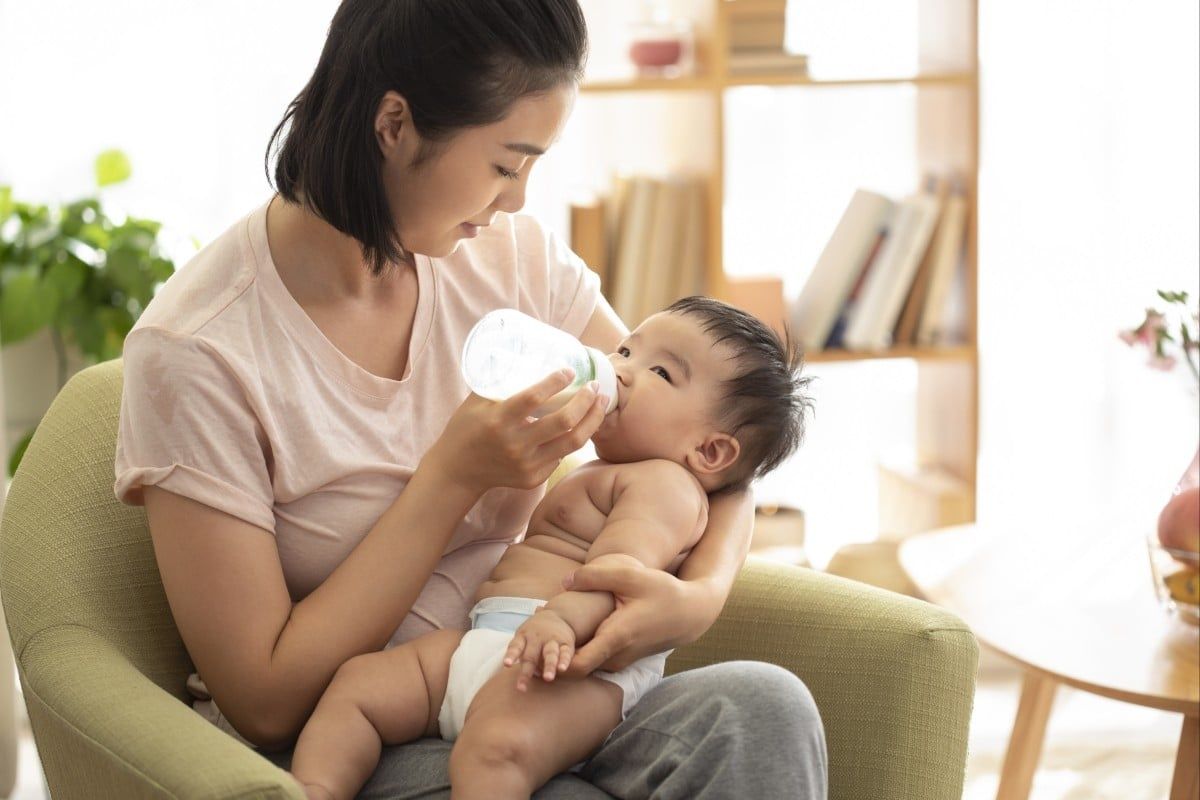
A three-month-old boy in China's Guangdong province required intensive care treatment after his parents inadvertently poisoned him by preparing infant formula with vegetable juice instead of water. The incident, which saw the child rushed to Zhongshan Women and Children's Hospital with severe symptoms including purplish-blue lips, purple-tinged skin and breathing difficulties, underscores a troubling pattern of well-intentioned but medically dangerous feeding practices among some Chinese families.
The parents' reasoning, while understandable to concerned guardians seeking optimal nutrition for their child, reflects a fundamental misunderstanding of infant physiology and food chemistry. They believed vegetable juice would provide superior nutritional value compared to plain water, a misconception that nearly cost their son his life. Hospital staff quickly identified the culprit: nitrite poisoning, a condition that emerged after the infant consumed the contaminated formula shortly before symptoms manifested.
Doctors explained the mechanism behind this toxic outcome in scientific terms accessible to the broader public. When vegetables undergo prolonged boiling—a common preparation method in many Asian households—the cooking process converts naturally occurring nitrates into nitrites, concentrated compounds that pose particular danger to vulnerable populations. This chemical transformation creates what appears to be an innocent, nutrient-rich broth but is actually a hazardous substance for immature biological systems.
A three-month-old infant's body remains physiologically underdeveloped in critical ways that directly contributed to this crisis. The digestive system and kidneys, organs responsible for filtering and processing substances, have not yet matured sufficiently to manage high concentrations of nitrates or their converted forms. This developmental limitation means that infants cannot metabolise or eliminate such toxins efficiently, allowing them to accumulate to dangerous levels in the bloodstream.
Once nitrites enter an infant's circulation, they interfere with the blood's fundamental oxygen-transport function. The compound binds to haemoglobin molecules, reducing the blood's capacity to carry oxygen throughout the body. This mechanism explains the distinctive purple discolouration that alarmed the parents—the baby's lips, skin and fingernails turned bluish-purple as tissues became oxygen-starved, a condition known medically as cyanosis. The difficulty breathing the child experienced reflected his body's desperate struggle to obtain adequate oxygen despite circulating blood that could no longer efficiently transport it.
Following two days of intensive medical intervention, the infant was discharged from hospital in mid-June, though the experience represents a narrow escape from potential permanent harm or fatality. His recovery, while ultimately successful, illustrates both the resilience of young children and the critical importance of immediate medical intervention when poisoning is suspected. Paediatrician Cao Qi from Nanning No 1 People's Hospital in Guangxi emphasised this time-sensitive dimension of nitrite toxicity, warning that delays of mere minutes can prove life-threatening in such cases.
Medical professionals responding to this incident have issued clear guidance to parents across the region. Formula should be mixed exclusively with warm water, nothing else. Common household substitutes—vegetable broth, rice water, fruit juices and various soups—all carry potential risks and should never replace water in infant nutrition. This simplicity of instruction belies the complexity of the nutritional and chemical considerations underlying the advice.
Cao Qi's subsequent public health messaging on social media reveals frustration among medical professionals with persistent dangerous practices. He cautioned against parents following trends or relying on subjective judgment in infant feeding decisions, emphasising that natural foods, despite their general health benefits for older children and adults, may prove unsuitable or even deadly for newborns. This distinction between age-appropriate nutrition represents a crucial but frequently overlooked principle in child-rearing.
China's social media environment has repeatedly amplified stories of unusual and dangerous infant feeding practices, suggesting these incidents reflect broader cultural patterns rather than isolated incidents. The previous year witnessed another high-profile case in Henan province involving a 52-day-old infant hospitalised for botulism poisoning after his grandmother added honey to his water—a practice that directly contradicts international paediatric guidance. These recurrent stories indicate a persistent gap between medical knowledge and household practice.
For Malaysian and Southeast Asian readers, this incident carries particular relevance given shared culinary traditions and similar concerns about providing optimal nutrition to young children. Many families across the region regularly prepare broths and vegetable infusions as dietary staples, and similar misconceptions about their appropriateness for infants may exist. The case demonstrates how cultural food practices, nutritionally sound for adults and older children, require careful reassessment when applied to infants whose biological development remains incomplete.
The broader public health lesson extends beyond this single family's tragedy. Paediatricians emphasise that parents require accessible, culturally sensitive education about infant nutrition that acknowledges their desire to provide the best possible care while grounding recommendations in developmental biology. The gap between good intentions and harmful outcomes, illustrated so starkly by this case, demands continued effort to ensure accurate information reaches families before such incidents occur.
Healthcare authorities and parenting educators across Southeast Asia should consider whether existing guidance reaches populations inclined toward traditional or experimental feeding approaches. Standard medical advice, though scientifically sound, sometimes fails to address the reasoning behind alternative practices or explain adequately why seemingly harmless natural substances pose genuine risks. This three-month-old's ICU admission ultimately represents a preventable tragedy, one that calls for more sophisticated and culturally informed approaches to child health communication.

