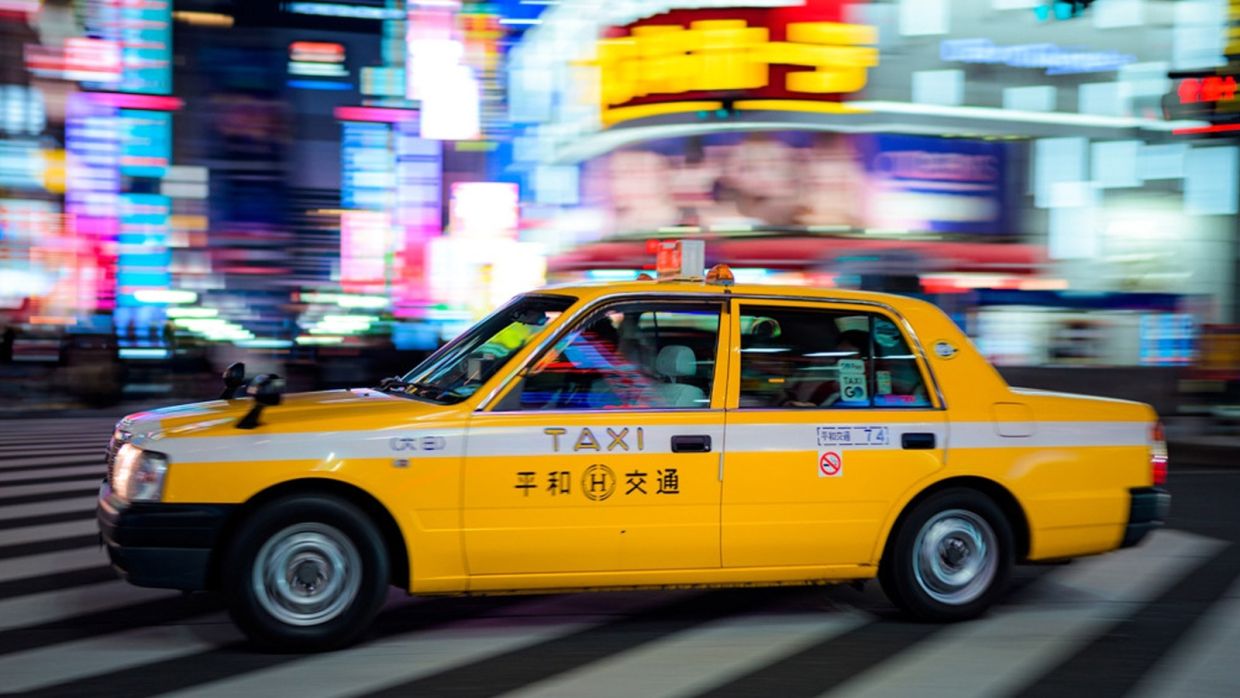
Japanese authorities have arrested Wang Xiaoyu, a 41-year-old Chinese national, on suspicion of running an illegal transportation network in Tokyo that capitalised on regulatory loopholes to ferry tourists without proper licensing. The operation came to light following complaints from legitimate taxi operators about unauthorised vehicles soliciting passengers at Haneda Airport, one of Asia's busiest aviation hubs. The case highlights vulnerabilities in Japan's urban transportation oversight and raises broader concerns about how fast-growing inbound tourism is creating opportunities for regulatory circumvention across the region.
Wang's scheme centred on exploiting Japan's "urban hire" vehicle category, a transportation class introduced in 2014 that permits commercial passenger transport under specific conditions. These vehicles are identified by distinctive green licence plates—a feature meant to distinguish them from regular taxis and facilitate regulatory oversight. However, the system proved susceptible to abuse. Wang leased vehicles registered to Phoenix Kokusai, a chauffeur service company that he effectively controlled, to individuals who were not officially employed by the firm. These drivers then operated as unlicensed taxis, transporting primarily Chinese tourists and other visitors between February and April of this year.
The revenue generated through this illicit operation was substantial. Tokyo Metropolitan Police Department investigators determined that Wang received approximately 38 million yen, equivalent to roughly USD 233,000, in fees from 18 drivers compensating him for use of the company's name and vehicle registrations. This arrangement persisted from November 2024 through May 2026, suggesting an enterprise that grew increasingly sophisticated and profitable over time. The financial scale of the operation underscores how such schemes can flourish when regulatory enforcement remains inconsistent or when operators understand loopholes better than authorities.
The vulnerability that Wang exploited reflects a structural challenge in Japan's transportation regulation. The green licence plate system, intended to create transparency, has paradoxically become difficult for authorities to monitor effectively. Police officials have acknowledged that vehicles bearing green plates are hard to distinguish from legitimately operated urban hire services through visual inspection alone. Without active investigation or passenger complaints, determining whether a vehicle is operating legally becomes nearly impossible. This enforcement gap is particularly acute at major transportation hubs like Haneda, where high passenger volumes and tourist congestion create ideal conditions for unlicensed operators to blend into the flow of legitimate services.
Wang's partial denial of the allegations suggests potential legal complexity in the prosecution. While he disputes certain aspects of the charges, the evidence appears substantial. Police have also arrested three drivers, all Chinese nationals, for their roles in operating the unlicensed services. The targeting of Chinese nationals—both as the operator and the drivers—reflects patterns in tourism-related violations where language barriers and familiarity with international visitor networks create advantages for immigrants with established ethnic community connections. This dimension has implications for how Southeast Asian countries, which receive millions of Chinese tourists annually, might anticipate similar regulatory challenges.
The broader context involves Japan's transformation as a tourism destination. The number of registered urban hire vehicles has grown dramatically from 3,868 in the 2013 fiscal year to 8,850 by fiscal 2024, an increase of 128 percent. This expansion reflects genuine demand driven by record inbound tourism, which reached historic levels before the pandemic and has since rebounded. Yet rapid growth in a regulatory category can create enforcement lag, where authorities struggle to monitor compliance across an exponentially larger fleet. Vehicle operators, particularly those willing to operate outside legal frameworks, exploit this monitoring deficit to undercut licensed taxi services and capture market share.
For Malaysian and Southeast Asian readers, this case offers instructive lessons about tourism infrastructure management. As countries in the region compete to attract international visitors and expand ground transportation options, similar regulatory vulnerabilities may emerge. The proliferation of ride-sharing and informal transportation services across Southeast Asia already illustrates how quickly informal networks can develop when formal licensing regimes are perceived as restrictive or when enforcement remains inconsistent. Japan's experience demonstrates that even wealthy, developed nations with sophisticated regulatory systems face challenges preventing such operations.
The investigation's origin—complaints from competing taxi drivers—highlights how market participants themselves often serve as the frontline enforcement mechanism. Legitimate operators, whose business models depend on compliance with expensive licensing requirements, have strong incentives to report violations. This suggests that regulatory authorities in any jurisdiction should develop robust complaint mechanisms and treat industry reports seriously. Tokyo Metropolitan Police's responsiveness to taxi driver complaints ultimately cracked open the Phoenix Kokusai scheme.
The case also reflects tensions inherent in tourism growth. Cities benefit enormously from international visitor spending and the associated economic activity. However, when that growth outpaces regulatory capacity or creates incentives for circumvention, the benefits become unevenly distributed. Licensed operators bear compliance costs while unlicensed competitors enjoy unfair advantages. Workers in the informal transport sector, meanwhile, often lack employment protections and safety standards that regulated services provide. Wang's drivers, by operating without official status, worked in precarious circumstances despite the apparent profitability of the overall operation.
Moving forward, Japanese authorities will likely face pressure to strengthen oversight of the urban hire category without unnecessarily restricting a legitimate transportation option that serves genuine market demand. The challenge involves designing enforcement strategies that can detect violations without requiring every interaction to be individually investigated. Some jurisdictions have implemented GPS tracking, customer verification requirements, or real-time dispatch monitoring. Tokyo may adopt similar measures, though such systems raise privacy considerations that require careful policy debate.
For the broader Southeast Asian region, the Tokyo case underscores that as inbound tourism grows and transportation services expand, regulatory frameworks must evolve in parallel. Nations that can anticipate vulnerabilities and address them proactively—through clear licensing standards, adequate enforcement capacity, and transparent complaint mechanisms—will avoid situations where organized illegal operations flourish. The Phoenix Kokusai scheme generated hundreds of thousands of dollars in illicit revenue; equivalent operations across Southeast Asia could be substantially larger given the region's lower compliance costs and enforcement capacity constraints, making proactive regulatory attention an economic imperative.

