Deputy Communications Minister Teo Nie Ching has issued a broad call for restraint among the nation's public sector workforce, urging officials to consciously avoid language that could be perceived as disrespectful or provocative when making statements to the public. Speaking in Putrajaya on June 15, Teo framed the guidance as a matter of professional conduct and national responsibility, emphasising that such standards should apply consistently rather than merely during election periods when political sensitivities are heightened.
The minister's remarks were specifically triggered by scrutiny of Mohd Hisyamuddin Ghazali, the newly appointed director-general of the Department of Community Communications (J-KOM), who has faced criticism over statements deemed inappropriate since assuming the post on June 9. Teo's intervention signals concern within the ministry about the tone and tenor of official communications at a time when public discourse has become increasingly fractious across multiple platforms.
Teo drew particular emphasis on the need for officials to steer clear of the three sensitive pillars commonly referenced in Malaysian public discourse: issues touching on race, religion, and matters concerning the institution of royalty. These domains represent longstanding constitutional sensitivities in Malaysia's multicultural and multi-religious society, and breaches in these areas carry significant reputational and legal consequences for individuals and agencies alike. By invoking these so-called 3R considerations, Teo underscored the expectation that government communications should reflect constitutional values and national unity principles.
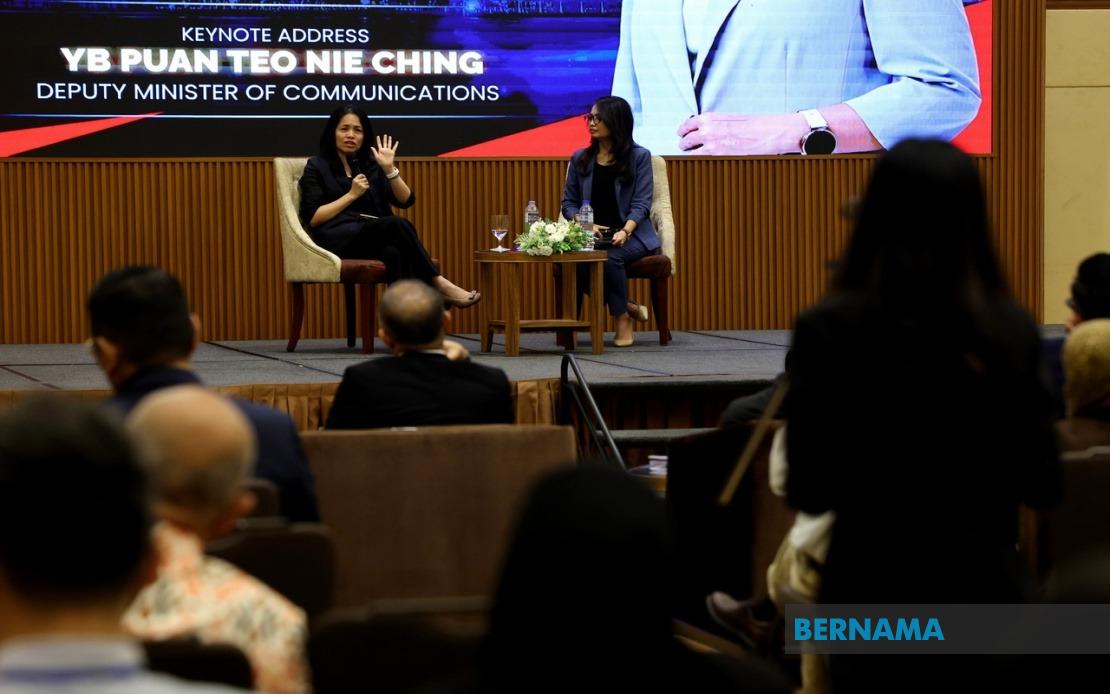
The deputy minister made her comments while officiating an industry dialogue focused on balancing viral content with journalistic responsibility, a forum particularly relevant given the contemporary challenge of managing official messaging in an age of rapid digital dissemination. Her timing suggests recognition that poor word choices from government officials can spread quickly across social media, amplifying divisions and potentially undermining public confidence in state institutions. The emphasis on measured communication appears rooted in practical concern about reputational damage rather than mere protocol.
Teo acknowledged that she had not yet met directly with Mohd Hisyamuddin to convey these standards in person, suggesting that her public statement may serve as an indirect but clear message to the newly installed J-KOM leadership. Appointing a new director-general at J-KOM represents a significant moment for communications strategy, as the department plays a central role in coordinating government messaging and managing the government's relationship with media and public audiences. The timing of controversial remarks so soon after an appointment raises questions about whether orientation or guidance processes for new senior officials adequately address communication expectations.
The controversy surrounding Mohd Hisyamuddin's tenure, though not detailed in Teo's public remarks, reflects broader challenges facing Malaysia's public service. As government agencies increasingly engage directly with citizens through social media and digital platforms, the boundary between formal communications and personal expression has blurred, creating situations where officials may be held accountable for remarks intended as informal commentary. The expectation that civil servants maintain professional standards even in less formal contexts has become a contested terrain where notions of free expression and institutional discipline intersect.
For Malaysian readers and regional observers, Teo's intervention carries implications beyond the immediate case of J-KOM's leadership. It signals that Malaysia's political and administrative establishment remains acutely aware of the destabilising potential of provocative rhetoric, particularly on sensitive communal issues. The emphasis on consistency—avoiding inappropriate language at all times rather than merely during campaigns—suggests recognition that the public's trust in institutions depends partly on whether officials apply standards uniformly rather than situationally.
The broader context involves Malaysia's experience with political rhetoric that has occasionally inflamed ethnic and religious tensions. By calling for restraint and proper language standards from the civil service, Teo is positioning government employees as custodians of a particular standard of public discourse. This approach reflects a view that the state apparatus should model the kind of measured, respectful communication that the government wishes to encourage more broadly in society.
The J-KOM appointment itself reflects wider government restructuring. Mohd Hisyamuddin replaced Datuk Ismail Yusop, marking a leadership transition at a department responsible for crafting how Malaysia's government presents itself to citizens and international audiences. Early missteps by the new director-general, if they occurred as suggested by the criticism Teo addressed, could signal broader questions about whether the selection process adequately assessed candidates' communication judgment and public sector values.
For media and communications professionals in Malaysia, Teo's remarks carry cautionary weight. The deputy minister was speaking at an event specifically addressing the interplay between content virality and journalistic responsibility, topics increasingly central to Southeast Asian media discussions. Her emphasis on official restraint implicitly acknowledges that public sector speech carries magnified influence through media amplification, making precision and propriety more important for government officials than for private citizens.
Moving forward, the incident appears likely to prompt internal ministry guidance about communication standards. The fact that Teo felt compelled to issue public remarks rather than address concerns through internal channels suggests either that earlier warnings to J-KOM had not achieved desired results or that the visibility of the controversy demanded a public response. Either interpretation points to ongoing tension between administrative oversight and departmental autonomy within Malaysia's civil service structure.
The broader significance of this episode lies in its illustration of how modern governance requires constant negotiation between institutional values and individual expression. Teo's intervention demonstrates that Malaysia's political leadership continues to view the civil service as a potential vector for either national harmony or communal friction, depending on how officials exercise their considerable platform. The challenge for Malaysia remains ensuring that such guidance maintains space for honest policy disagreement while preventing rhetoric that weaponises sensitive identity categories.