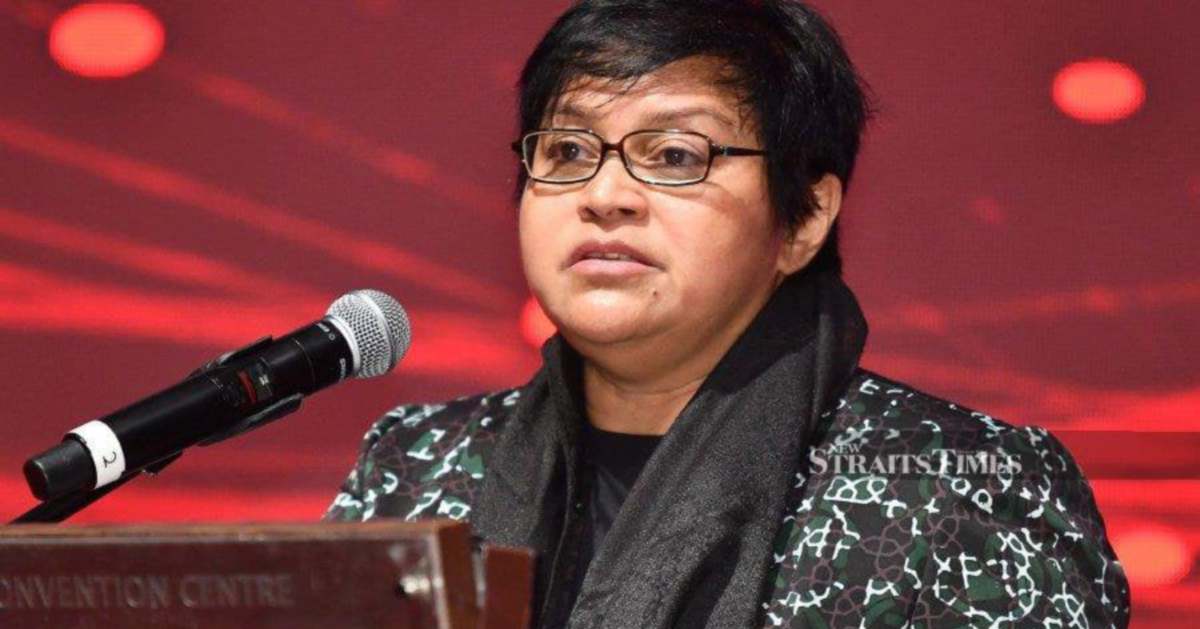
The prospect of forming coalition administrations or unity governments in Johor should be shelved until after voters have cast their ballots and results are tabulated, according to Umno's top communications strategist Datuk Seri Azalina Othman Said. Speaking from Putrajaya, the senior party official has drawn a clear line on the timing of political negotiations, suggesting that speculation about post-election alliances is premature and potentially counterproductive.
Azalina's intervention reflects a broader pattern of caution within the federal government regarding state-level political arrangements. The Umno information chief's statement carries particular weight given her prominent role in shaping the party's public messaging and her proximity to senior decision-makers. Her comments suggest that the party hierarchy has yet to settle on its approach to possible power-sharing arrangements in the southern state, despite escalating discussion among grassroots members and political analysts about various coalition scenarios.
Johor stands as a crucial political battleground for Umno, which has governed the state for decades and views it as one of its traditional strongholds. The state's electoral significance extends beyond mere seat counts—it represents a symbolic test of Umno's political relevance and capacity to mobilise voters outside the federal government structure. Any perceived weakness or uncertainty in Johor could reverberate across other state contests and influence calculations ahead of the next general election.
The push to defer coalition negotiations until after election results emerge serves multiple strategic purposes. By insisting on this sequencing, Umno avoids appearing to negotiate from a position of weakness or to preemptively concede certain outcomes. Premature coalition talks might suggest the party anticipates difficulties retaining sufficient seats to govern independently, potentially demoralising its own supporters and emboldening rivals who could interpret such moves as signs of vulnerability.
From an electoral perspective, keeping coalition discussions off the table during campaigning allows all participating parties to focus messaging on their individual platforms and achievements rather than becoming entangled in complex power-sharing arrangements that might confuse voters. Parties contesting elections typically prefer clean narratives centred on their own vision and track record, finding that discussions of intricate political arrangements tend to distract from core campaign messaging and can create perceptions of backroom dealing.
The timing of Azalina's remarks also reflects the competitive dynamics within Malaysia's broader political landscape. With multiple parties vying for influence in Johor and questions swirling about the viability of various alliance combinations, maintaining strategic ambiguity provides negotiating flexibility. Once results become apparent, the arithmetic of available coalition partners becomes obvious, and actual negotiations can proceed from a position informed by tangible electoral outcomes rather than speculation.
For Malaysian readers unfamiliar with Johor's political architecture, the state has been a Umno bastion but has recently experienced electoral tremors, with opposition parties making inroads and some constituencies displaying increased volatility. The possibility of coalition or unity government arrangements would represent a significant departure from decades of straightforward single-party governance in the state, underscoring the competitive pressures reshaping Malaysian electoral politics.
Azalina's stance also acknowledges an uncomfortable reality within party politics: discussions of how to divvy up ministerial positions, state development allocations, and other spoils of power can become divisive if conducted prematurely. Senior figures like Azalina understand that such conversations, if leaked or amplified, can generate faction-building, resentment, and accusations of corruption that undermine a party's electoral appeal, particularly among voters sceptical of political elites.
The constraint against pre-election coalition negotiations extends deeper into fundamental questions about democratic legitimacy. Malaysian voters increasingly demand clarity about who they are voting for and what specific arrangement they are endorsing. Parties that appear to negotiate coalitions before consulting the electorate risk alienating voters who feel their choices have been predetermined by backroom deals rather than reflecting genuine electoral will. This concern about voter sentiment and the perception of transparency increasingly shapes how seasoned politicians like Azalina approach pre-election positioning.
For Southeast Asian observers, Azalina's comments exemplify broader patterns in Malaysian politics where state-level contests function as testing grounds for national political strategies. Johor's electoral trajectory will likely influence calculations about coalition viability in other states and could reshape the calculus leading into the subsequent general election, making the state a crucial data point for tracking Malaysia's evolving political realignment.
The insistence on postponing coalition talks until after results emerge also preserves optionality for all potential partners. Without knowing exact seat distributions, various combinations remain theoretically possible, and forcing premature negotiations could eliminate configurations that become advantageous once actual numbers are known. This flexibility serves not only Umno but any party contemplating its post-election positioning, making Azalina's call for sequencing a broadly rational strategic preference across the political spectrum.

