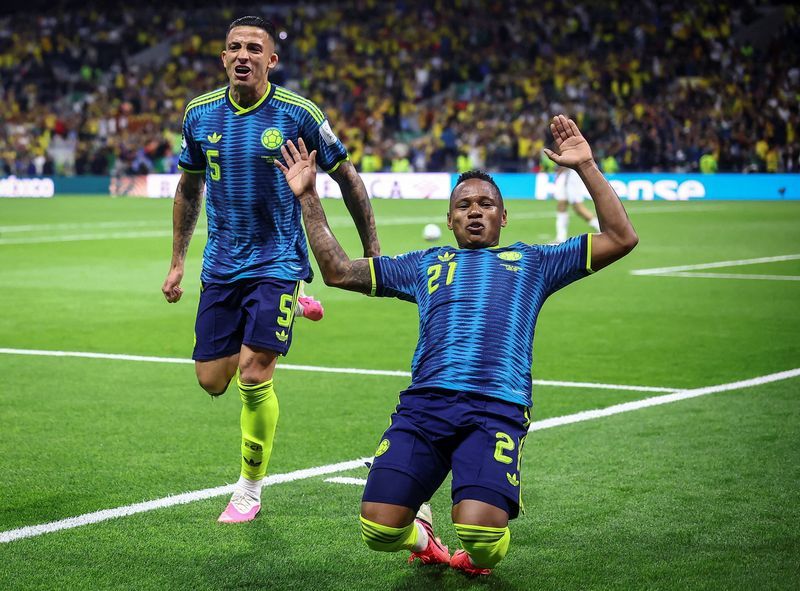
Colombia will attempt to maintain their winning momentum in Group K when they confront DR Congo on Tuesday, as manager Nestor Lorenzo's squad looks to build on an opening victory while remaining cautious of an opponent who has already demonstrated the capacity to trouble elite opposition. The South American side's 3-1 triumph over Uzbekistan launched their campaign positively, though the nature of that performance—marked by defensive fragility in the latter stages—has prompted reflection within the squad about the areas requiring immediate improvement.
Success against DR Congo would secure Colombia's progression to the knockout rounds and could even clinch top spot in the group should Portugal stumble against Uzbekistan. However, Lorenzo's tactical preparations must account for a visiting team that arrives with genuine confidence after their eye-catching 1-1 stalemate against the Portuguese. The Congolese, competing in the World Cup for the first time since 1974 when the nation was known as Zaire, have signalled they intend to be far more than ceremonial participants in this tournament.
The standout performer for Colombia thus far has been Bayern Munich's Luis Diaz, whose combination of pace, intelligent movement, and finishing prowess proved decisive against Uzbekistan. The 27-year-old completed a full-bodied attacking display that included both a goal and an assist, earning him the player-of-the-match accolade. However, the Colombian midfield setup permitted their opponents to penetrate dangerously during stretches of the second half, suggesting that Lorenzo cannot afford complacency when confronting a DR Congo side equipped with the tactical discipline to exploit such openings.
Captain James Rodriguez, Colombia's orchestrator in midfield, operated with limited influence during the opener, with the team's attacking play predominantly channelled through Diaz's direct interventions rather than the intricate build-up play one might expect from a team of Colombia's quality. Lorenzo has publicly acknowledged this imbalance, recognising that greater involvement from his captain could provide the nuanced playmaking that transforms one-dimensional attacking patterns into more sophisticated patterns of play. The pressure now rests upon Rodriguez to deliver a more commanding midfield presence against opponents who will attempt to restrict Colombia's space through systematic pressing.
DR Congo's opening-match performance against Portugal demonstrated several strategic strengths that should concern Lorenzo's preparation team. Coach Sebastien Desabre has fashioned a unit capable of maintaining defensive organisation even when faced with sustained Portuguese possession, while simultaneously threatening on the counter-attack through rapid transitions. Yoane Wissa's opening-minute goal—the nation's first in World Cup history—announced their arrival as a potent force, and the Brentford forward's movement may again pose problems for a Colombian backline that showed occasional susceptibility to organisation lapses.
Lorenzo has specifically highlighted the transitional nature of Congo's play as the primary tactical challenge awaiting his team. The Argentine coach's assessment—that his opponents favour long-ball strategies and aggressive counter-attacking—underscores a fundamental mismatch in playing styles that could prove decisive. Whereas Colombia prefer dominating possession to manipulate match rhythm and create numerical advantages in attacking areas, Congo will seek to cede territory and exploit spaces behind the Colombian defensive line through explosive directness. This tactical asymmetry, Lorenzo acknowledged, creates genuine complexity for his preparation, demanding that his team balance their natural inclination to control proceedings with the discipline required to neutralise a counter-attacking threat.
The Colombian coach also identified a subtle vulnerability in his team's performance against Uzbekistan: their possession dominance occasionally became counterproductive, with players dwelling excessively on the ball in searching for the perfect opportunity rather than capitalising on advantageous positions when they materialised. This lack of clinical finishing in the final third represents a concern that must be rectified, particularly against opponents who grant fewer openings through their compact defensive approach. The instruction to his attackers appears clear—when chances present themselves, conversion becomes paramount rather than waiting for the ideal scenario.
Domestic support may significantly influence the contest's dynamics. Thousands of Colombian supporters transformed Mexico City's Estadio Azteca into an improvised home ground during the Uzbekistan match, providing vocal encouragement that undoubtedly boosted squad morale. With Guadalajara serving as Colombia's tournament base, another substantial contingent of yellow-clad supporters is anticipated to travel north, potentially recreating the atmospheric advantage that characterised their opening fixture. Such backing often proves invaluable during tight contests where psychological momentum tilts proceedings in either direction.
DR Congo's emergence as a genuine competitive force has fundamentally altered Group K's narrative. Prior to the Portugal match, conventional wisdom suggested the Africans would occupy fourth spot, collecting minimal points and suffering heavy defeats. Instead, Desabre's team has established themselves as dangerous opponents capable of exploiting the specific vulnerabilities of higher-ranked sides. Colombia cannot afford to approach this encounter with presumptions of superiority; rather, Lorenzo must prepare his squad for a dogged, organised opponent determined to execute a clear tactical blueprint designed to suffocate creativity and punish carelessness in transition.
The broader implications for Colombia's tournament trajectory depend significantly upon their response to DR Congo's challenge. A convincing victory against Desabre's well-organised unit would substantially enhance confidence heading into their final group match, particularly if that fixture determines their knockout-stage seeding. Conversely, a laboured victory or surprise setback would demand serious recalibration of both tactical approach and mental approach as the tournament progresses. For Southeast Asian observers, the contest represents a compelling demonstration of how organised, disciplined defending combined with tactical clarity can neutralise superior possession-based teams—lessons applicable across multiple football contexts.

