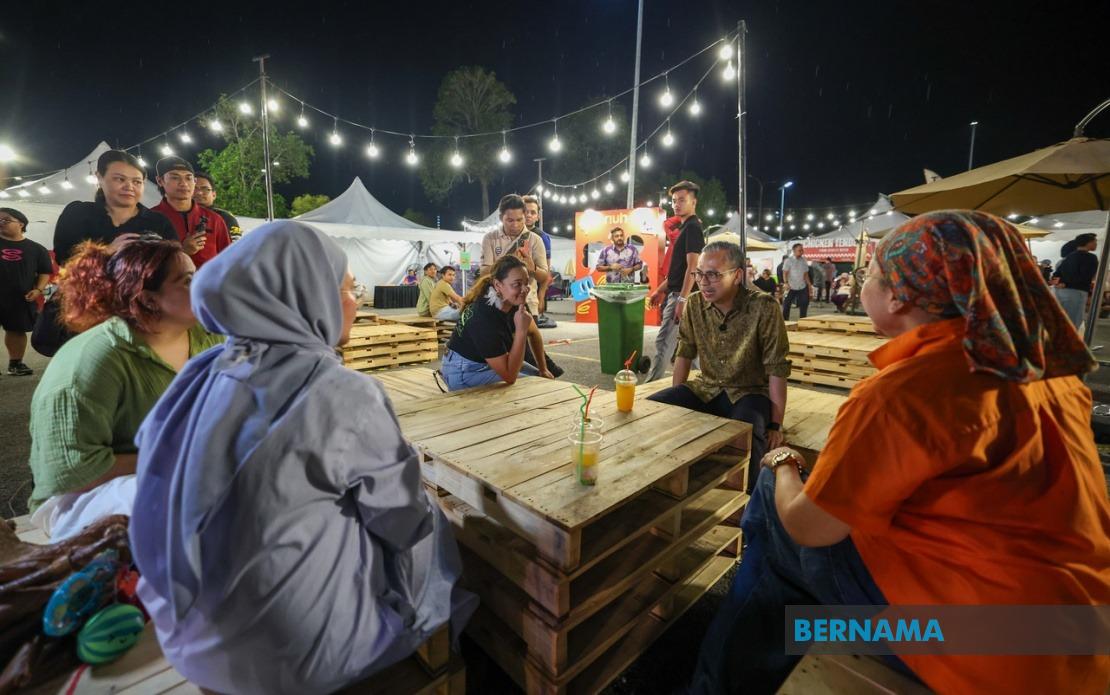
Communications Minister Datuk Fahmi Fadzil has commended the strong reception to the RIUH Pi HAWANA carnival held at the PICCA Convention Centre @ Butterworth Arena, voicing confidence that the event effectively serves as a launching pad for Malaysia's homegrown creative sector. Speaking at the carnival on June 19, Fahmi highlighted the seamless execution of the programme, which coincides with the National Journalists' Day (HAWANA) 2026 celebration, and underscored its importance in bridging established artistes with younger performers in front of engaged audiences.
The carnival has succeeded in drawing considerable footfall since its opening, validating the concept of pairing creative industries with cultural programming. Fahmi noted particular satisfaction with the diversity of performers assembled, including the rock band Exists and other acts spanning multiple genres, suggesting that the event's curatorial approach appeals to audiences across different age groups and musical preferences. This intergenerational appeal has become increasingly important as Malaysia seeks to maintain interest in live entertainment and creative content amid competition from digital platforms.
Fahmi's endorsement carries weight beyond typical ministerial pleasantries. As the Communications portfolio holder, his perspective reflects governmental interest in supporting the creative economy, a sector that policymakers have identified as crucial for post-pandemic economic diversification. The carnival's ability to attract crowds while simultaneously providing visibility to 24 local creative brands demonstrates the multiplier effect when cultural events are designed with both entertainment and commercial objectives in mind.
The minister called upon Penang residents and visitors throughout the region to take advantage of the remaining days of the carnival, which continues through the weekend. This appeal to expand attendance reflects broader aspirations to entrench such events within Malaysia's cultural calendar. By framing participation as an opportunity to support local creatives, Fahmi positioned attendance not merely as entertainment consumption but as a form of economic participation.
Beyond the immediate carnival, Fahmi expressed hope that RIUH Pi HAWANA would become a recurring fixture alongside future HAWANA celebrations. This vision suggests the Communications Ministry views the pairing as mutually beneficial—HAWANA gains cultural cachet through association with contemporary creative industries, while the creative sector gains institutional backing and guaranteed promotional platforms. Should this proposal materialise, it could establish a template for how government agencies integrate cultural programming with professional observances.
The carnival's structure reveals thoughtful event design. Organisers MyCreative Ventures assembled a comprehensive ecosystem: more than two dozen creative vendors provide shopping and discovery opportunities, two dozen food and beverage operators ensure visitor comfort and extended stay times, while interactive workshops transform passive observation into active participation. This layered approach maximises dwell time and creates multiple touchpoints where attendees might discover new favourite brands or artistes. The inclusion of 18 live performances, spanning established acts like Bunkface alongside emerging talents such as Budak Nakal Hujung Simpang and Chelsia Ng, reflects professional curation balancing proven crowd appeal with artist development.
The presence of diverse performers carries cultural significance for Penang specifically. As Malaysia's second-largest metropolitan area and a state with distinct musical heritage, Penang audiences represent both a testing ground for new acts and a loyal base for established performers. The carnival's decision to feature both regional acts and performers with national profiles suggests organisers recognised Penang's role as both a destination and a talent incubator within Malaysia's creative landscape.
Fahmi's comments arrive at a moment when Malaysian creative industries face particular headwinds. Copyright enforcement remains inconsistent, streaming platforms cannibalise traditional revenue streams, and international content often overshadows homegrown productions. Live events like RIUH Pi HAWANA become increasingly valuable as one of few remaining revenue opportunities where Malaysian artistes can generate income while building direct relationships with audiences. The carnival thus serves a practical economic function beyond its entertainment value.
The HAWANA observance itself, established in 2018 and administered by the Communications Ministry through the Malaysian National News Agency (Bernama), underscores the government's stake in media and cultural narratives. By pairing HAWANA with the creative carnival, organisers created a thematic link between journalism and cultural production—both sectors responsible for shaping public discourse and national identity. This conceptual integration may appeal to government stakeholders while remaining commercially and culturally viable for public audiences.
For visitors from across Southeast Asia who might attend through Penang's tourism infrastructure, the carnival offers accessible entry into contemporary Malaysian creative culture. Unlike institutions or museums that require specific interest or advance planning, a carnival encourages casual discovery and spontaneous participation. This accessibility factor could enhance Penang's reputation as a cultural destination, particularly among younger demographics who form the primary audience for creative industries content.
The enthusiasm Fahmi expressed suggests official confidence in the carnival's success and possible longevity. Should attendance figures and vendor feedback prove positive, organisers may scale the event, introduce it to other Malaysian states, or expand its duration. Such expansion would require sustained coordination between the Communications Ministry, cultural organisations, and commercial partners—a structure that appears functional based on this year's outcomes.
Looking forward, the carnival's reception offers Malaysian policymakers tangible evidence that citizens will engage with locally produced creative content when it is presented professionally and accessibly. This data point may influence future funding decisions and policy frameworks supporting the creative sector. For artistes, entrepreneurs, and media professionals, the carnival represents validation that the domestic market for Malaysian creativity remains viable when properly cultivated and promoted, a reassuring signal amid global competition for attention and resources.

