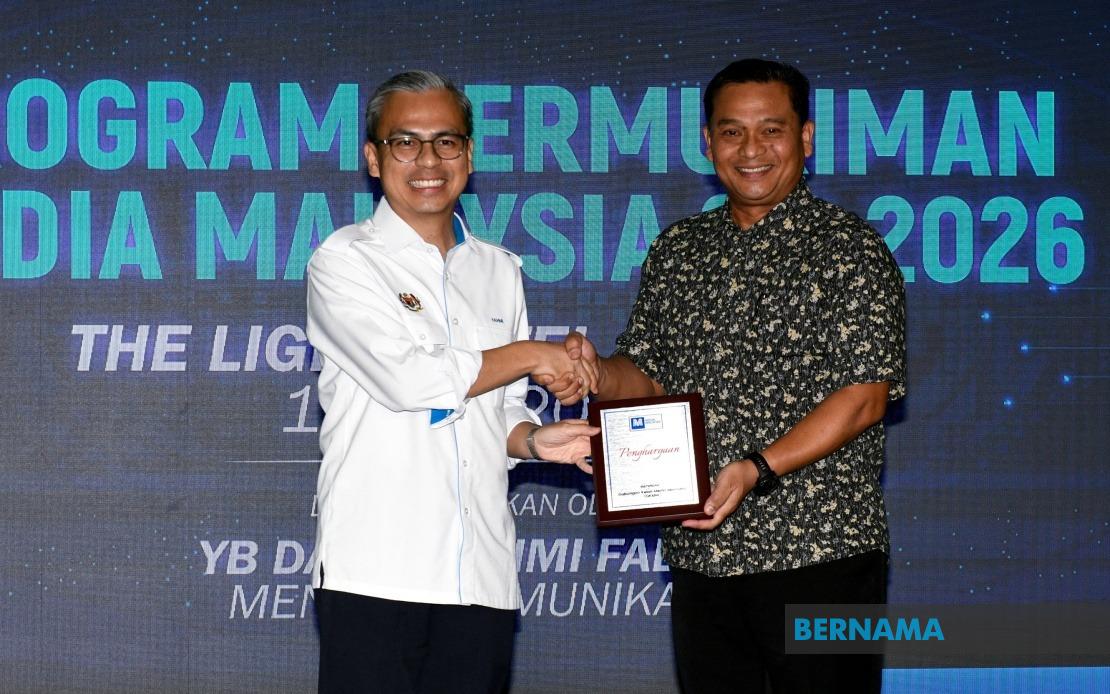
Communications Minister Datuk Fahmi Fadzil has unveiled a funding initiative aimed at strengthening Malaysia's media fraternity, announcing that each state media club participating in the Malaysian Media Clubs Association will receive RM10,000 in financial support. The association itself will secure an additional RM30,000 allocation to finance welfare programmes and activities benefiting journalists across the country. The minister made this declaration during his address at the Malaysia Media Retreat Programme 2.0 in Butterworth on June 19, emphasising the importance of channelling resources toward the sustainability of the media profession.
The funding announcement reflects the government's broader commitment to supporting journalists at a time when the media industry faces mounting pressures from technological disruption and economic uncertainty. By routing money through state-level clubs, the ministry seeks to ensure that benefits reach practitioners at the grassroots level, addressing concerns that have long preoccupied media professionals regarding job security, remuneration, and working conditions. Fahmi's decision to allocate funds directly to individual state clubs demonstrates a recognition that media communities operate distinctly across Malaysia's various regions, with each jurisdiction facing unique challenges that merit localised attention and resources.
During his remarks, Fahmi stressed the irreplaceable nature of journalism in an age of advancing artificial intelligence and digital transformation. He articulated a vision in which human journalists remain central to Malaysia's information ecosystem, arguing that the ability to witness events firsthand, cultivate primary sources, and apply journalistic discipline to raw information cannot be replicated by algorithms. This position carries particular significance in Southeast Asia, where AI-driven content aggregation and automated news generation pose existential questions for traditional newsrooms struggling with shrinking revenues and reduced staff capacities. The minister's public endorsement of journalism's human element signals governmental acknowledgment of these challenges and a determination to preserve professional news gathering as a cornerstone of democratic society.
The allocation to GKMM itself underscores the government's view that industry associations, while not formal labour unions, possess critical legitimacy in articulating the collective interests of media workers. The Malaysian Media Clubs Association serves as a crucial conduit for raising concerns about journalist welfare, advocating for improved professional standards, and channelling industry perspectives into policy discussions. By funding the association's operations, the Communications Ministry acknowledges its role as an essential intermediary between government and the media workforce, enabling it to organise activities that strengthen professional networks and address shared grievances that individual media organisations might struggle to voice independently.
Fahmi's remarks also referenced the recently developed Malaysian Media Council Act, positioning it as an outcome of genuine consultation with industry stakeholders. He indicated that the government intends to maintain this collaborative approach to policymaking affecting the media sector, suggesting that future regulatory frameworks and support measures will continue to incorporate feedback from journalists and news organisations. This commitment to consultation holds considerable importance for Malaysian newsrooms, which have historically experienced tension between state interests and editorial independence. The minister's framing of the new media law as industry-informed rather than government-imposed signals a desire to build consensus around regulatory structures that balance legitimate public interests with press freedom.
The practical implications of the funding extend beyond symbolic gestures of support. For state media clubs operating on limited budgets, RM10,000 represents a meaningful injection of capital that can support training workshops, professional development seminars, and social welfare assistance for members facing hardship. These clubs often serve as communities of practice where journalists from competing outlets collaborate on matters of shared professional concern, from ethics guidelines to advocating for press freedom. Enhanced funding allows them to expand these functions, creating spaces where practitioners can exchange ideas, develop skills, and provide mutual support during economic downturns or industry disruptions.
The timing of this announcement carries weight in Malaysia's contemporary media landscape, where numerous publications have faced financial strain, resulting in newsroom reductions and accelerated departures of experienced journalists. Regional competitors like Singapore and Thailand have implemented various government and industry initiatives to sustain journalism, from training grants to technology partnerships. Malaysia's proactive funding of media clubs positions the country as taking seriously the need to retain journalistic talent and institutional knowledge that might otherwise dissipate as practitioners seek employment in adjacent sectors or relocate internationally. For journalists contemplating career stability, such government initiatives contribute to confidence in the profession's long-term viability.
The presence of senior government officials at the Media Retreat Programme, including Communications Ministry secretary-general Datuk Abdul Halim Hamzah and Malaysian National News Agency leadership, reinforced the official importance attached to the gathering. This high-level attendance demonstrated that media-related policy matters now command serious attention at senior bureaucratic levels, suggesting the Communications Ministry views journalism support as integral to broader governance objectives. The participation of Bernama leadership also highlighted the continued significance of Malaysia's national news agency as a cultural institution and potential partner in initiatives supporting the broader media ecosystem.
Fahmi's framing of journalists as essential witnesses to events establishes a philosophical foundation for ongoing government engagement with media practitioners. This perspective acknowledges that journalism serves public interests distinct from those of individual media proprietors or political actors. By positioning professional news gathering as irreplaceable infrastructure rather than merely commercial activity, the minister creates rhetorical space for continued government involvement in supporting the industry—a stance that could influence future budget allocations, regulatory decisions, and industry development programmes. For Malaysian newsrooms, this framing suggests that policymakers increasingly recognise journalism's broader social utility beyond entertainment or commercial value.
The allocation to state media clubs reflects a decentralised approach to media support that recognises Malaysia's federal structure and regional diversity. Penang, Selangor, Sarawak, and Sabah media communities operate within distinct political environments, serve geographically dispersed populations, and confront particular local challenges. By funding state-level organisations, the Communications Ministry acknowledges these differences while maintaining national coordination through GKMM, the umbrella association. This two-tier funding structure suggests a model that could be extended to other government support mechanisms, creating frameworks where national coordination complements localised implementation.
Moving forward, the success of this initiative will depend substantially on how effectively state media clubs and GKMM deploy these resources to address genuine journalist concerns. Transparent accounting, inclusive decision-making about fund allocation, and genuine responsiveness to member priorities will determine whether the initiative strengthens professional community or merely provides superficial financial gestures. For Malaysian journalists monitoring this development, the key question remains whether government support translates into concrete improvements to working conditions, professional development opportunities, and industry sustainability, or whether it remains symbolic without meaningful impact on daily professional realities.

