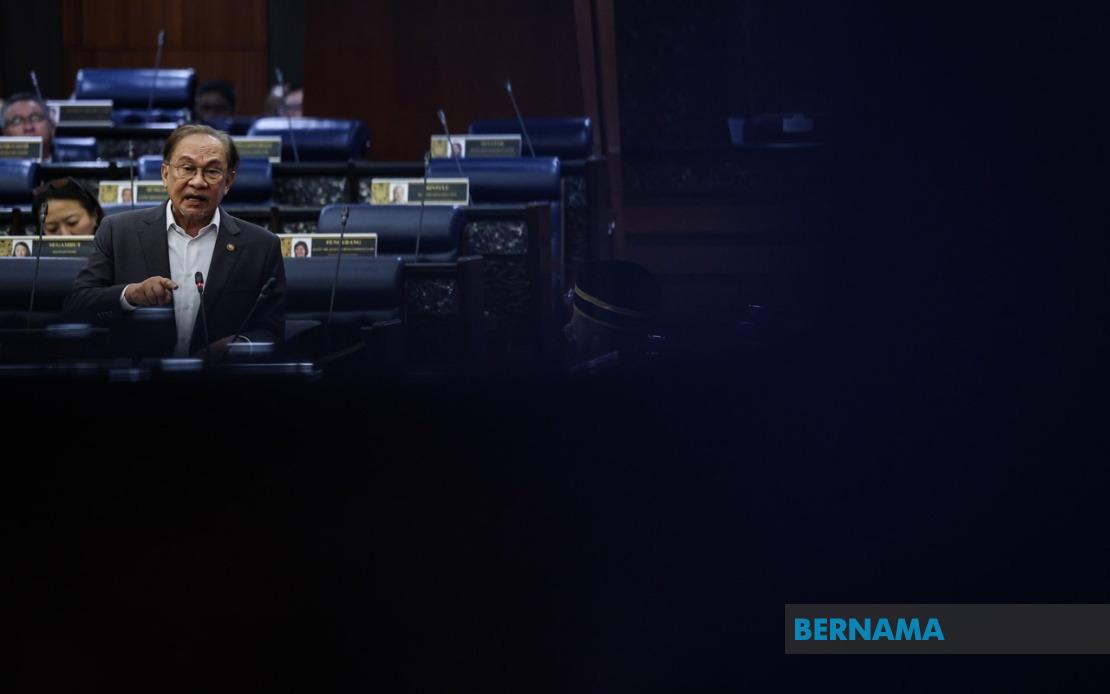
Prime Minister Datuk Seri Anwar Ibrahim has introduced a significant procedural safeguard for journalists, declaring that complaints against media practitioners from established news organisations will no longer trigger immediate government investigations or enforcement action. Instead, all grievances must first be channelled through the Malaysian Media Council (MMM), a gatekeeping mechanism designed to inject fairness and transparency into the complaint resolution process. This structural change represents a deliberate attempt to recalibrate the relationship between the state and the press, establishing a buffer against what the government characterises as frivolous or politically motivated accusations.
The Prime Minister articulated the underlying rationale during parliamentary question time on July 7, framing the MMM as an essential institutional check against arbitrary action. Anwar emphasised that the new protocol ensures journalists are not prosecuted or investigated merely because a complaint has been filed by a government agency or individual, a concern that has historically troubled media practitioners operating under Malaysia's restrictive legislation. By requiring initial vetting at the council level, the government seeks to prevent what it views as unjust targeting of reporters and editors simply for performing their professional duties, including coverage that may reflect unfavourably on particular government departments or officials.
This announcement directly addresses longstanding anxieties within Malaysia's journalism community regarding legislation that critics argue constrains press freedom disproportionately. The Sedition Act 1948 and the Official Secrets Act 1972 remain on the statute books, providing legal instruments through which journalists can be prosecuted for their reporting activities. These laws have drawn sustained international criticism from media freedom advocates, who contend they function as de facto censorship mechanisms that discourage fearless journalism and investigative reporting on matters of public interest. The introduction of the MMM framework suggests the government recognises the legitimacy of these concerns whilst stopping short of legislative reform.
Anwar acknowledged that no jurisdiction grants absolute freedom to press practitioners, positioning Malaysia within a global context where journalists operate within legal boundaries. However, he drew an important distinction between lawful regulation and weaponisation of the law against media organisations simply because their reporting generates displeasure among officials. The Prime Minister's statement reflected recognition that the separation between legitimate legal oversight and persecution of journalists can become dangerously blurred in practice, particularly in systems where political pressures influence enforcement decisions. By introducing the MMM as an intermediary body, the government presents itself as establishing independence and rigour in how complaints are assessed.
The Malaysian Media Council's role as a first-level reviewing authority fundamentally transforms complaint procedures previously characterised by direct government action. Under the new mechanism, before investigators from police or other enforcement agencies can proceed, the MMM must examine whether allegations of misconduct by media organisations have substance and warrant further action. This requirement theoretically prevents complaints rooted in political grievance or departmental irritation from reaching the prosecution stage. The council thus becomes a filter through which cases must pass, adding institutional layers that, proponents argue, will discourage hasty or vengeful prosecutions.
For Malaysian newsrooms operating in an environment where media ownership concentration and economic pressures already constrain editorial independence, this development provides modest procedural protection. Journalists and editors have frequently expressed apprehension about being dragged into protracted legal battles over stories touching on sensitive political or security matters. The MMM framework, by introducing deliberative review before formal investigations commence, may reduce the chilling effect that fear of prosecution has historically exerted on investigative journalism and critical reporting. However, the effectiveness of these safeguards depends substantially on the council's actual composition, independence from government influence, and willingness to reject unfounded complaints.
The distinction Anwar drew between automatic investigation and investigation following MMC review is conceptually significant but operationally fragile. If government agencies continue referring complaints to the council as a procedural formality rather than genuine first-line scrutiny, the buffer effect could prove illusory. The council must possess genuine authority to reject complaints and shield journalists from investigation, not merely serve as a rubber-stamp for enforcement action already predetermined by political calculations. Critical observers will monitor whether the MMM demonstrates real independence or functions as a legitimising mechanism for decisions made elsewhere.
Regionally, Malaysia's approach offers an intermediate pathway between unregulated press freedom and heavy-handed suppression, reflecting tensions between democratic governance and security concerns. Singapore, Vietnam, Thailand, and other Southeast Asian nations employ various mechanisms to manage press conduct, but few have attempted the council-based filtering system Anwar describes. Should the MMM function effectively, it could provide a model whereby democracies maintain journalistic accountability without sacrificing the independence essential for media to serve watchdog functions. Conversely, if the council becomes captured by government interests, it might discredit the entire framework and worsen perceptions of press restrictions.
The timing of this announcement carries significance, arriving as international scrutiny of press freedom in Malaysia has intensified. Global rankings consistently place Malaysia below regional peers in media liberty indices, reflecting concerns about legal restrictions and their application against critics. Government acknowledgment that existing laws require procedural safeguards constitutes implicit admission that these statutes carry potential for misuse. Rather than repealing problematic legislation outright, the administration has opted for procedural remediation through institutional intermediation, a compromise reflecting the political difficulty of legislative reform whilst addressing practitioner concerns.
For journalists in Malaysia, the practical implications remain partially uncertain pending clarification of the MMC's operational procedures, decision-making criteria, and enforcement mechanisms. Questions persist about what constitutes valid grounds for complaint, how quickly the council will render decisions, what remedies exist if the council rejects complaints unjustly, and whether government agencies will respect council determinations that shield journalists from investigation. The announcement represents movement toward greater procedural fairness, but sustained scrutiny will be necessary to ensure the mechanism delivers meaningful protection rather than becoming another layer of bureaucracy that ultimately legitimises the same prosecutions journalists feared previously.
Moving forward, the credibility of Malaysia's commitment to media freedom will substantially depend on how rigorously the Malaysian Media Council applies its gatekeeping function and whether government enforcement agencies genuinely accept its determinations. The framework reflects evolving thinking about balancing legitimate public interest in press accountability with recognition that journalists require protection against politically motivated prosecution. Whether this compromise proves durable and effective will reveal much about Malaysia's trajectory toward becoming a more transparent, pluralistic democracy where journalism can flourish without constant fear of legal weaponisation.

