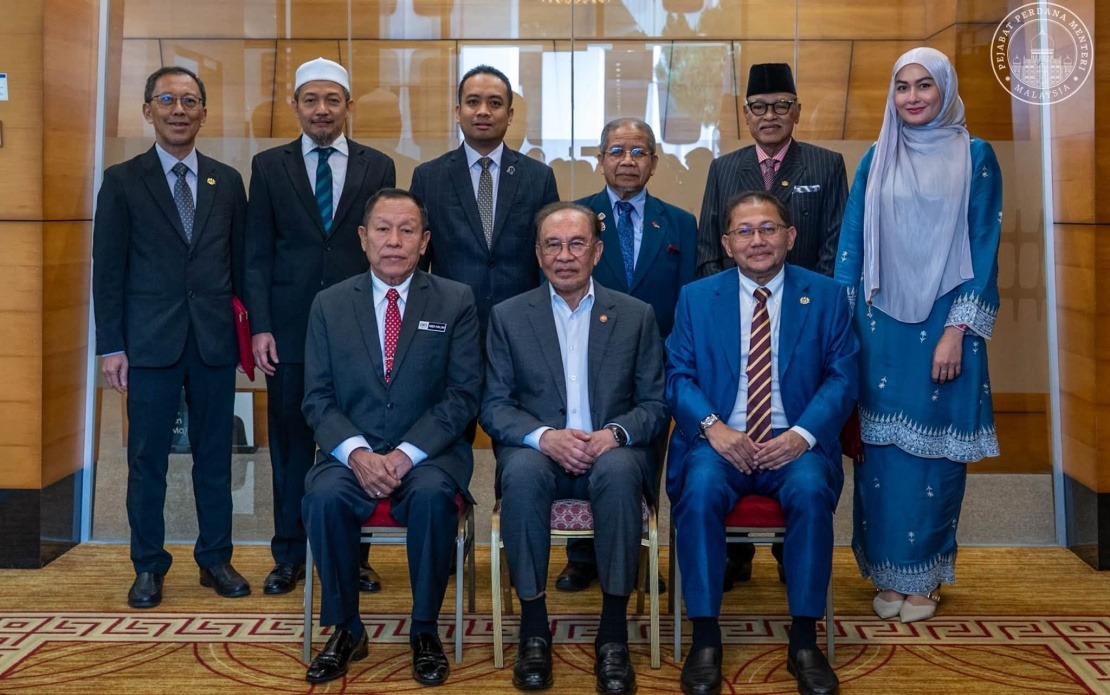
Prime Minister Datuk Seri Anwar Ibrahim has underscored the necessity of a comprehensive, multi-stakeholder approach to tackling corruption in Malaysia, emphasising that no single enforcement body can shoulder this responsibility alone. Speaking on June 30, the Prime Minister highlighted that successfully rooting out graft demands close collaboration spanning enforcement agencies, oversight bodies, Parliament, the civil service, the private sector, and the broader public. This positioning reflects a recognition that corruption represents a structural challenge requiring systemic responses rather than isolated policing efforts.
In advancing this vision, Anwar pointed to the critical role played by two key oversight institutions established under the Malaysian Anti-Corruption Commission Act 2009. The Special Committee on Corruption (JKMR) and the Anti-Corruption Advisory Board (LPPR) function as independent check-and-balance mechanisms, providing autonomous scrutiny and candid assessments that enhance the potency of the nation's anti-corruption apparatus. Both bodies operate with statutorily mandated independence, designed to insulate their operations from political pressure while maintaining meaningful engagement with the enforcement process.
The Prime Minister's remarks came as he formally presented appointment instruments for newly selected members of both committees, following official consent from the Yang di-Pertuan Agong. This ceremonial moment served as an occasion for Anwar to articulate the expectations he holds for the incoming members, exhorting them to deepen their commitment to advancing Malaysia's anti-corruption agenda with renewed determination and focus.
The composition of these oversight bodies reflects Malaysia's institutional architecture for managing graft. The JKMR draws its membership from both the government and opposition benches within the Senate and Dewan Rakyat, explicitly incorporating parliamentary representation from multiple political perspectives. This bipartisan structure theoretically enables the committee to maintain political credibility across the spectrum whilst maintaining independence from the sitting government.
Meanwhile, the LPPR operates under a different selection framework, recruiting members from among individuals whose careers have demonstrated exceptional integrity and noteworthy contributions to public service or professional excellence. This approach prioritises expertise and ethical credentials over political affiliation, creating a distinct institutional character focused on technical competence and moral authority rather than political balance.
Anwar acknowledged that the newly appointed committee members bring diverse professional and personal backgrounds to their roles, yet emphasised that they converge around a shared mandate: strengthening the nation's capacity to detect, investigate, and ultimately eliminate corruption across all sectors of Malaysian society. This framing attempts to transcend the particular differences that members might carry, situating their appointment within a larger national interest framework.
The emphasis on collective responsibility carries particular weight in the Malaysian context, where corruption has long been identified as a significant constraint on economic development, institutional effectiveness, and public trust. Regional comparisons with neighbouring Southeast Asian economies consistently highlight anti-corruption performance as a crucial differentiator for investment attractiveness and institutional legitimacy. Malaysia's standing in international corruption perception indices directly influences foreign investor confidence and the nation's competitive positioning in the region.
The Multi-agency Anti-Corruption Task Force structure that Anwar references reflects an evolution in thinking about governance challenges. Rather than concentrating authority within a single enforcement agency, this distributed model acknowledges that corruption often involves complex networks spanning multiple sectors and institutions. Private sector actors, government officials, and intermediaries frequently cooperate in corrupt schemes, rendering compartmentalised responses ineffective. A genuinely coordinated approach requires information-sharing mechanisms, complementary enforcement strategies, and aligned institutional incentives across traditionally separate domains.
Furthermore, the invocation of civil society and the public sector as essential participants recognises that enforcement alone cannot transform a culture of integrity. Whistleblower protections, transparency initiatives, internal audit functions, and corporate governance reforms all contribute to creating an environment where corrupt behaviour becomes riskier and less socially acceptable. Public awareness campaigns and educational programmes can shift norms and expectations in ways that enforcement action cannot independently achieve.
The appointment of new committee members also signals continuity with Malaysia's international anti-corruption commitments. The nation remains subject to scrutiny under the United Nations Convention Against Corruption and engages with international peer review mechanisms. Strengthening the visible independence and effectiveness of domestic oversight bodies directly supports Malaysia's credibility in these international forums whilst demonstrating practical commitment to global anti-corruption standards.
As Malaysia navigates ongoing economic challenges and seeks to attract high-quality foreign investment, the government's demonstrated commitment to serious anti-corruption work becomes increasingly consequential. Investors require assurance that business operations will occur within predictable legal frameworks and that corrupt officials cannot overturn legitimate commercial arrangements through bribery or extortion. By emphasising the depth of Malaysia's institutional commitment to fighting graft, Anwar positions the nation as a relatively secure destination for capital relative to certain regional peers.
Looking forward, the effectiveness of this collective approach will depend substantially on the execution capacity of individual institutions and the quality of inter-agency coordination mechanisms. Mere institutional multiplicity without genuine information-sharing and aligned incentives can create duplication, turf conflicts, and ultimately less effective outcomes than focused specialised enforcement. The Prime Minister's statement therefore represents a beginning rather than a conclusion—the real test lies in whether these committees and agencies translate shared rhetoric into coordinated operational results.

