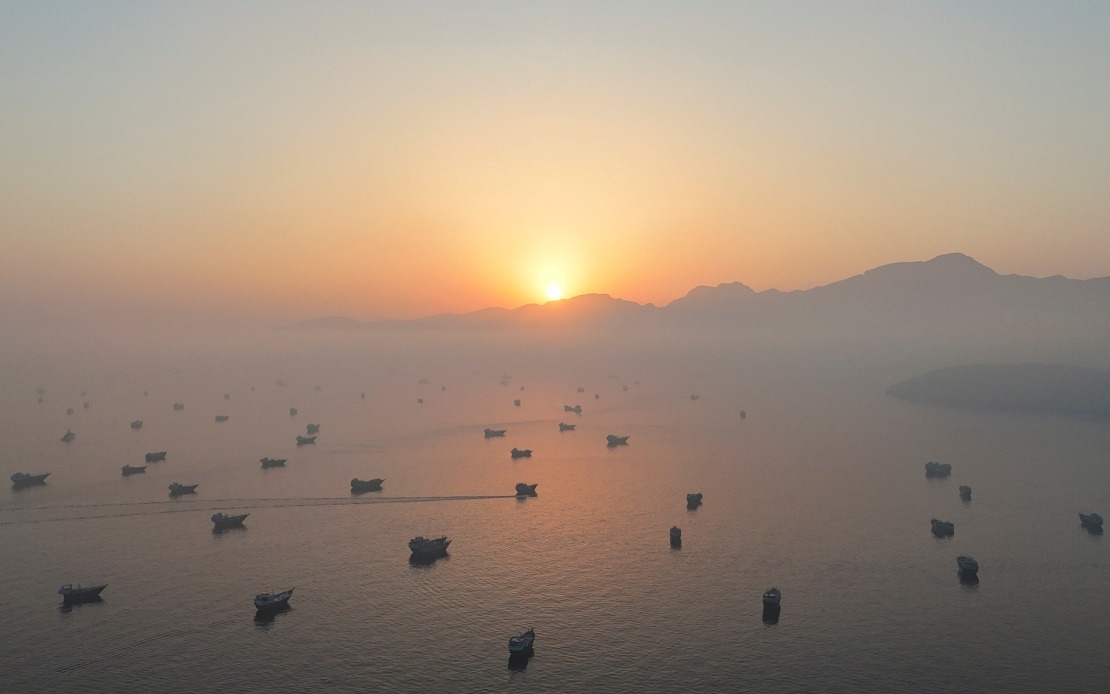
The Comprehensive and Progressive Agreement for Trans-Pacific Partnership has given its backing to a recent US-Iran accord and related measures designed to restore normal navigation through the Strait of Hormuz, signalling the trade bloc's deep concern about the fragility of global energy markets and supply chain vulnerability. The statement came following a virtual ministerial gathering on Friday, with representatives from the bloc's twelve member economies in attendance, reflecting the broad international consensus that maritime security in this crucial waterway carries significant implications for economic stability across the Asia-Pacific region and beyond.
The importance of maintaining unimpeded passage through the Strait of Hormuz cannot be overstated, particularly for nations dependent on energy imports. The shipping lane handles a substantial portion of global oil and liquefied natural gas trade, making it a critical artery for the world economy. Any disruption to this vital corridor directly threatens energy security across multiple continents and contributes to inflation pressures that reverberate through supply chains and consumer prices. For Malaysia and other Southeast Asian economies, stable access to energy resources through this route is foundational to industrial competitiveness and economic growth.
The CPTPP ministers specifically highlighted concerns relating to crude oil, refined petroleum products including diesel, natural gas, petrochemical derivatives, and essential commodities such as fertilisers. These goods are central to everything from transportation and manufacturing to agricultural production. The joint ministerial statement emphasised that safeguarding international commerce in these sectors requires more than diplomatic agreements—it demands reliable, secure transit infrastructure and sustained commitment from all parties to respecting the rules governing maritime conduct. The reference to the United Nations Convention on the Law of the Sea underscores the bloc's preference for resolving disputes through established legal frameworks rather than unilateral action.
Beyond the immediate geopolitical dimension, the statement reflects growing recognition within the CPTPP of how energy trade disruptions cascade through modern economies. Supply chain fragmentation has already exposed vulnerabilities that were previously hidden by decades of globalisation and just-in-time manufacturing. When critical supplies cannot reach their destinations reliably, entire industries face production halts and cost increases. For Southeast Asian nations like Malaysia that serve as manufacturing hubs and trading centres, such disruptions create immediate economic pain through reduced export competitiveness and increased input costs.
The ministers reaffirmed their commitment to preventing discriminatory trade practices and called upon other nations to similarly refrain from imposing unjustified trade restrictions on energy and related products. This language reflects subtle tensions within the global trading system, where some countries have used trade measures ostensibly aimed at addressing security concerns but which in practice distort markets and penalise trading partners. The CPTPP's emphasis on rules-based trade in this context serves as a counterweight to unilateralist tendencies and reinforces the principle that trade disputes should be resolved through established mechanisms rather than through retaliatory tariffs or restrictions.
An interesting dimension of the statement involves regional initiatives such as the Partnership On Wide Energy and Resources Resilience Asia, or POWERR Asia. This framework represents an attempt to build more sophisticated and distributed energy supply chains by fostering coordination between producing and consuming nations across the Indo-Pacific. Rather than relying on a single dominant transit route or supplier, POWERR Asia aims to develop multiple pathways and flexible sourcing arrangements. This approach acknowledges that the Strait of Hormuz, while crucial, should not be the only critical chokepoint upon which regional energy security depends.
The bloc also demonstrated awareness of the particular vulnerability of small island developing countries, particularly those in the Pacific region, which face acute energy security challenges due to geographic isolation and limited storage capacity. These nations are often the most exposed to supply disruptions and price volatility, making them especially dependent on regional cooperation and trade diversification. The CPTPP's attention to this issue suggests a broadening of the bloc's mandate beyond traditional trade liberalisation to encompass broader resilience considerations that affect smaller and more vulnerable members.
For Malaysian stakeholders, the CPTPP's positioning carries several implications. As an energy consumer and significant trader in processed petroleum products and petrochemicals, Malaysia benefits directly from stable shipping lanes and rules-based maritime commerce. The country's petrochemical industry, concentrated in regions like the Johor corridor, relies on consistent feedstock supplies and reliable export channels for finished products. Furthermore, Malaysia's role as a shipping hub and financial centre for energy trading makes it directly exposed to supply chain disruptions affecting the energy sector.
The statement also reflects a broader strategic calculus within the CPTPP regarding the relationship between trade governance and geopolitical stability. By endorsing the US-Iran agreement and its implementation, the bloc is signalling that it views sustainable international commerce as dependent upon diplomatic solutions to regional conflicts. This approach contrasts with purely transactional or zero-sum perspectives on geopolitical competition. It recognises that when major powers engage in sustained confrontation, the entire system of international trade suffers through increased uncertainty, higher insurance and shipping costs, and reduced willingness of traders to engage in transactions involving affected regions.
Looking forward, the CPTPP's joint statement serves as a foundation for continued monitoring of developments affecting maritime security and energy trade. The ministers essentially committed to maintaining regular dialogue and coordination as new challenges emerge. Given the ongoing tensions in global energy markets and periodic flare-ups in regional conflicts, this commitment to collective problem-solving through rules-based frameworks will be tested repeatedly. For Malaysia and other CPTPP members, the statement represents both a reaffirmation of shared interests in stable trade conditions and a pragmatic acknowledgement that achieving such stability requires sustained diplomatic engagement and willingness to move beyond narrow bilateral interests.
The virtual format of the meeting itself merits noting, as it reflects how the CPTPP has adapted to conducting significant business through digital channels. This operational flexibility has enabled the bloc to respond more quickly to emerging challenges while maintaining continuity in dialogue. As global supply chains continue evolving and new risks emerge, this capacity for rapid collective response may prove increasingly valuable in protecting the interests of member economies and their trading partners throughout the Asia-Pacific region.

