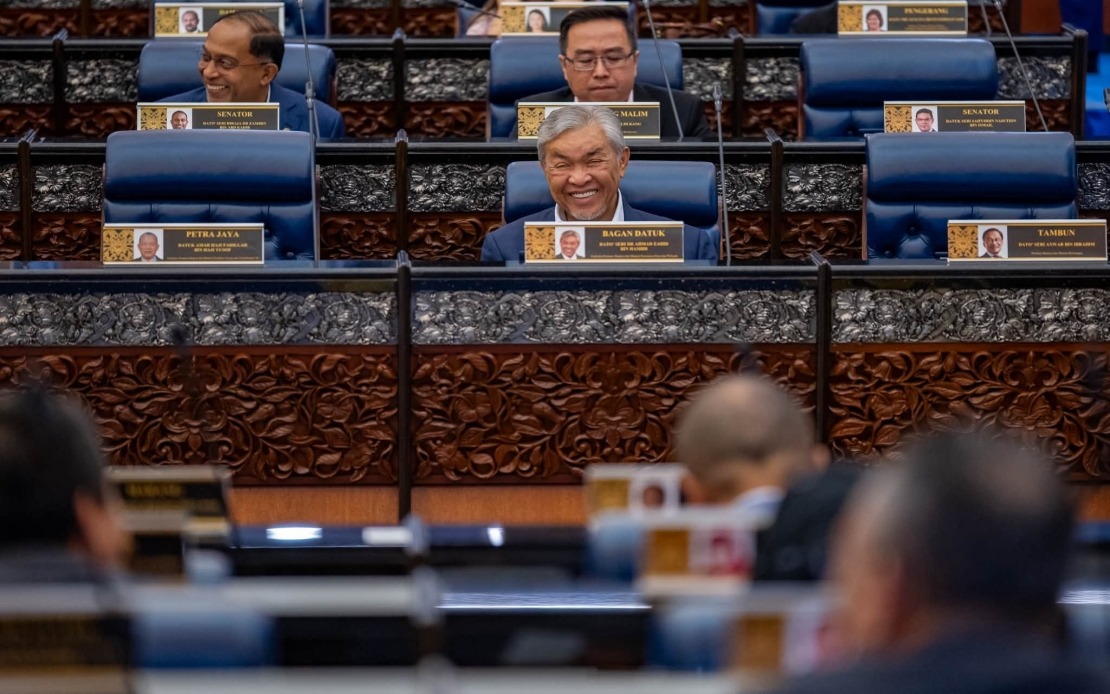
Deputy Prime Minister Datuk Seri Dr Ahmad Zahid Hamidi has called for accountability to accompany scrutiny of Lembaga Tabung Haji, emphasising that critique alone must give way to tangible corrective measures if the major Islamic financial institution is to regain and maintain public trust. Speaking through a Facebook statement on August 11 following a special Dewan Rakyat sitting dedicated to examining a Royal Commission of Inquiry report on the organisation, Ahmad Zahid stressed the critical need to translate parliamentary discussions into meaningful action rather than allowing grievances to fester unresolved.
The Deputy Prime Minister, who also holds the Rural and Regional Development portfolio, pointed out that allowing controversy to drag on without substantive follow-up threatened the standing of an institution that holds considerable significance within Malaysia's Islamic framework and serves hundreds of thousands of pilgrims planning their journeys to Makkah. His remarks underscored growing concern that while the special parliamentary session provided a formal mechanism for lawmakers to examine, interrogate and propose solutions based on detailed evidence, the real test would lie in whether identified shortcomings would be systematically remedied or gradually forgotten once media attention waned.
The foundation for this parliamentary examination was laid when the government made the RCI report public on July 29, breaking with previous practice of keeping such findings confidential. This decision fundamentally altered the accountability landscape surrounding Tabung Haji by allowing elected representatives to scrutinise institutional weaknesses in an open forum. The public release also served to transform what might have remained an opaque bureaucratic exercise into a matter subject to democratic oversight and public awareness, reflecting broader global trends toward transparency in governance even when findings prove unflattering to major institutions.
The RCI inquiry had examined Tabung Haji's management and operational practices spanning six years, from 2014 through 2020, a critical period that saw significant financial pressures on pilgrimage-related institutions globally and domestic economic challenges that affected savings behaviour among Malaysian Muslims. The investigation identified substantial gaps in governance, risk management, and operational oversight, producing 25 specific recommendations aimed at strengthening the institution's institutional architecture. These findings, once contained within government circles, now became material for public deliberation and parliamentary accountability.
Progress toward implementing the inquiry's recommendations appeared encouraging at first glance, with Tabung Haji having enacted approximately three-quarters of the 25 suggested reforms by early August. This implementation rate suggested responsiveness to criticism, yet Ahmad Zahid's emphasis on ensuring recommendations translated into sustained organisational change hinted at deeper concerns about whether structural reforms would prove durable or whether institutional inertia might allow old patterns to resurface once external pressure diminished. The distinction between procedural compliance and genuine cultural transformation within an institution remains a persistent challenge in governance reform across the region.
The Deputy Prime Minister's statement appeared pitched at multiple audiences simultaneously. To parliamentary critics and civil society observers monitoring Tabung Haji's conduct, his remarks signalled official acknowledgment that the inquiry had exposed genuine problems warranting serious remediation. To institutional leadership, his insistence on translating criticism into action conveyed an implicit warning against treating the RCI process as a perfunctory exercise to be endured rather than a catalyst for meaningful change. The carefully calibrated language also reflected broader political sensitivities surrounding religion-related institutions in Malaysia, where criticism must navigate the need to expose problems while maintaining respect for organisations held in high community regard.
Ahmad Zahid's invocation of sincerity and wisdom, framed in Islamic terminology referencing the broader Muslim community, added a moral and spiritual dimension to what might otherwise appear as straightforward administrative oversight. By grounding the need for responsible action in religious principles, he implicitly reminded stakeholders that Tabung Haji's fundamental purpose—facilitating pilgrimage for Malaysian Muslims—transcended narrow institutional interests and carried obligations extending to the entire faith community. This framing elevated the debate beyond technocratic discussion of financial controls or management systems to encompass broader questions of trust and stewardship.
For Malaysian pilgrims and their families, the practical implications of these institutional deficiencies and their remediation carry considerable weight. Tabung Haji serves approximately 600,000 active members saving for pilgrimage, and the organisation manages investments and accumulated savings totalling billions of ringgit. Management failures or operational weaknesses directly threaten not merely financial returns but the foundational trust that allows ordinary Malaysians to entrust these organisations with resources earmarked for life's most spiritually significant journeys. The RCI findings, while concerning, offered the opportunity for systematic correction before greater damage accumulated.
The special parliamentary sitting itself represented an important procedural development in Malaysian democratic practice. Rather than allowing the RCI report to circulate only among senior officials and remain subject to selective briefings, Parliament was convened specifically to examine its contents. This approach potentially strengthened the legitimacy of whatever corrective actions subsequently emerged, as they would have been deliberated by elected representatives answering to constituents rather than simply imposed from above. The openness also created a record of parliamentary concern that would complicate any future institutional backsliding or resistance to reform.
Moving forward, Ahmad Zahid's emphasis on responsible action suggests the government recognises that public confidence in Tabung Haji cannot be rebuilt through rhetoric alone. The implementation of the 25 recommendations must proceed transparently, with measurable milestones and credible monitoring mechanisms. Civil society organisations, religious scholars, and oversight bodies would need to remain engaged in tracking progress rather than assuming that initial implementation rates would translate into sustained institutional improvement. For Malaysian policymakers more broadly, the Tabung Haji experience offers instructive lessons about the necessity of translating critical inquiry into institutional transformation if public institutions are to retain the legitimacy and trust essential to effective governance.

