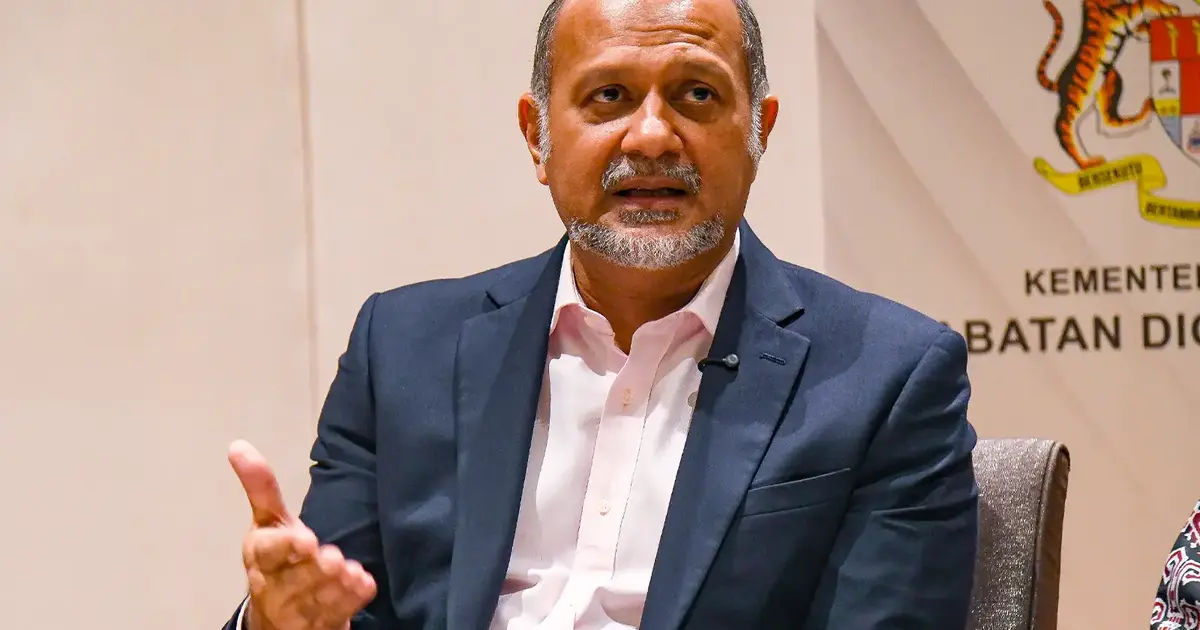
DAP chairman Gobind Singh Deo has escalated pressure on Malaysia's law enforcement agencies to disclose progress on their investigation into allegations of organised corporate wrongdoing, directing his appeal specifically to the Inspector-General of Police and the Malaysian Anti-Corruption Commission. The timing of his statement underscores growing impatience within the ruling coalition over the pace of what has become a high-profile inquiry with significant political dimensions.
The investigation was formally initiated following a Cabinet directive issued in March, which tasked both the police and the anti-corruption body with examining serious claims relating to corporate mafia activities. This governmental mandate provided the institutional framework and official sanction necessary for a comprehensive probe into the alleged network of interconnected corporate interests accused of operating outside normal legal and regulatory boundaries.
Gobind's intervention reflects broader frustrations within DAP ranks about the transparency and timeline of major investigations. The party chairman's assertion that "ample time has been given" suggests that the coalition government, of which DAP is a significant component, expects tangible public evidence of investigative progress rather than continued silence from the relevant agencies. This demand carries particular weight given DAP's emphasis on accountability and clean governance, themes that have featured prominently in the party's political messaging since the 2018 general election.
The corporate mafia probe touches on sensitive territory in Malaysian politics and business. Such investigations typically involve examining allegations of collusion, market manipulation, and the use of political connections to secure unfair commercial advantage—dynamics that have long concerned observers of Malaysia's economic governance. The nature of such crimes often requires extended investigation periods, as uncovering networks of improper corporate relationships demands careful documentation and coordination across multiple agencies and sectors.
The distinction between the police and MACC roles in such an investigation carries institutional significance. The MACC generally focuses on corruption offences and the misuse of public office, while police investigations typically address criminal conduct more broadly. Their parallel involvement suggests the allegations touch both dimensions—potentially involving public officials whose positions were leveraged for private corporate benefit, or public resources that were misappropriated.
Public calls for transparency in ongoing investigations present inherent tensions in democratic societies. While citizens and political representatives have legitimate interests in knowing that serious allegations are being pursued, premature disclosure or partial updates can compromise investigative integrity, alert suspects to the scope of probes, or prejudice eventual legal proceedings. Malaysian law enforcement agencies must balance these competing pressures, particularly when high-profile figures may be implicated.
Gobind's public statement also functions as a form of political pressure, signalling to the broader government that key coalition members expect visible progress on matters they regard as important for public confidence in governance. Such pressure can motivate expedited work, but it may also create perverse incentives if investigations accelerate without maintaining rigorous standards. The DAP chairman's framing—that substantial time has now passed—attempts to establish that delays can no longer be justified by ordinary investigative timelines.
For Malaysian businesses and investors, extended uncertainty around any corporate mafia investigation creates an uncomfortable backdrop. If serious allegations of organised wrongdoing remain unresolved, it raises questions about the regulatory environment's integrity and the predictability of commercial competition. Companies operating legitimately may face market disadvantages if competitors are suspected of using improper networks, yet remain nominally unchallenged by authorities. This uncertainty can dampen investment confidence and entrepreneurial activity.
The regional dimension adds another layer of complexity. Southeast Asian markets increasingly interconnect, and Malaysia's reputation for corporate governance influences investor perceptions across the region. A protracted investigation that appears inconclusive risks signalling that Malaysia's institutions struggle to address systemic corporate wrongdoing, potentially affecting the country's standing as an investment destination alongside regional competitors like Singapore, Thailand, and Indonesia.
Gobind's call reflects calculations within DAP's leadership about political messaging. By publicly demanding transparency, the party positions itself as a guardian of accountability and public interest, reinforcing its identity as a reform-oriented party. Simultaneously, it provides a face-saving mechanism for the government to release more information without appearing to capitulate to external pressure—the agencies can frame disclosure as responding to the Chairman's legitimate calls rather than as forced revelations.
The practical challenge facing investigators remains substantial. Corporate mafia networks, by definition, operate through layers of intermediaries, shell companies, and legitimate-appearing transactions designed to obscure the underlying coordinated activity. Proving the existence of such networks requires painstaking accumulation of evidence—financial records, communications, testimony from insiders—that cannot be rushed without compromising evidentiary value.
Moving forward, the agencies involved face mounting expectations to demonstrate concrete progress. Whether this manifests as formal charges against named individuals, detailed investigative summaries, or other forms of public updates remains to be determined. The political pressure from coalition partners like DAP suggests that continued silence is becoming untenable, even if full disclosure of ongoing investigative details remains inappropriate. Resolving this tension will require careful navigation by both law enforcement and government leadership.

