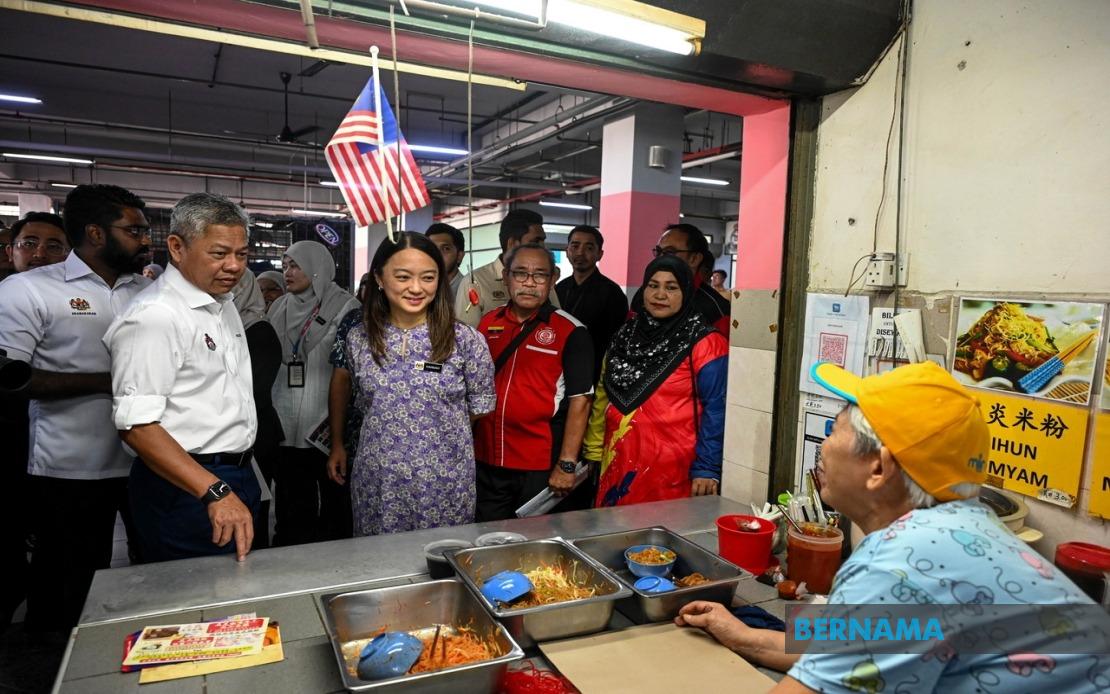
Kuala Lumpur's hawker sector is set for a comprehensive modernisation drive as the city authority commits RM200 million to overhaul facilities at 287 sites scattered across the federal capital. The Lestari Niaga @ Kuala Lumpur 2026 initiative represents one of the most ambitious infrastructure upgrades for the informal food sector in recent years, directly impacting the livelihoods of more than 11,000 street vendors and hawkers who form the backbone of the city's distinctive food culture and everyday commerce.
Minister in the Prime Minister's Department (Federal Territories) Hannah Yeoh articulated the broader vision behind the programme during an inspection at UTC Sentul, emphasising that modernisation must be pursued with consideration for all affected parties. Rather than imposing top-down solutions, the authority has committed to a stakeholder-driven approach that incorporates feedback from residents concerned about traffic congestion, traders seeking sustainable operations, and building tenants navigating their own commercial pressures. This balancing act reflects the complexity of managing urban hawker spaces in densely populated metropolitan areas where competing interests frequently clash.
The UTC Sentul project serves as a flagship example of the initiative's scope and execution model. This RM1.6 million undertaking will replace existing structures with 20 modern modular kiosks, representing a significant leap in infrastructure quality for the 20 active traders currently operating in the area. The three-month construction timeline targets completion before October, demonstrating a commitment to minimising operational disruption during the transition period. Such purposeful planning stands in contrast to previous ad-hoc approaches that often left vendors uncertain about timelines and relocation procedures.
Innovative financial support mechanisms distinguish this programme from conventional hawker upgrading efforts. Kuala Lumpur Mayor Datuk Seri Fadlun Mak Ujud revealed that DBKL is introducing a groundbreaking monthly assistance of RM1,500 for traders affected during construction phases. This direct financial intervention addresses a persistent challenge in hawker modernisation: temporary trading sites frequently prove economically counterproductive, located in areas with poor foot traffic and customer accessibility. By providing cash assistance instead, the authority acknowledges the real income losses traders face and offers a more pragmatic solution that preserves business viability throughout renovation cycles.
The geographic scope of the initial expansion reflects strategic prioritisation across Kuala Lumpur's diverse districts. Simultaneous projects backed by identical financial incentive structures are advancing in locations including Jalan Dato Senu, Pudu Ulu, and Bandar Tun Razak, suggesting a coordinated rollout rather than fragmented interventions. This staged approach allows the authority to learn from early implementations, refine operational procedures, and gradually expand the programme's footprint across the broader trading ecosystem. The geographical distribution also ensures that benefits extend beyond central business areas to include neighbourhood-level hawker communities often overlooked in urban development prioritisation.
The composition of the 11,000 affected traders reveals the diversity within Kuala Lumpur's hawker sector. Approximately 4,000 operate as street hawkers without fixed premises, representing the most vulnerable and mobile segment requiring dedicated support frameworks. Another 5,000 conduct business from facilities under municipal supervision and control, operating within established hawker centres and markets. The remaining thousand comprise traders in reapplication categories, suggesting prior conflicts or permit issues requiring administrative resolution. This granular breakdown indicates that the modernisation strategy must accommodate vastly different operational models and regulatory statuses within a single coherent framework.
The initial phase encompasses 224 locations within the broader 287-site network, prioritising zones with concentrated trader populations and identifiable infrastructure deficiencies. This phased implementation allows DBKL to allocate resources strategically while building institutional capacity to execute simultaneous projects across multiple districts. The staggered approach also permits course corrections based on early feedback, reducing the risk of systemic errors that could undermine the programme's legitimacy among trading communities sceptical of government intentions following previous relocation controversies.
Stakeholder engagement has informed the programme's design philosophy, with DBKL conducting consultation sessions before finalising redevelopment specifications. This consultation process emerged partly in response to the UTC Sentul project's initial public visibility and concerns among affected vendors. By demonstrating responsiveness to trader feedback, the authority attempts to rebuild trust within communities that have experienced disruptive relocations in previous years. The success of this consultative approach may establish a template for future informal sector interventions across Southeast Asia, where hawker spaces remain economically and culturally significant despite rapid urban formalisation pressures.
The modernisation programme arrives amid broader regional trends toward hawker sector professionalisation and integration into formal municipal governance structures. Neighbouring Singapore and other advanced economies have demonstrated that well-designed hawker infrastructure attracts customers, improves vendor productivity, and generates municipal revenue through licensing and rental arrangements. Kuala Lumpur's substantial investment signals recognition that hawker sectors require sustained capital commitment rather than episodic interventions, positioning the city competitively within regional urban centres and affirming cultural commitment to preserving informal food commerce within modernised frameworks.
The Lestari Niaga initiative also addresses environmental and health dimensions increasingly important to urban consumers and regulators. Modern modular kiosks typically incorporate improved waste management, water supply, and sanitation infrastructure compared to traditional structures, reducing environmental externalities while creating healthier working conditions for vendors. Such improvements address concerns from residents and public health authorities regarding food safety and operational cleanliness, potentially reducing friction between formal residents and informal traders sharing urban spaces. Enhanced infrastructure also facilitates regulatory compliance monitoring, streamlining DBKL's oversight responsibilities while protecting traders through clearer operational standards.
For Malaysian traders and policymakers observing this initiative, several implications emerge regarding informal sector management in rapidly developing cities. The RM200 million commitment demonstrates that substantial public investment in hawker modernisation is administratively feasible and politically viable when structured as inclusive rather than exclusionary projects. The financial assistance mechanism offers a replicable model for other Malaysian municipalities facing similar modernisation pressures, potentially establishing best practices for managing trade-offs between infrastructure improvement and vendor economic security. The programme's emphasis on stakeholder consultation provides a framework for reducing the social friction that often accompanies urban spatial reorganisation, suggesting that inclusive governance approaches yield better outcomes than prescriptive development models.
As implementation proceeds across the 287 sites, success will ultimately depend on whether modernised infrastructure translates into improved earning potential for participating traders. If vendor incomes increase following facility upgrades—a reasonably expected outcome given enhanced customer experience and operational efficiency—the programme will validate the investment thesis and likely inspire similar initiatives throughout Malaysia's urban centres. Conversely, if traders experience income decline despite infrastructure improvements, the underlying assumption that better facilities automatically generate better business prospects will require reassessment. This demonstration effect extends beyond Kuala Lumpur's borders, influencing how other Southeast Asian cities approach persistent tensions between urban development aspirations and informal sector preservation.

