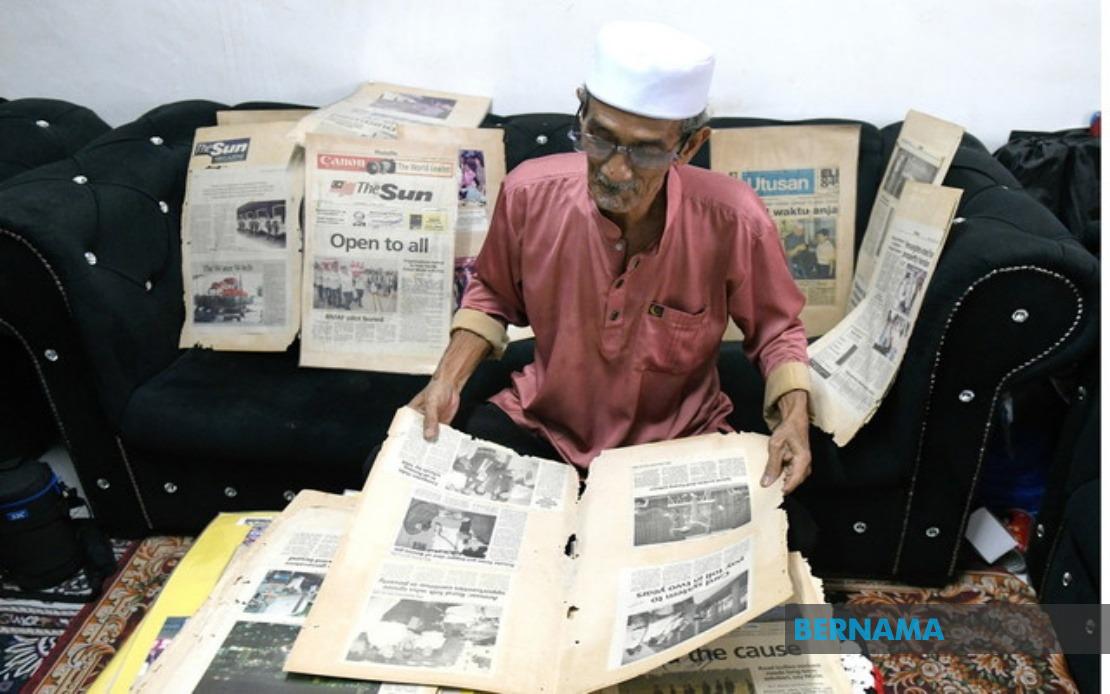
Azmi Sapiei carries the scars of his profession both literally and figuratively. The 64-year-old veteran photographer and cameraman was kicked and spat upon by a suspect during a court case assignment in 2001, an incident that he describes as one of many hazardous moments etched into his memory across more than thirty years working in Malaysian media. The attack, which occurred while he was covering proceedings for The Sun newspaper, underscores the physical dangers that journalists face when pursuing stories in the field—a reality that extends far beyond the relative safety of a newsroom desk.
Azmi's journey through Malaysia's media landscape began in earnest when he joined Bernama, the nation's principal news agency, in 1993 as a photographer. His nearly three years at the organisation proved formative, providing him with access to cover pivotal national events that would define his career. Among his most significant assignments was securing exclusive photographs of Shamsiah Fakeh, a former member of the Malayan Communist Party, upon her return from China in July 1994. The story remains instructive for understanding both the challenges and rewards of news photography. Shamsiah was returning to her nephew's residence in Gombak, and by arriving early before authorities cordoned off the area, Azmi and a journalist managed to gain access that competing news organisations could not obtain.
The exclusive coverage nearly ended in professional embarrassment, however. Working in the analogue era when all photographs required film processing, Azmi had shot three rolls of film covering the assignment. Upon his return to the office, his editor questioned why he had used only three rolls, implying the work was insufficient. Azmi recalls the humiliation of watching his rolls placed one by one into a bin, his confidence shaken by apparent editorial scepticism. Yet the story transformed once the film was developed. Every major newspaper in Malaysia ran his photographs the following day, vindicating his judgment and teaching him a crucial lesson about the unpredictability of news work and the importance of persisting despite doubt.
Before joining Bernama, Azmi had pursued an unconventional path to journalism. He initially worked in a factory setting before deciding to migrate to Kuala Lumpur to pursue his passion for photography. He worked independently with various agencies and women's magazines, gradually building both technical skills and professional networks. This period of self-directed learning cultivated the discipline and adaptability that would characterise his later work across multiple news organisations. When he joined Bernama in 1993, he was joining an institution that Azmi now describes as a professional 'school' that shaped generations of quality photographers and instilled rigorous standards around accuracy, visual composition, and news value—principles that remain relevant in today's digital environment.
Azmi's assessment of his former employer reflects a broader truth about institutional journalism in Malaysia. Bernama, as the national news agency, established benchmarks for photojournalism that influenced standards across the industry. The training and discipline gained there proved invaluable when Azmi subsequently worked at The Sun, Bernama TV, and eventually RTM Penang. However, his career trajectory also reflects the structural changes that Malaysian media has undergone. After leaving Bernama at the end of 1996, he returned to Penang and worked as a photographer and later cameraman, eventually taking a part-time role at RTM Penang from 2003 until his retirement in mid-2020. The shift from full-time to part-time work hints at the contraction in traditional broadcast media employment that has characterised the past two decades globally.
The physical and technical demands of the profession intensified significantly when Azmi transitioned from still photography to television camerawork. While the fundamental responsibilities remained similar—capturing visually compelling and journalistically accurate content—television cameramen required substantially greater physical endurance. During his tenure at Bernama TV, Azmi operated a Betacam camera, a now-obsolete format that weighed approximately 12 kilogrammes. He recalls colleagues sardonically referring to the equipment as 'junk iron' because of the burden it imposed on operators who had to carry it for hours during assignment coverage. This detail illuminates a largely invisible aspect of journalism: the bodily toll required to produce the news that reaches audiences daily.
The transition from film to digital technology represented another significant evolution in Azmi's career. Unlike the analogue era, when photographers could only view their work after processing—a delay that could span hours—digital cameras provided immediate feedback, accelerating the news cycle and increasing pressure on photographers to deliver usable images within minutes of an event. Azmi witnessed this transformation firsthand, adapting his workflow and shooting methodology as technology evolved. The shift also democratised equipment access, making quality cameras more affordable but simultaneously intensifying competition as barriers to entry lowered and the supply of available footage increased exponentially.
In recognition of his contributions to Malaysian broadcast journalism, Azmi received the 2006 Penang State Media Award in the visual electronic media category. The honour acknowledged not merely technical proficiency but a career-long commitment to documenting events with integrity and professionalism despite the inherent dangers and frustrations of the work. His three decades in media represent a period of profound transformation in how news is gathered, processed, and distributed. From the era of three-roll film assignments and darkroom developing to the instantaneous digital capture and distribution of modern journalism, Azmi navigated technological revolutions while maintaining core professional values.
Perhaps most significantly, Azmi's legacy extends beyond his own career achievements. His second son, Muhammad Syafiq, now 30 years old, works as a cameraman with Media Prima Television Network, representing the intergenerational transmission of journalistic commitment within families. Syafiq's interest in cameras developed organically from watching his father transport equipment home and subsequently accompanying him to assignment locations after completing his Sijil Pelajaran Malaysia examination in 2016. Within a year, he was operating cameras independently, building on techniques, visual composition principles, and work discipline that his father had imparted through mentorship.
For Syafiq, his father represented more than a parent—Azmi functioned as both teacher and exemplary professional who demonstrated that journalism demands rigorous standards, creative vision, and unwavering commitment even when facing physical danger or professional setbacks. The relationship between Azmi and Syafiq reflects broader patterns within Malaysian media, where institutional knowledge and professional standards are transmitted through apprenticeship and family mentorship alongside formal educational training. As Malaysian media continues evolving amid digital disruption, streaming platforms, and changing audience consumption patterns, the human element that Azmi embodied—patience, discipline, judgment, and resilience—remains irreplaceable.
Azmi's career also offers perspective on the changing nature of news work in Southeast Asia more broadly. While Malaysian media has undergone significant structural changes over the past three decades, the fundamental responsibility of journalists to document truth under difficult circumstances persists. The physical assault Azmi endured while covering a court case in 2001 reminds us that journalists operate at the intersection of power, conflict, and public interest, often at personal risk. His decision to continue his career despite such incidents, and his transmission of professional values to the next generation, underscores the enduring importance of news gathering as a democratic function. As Malaysia's media landscape continues fragmenting and traditional news organisations face financial pressures, the institutional memory and professional standards that figures like Azmi developed and transmitted become increasingly valuable for maintaining journalistic quality and integrity.

