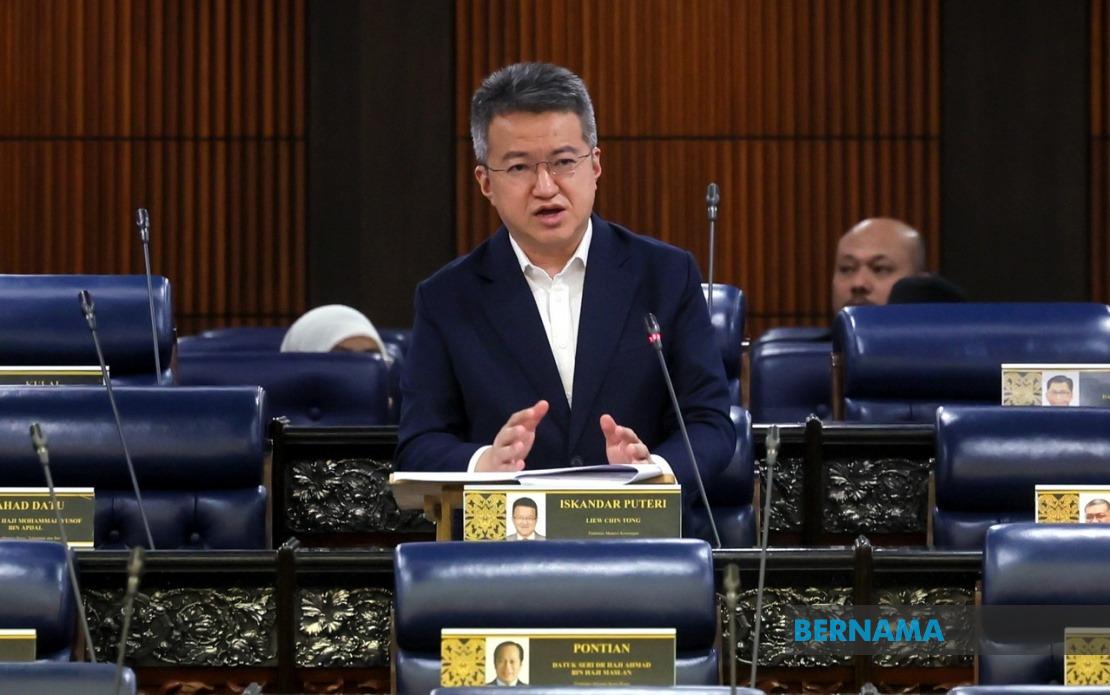
Deputy Finance Minister Liew Chin Tong has dismissed claims that fugitive businessman Low Taek Jho, popularly known as Jho Low, secretly entered Malaysia alongside a Chinese delegation to negotiate a settlement over the sprawling 1Malaysia Development Berhad (1MDB) scandal. During parliamentary Question Time on July 9, Liew provided a succinct rebuttal when challenged by Muar MP Syed Saddiq Syed Abdul Rahman of MUDA, stating simply: "I deny the allegation." The exchange came after Syed Saddiq referenced media reports alleging that Jho Low had attended confidential meetings in Malaysia in late 2024 aimed at discussing a potential repayment package with the Ministry of Finance.
The parliamentary question underscores the persistent intrigue surrounding Jho Low's movements and any potential backchannels involving the government's attempts to recover the massive sums siphoned from 1MDB. Jho Low, who remains a fugitive from Malaysian justice authorities, has long been implicated as the architect of one of the world's most significant financial frauds. The alleged secret visit, if it had occurred, would have raised significant governance questions about direct negotiations with the primary suspect in the scandal rather than pursuing strictly legal channels for asset recovery.
In his fuller response to an earlier question from Stampin MP Chong Chieng Jen, Liew outlined the government's comprehensive multi-pronged approach to recovering misappropriated 1MDB funds. The ministry continues aggressive pursuit through both criminal prosecutions and civil litigation targeting key figures implicated in the scandal. This dual-track strategy reflects the complexity of recovering assets that have been scattered across jurisdictions and potentially obscured through layers of financial instruments and international transfers.
The government achieved a significant legal milestone when the High Court sentenced former Prime Minister Datuk Seri Najib Tun Razak on December 26, 2025, to 15 years' imprisonment. The court found Najib guilty on 25 charges encompassing money laundering and abuse of his official position to solicit bribes connected to 1MDB. Accompanying this custodial sentence, the court imposed a financial penalty of RM11.38 billion, representing one of the largest monetary judgments in Malaysian legal history. This conviction stands as the most concrete legal accountability for individuals at the highest echelons of the 1MDB scandal.
Beyond Najib, the government has pursued civil recovery against his wife, Datin Seri Rosmah Mansor, seeking to reclaim approximately US$380 million (roughly RM1.56 billion) in damages. This particular civil action focuses on allegations that 1MDB funds were misappropriated to purchase luxury goods including high-end handbags and jewellery. The case against Rosmah highlights how investigators have traced specific asset acquisitions directly to the diverted public monies, providing a clearer evidentiary pathway for civil recovery compared to more opaque financial transfers.
The most substantial claims, however, remain directed at Jho Low himself. Criminal and civil proceedings against the fugitive businessman involve a staggering civil claim valued at US$3.78 billion, equivalent to approximately RM15.4 billion. This figure represents the government's assessment of the total quantum of damages attributable to Jho Low's orchestration of the scheme. However, recovering these assets presents extraordinary practical challenges given that Jho Low remains outside Malaysian jurisdiction and has access to international networks and resources that facilitate continued evasion.
Liew characterised the 1MDB scandal as having inflicted four distinct categories of harm to the nation's interests. The first comprises direct financial losses—the actual funds diverted from the state investment fund. The second involves opportunity costs, encompassing the investments and economic development that could have been realised had the billions remained deployed in productive projects. The third category encompasses irrecoverable losses, acknowledging that certain assets and opportunities have been permanently lost to the nation. Finally, the scandal has inflicted lasting reputational damage to Malaysia internationally, affecting investor confidence and the country's standing in global financial and governance assessments.
For Malaysian readers and the broader Southeast Asian context, the persistence of these recovery efforts carries significance beyond the immediate financial stakes. The 1MDB saga exposed vulnerabilities in regulatory oversight, fund governance, and institutional checks that theoretically should prevent large-scale misappropriation. The government's sustained pursuit through courts reflects a commitment to establishing accountability, yet the protracted nature of these cases also illustrates the challenges inherent in prosecuting complex international financial crimes involving multiple jurisdictions and sophisticated obfuscation techniques.
The denial regarding Jho Low's alleged secret entry into Malaysia also implicitly addresses concerns about whether authorities might circumvent conventional legal processes through informal negotiations. Such arrangements could undermine public confidence in the rule of law and suggest that serious financial crimes might be resolved through backroom dealings rather than transparent judicial proceedings. The deputy minister's categorical rejection thus serves to reassure stakeholders that the government pursues these matters exclusively through established legal mechanisms.
Moving forward, the challenge for Malaysian authorities lies in maintaining the momentum of recovery efforts while navigating the inherent complications of pursuing fugitives and tracing assets across international borders. Cooperation with foreign governments, financial intelligence units, and international law enforcement agencies remains essential. The Najib conviction demonstrates that despite Jho Low's flight, the judicial system can still hold co-conspirators accountable, though the scale of the remaining financial recovery remains substantial and the timeline uncertain.

